


President Confers Padma Awards
Syllabus: GS1/Culture
In News
- President Droupadi Murmu conferred Padma Awards to 66 eminent personalities for the year 2026 at the first Civil Investiture Ceremony held at Rashtrapati Bhavan.
More about the News
- The awards are announced annually on Republic Day. For 2026, the President approved 131 Padma Awards, including 5 Padma Vibhushan, 13 Padma Bhushan, and 113 Padma Shri.
- Remaining awardees will be felicitated in a second ceremony later.
Key Recipients
- Dharmendra Singh Deol was honoured with the Padma Vibhushan posthumously for contributions to art. N.
- Rajam also received the Padma Vibhushan for contributions to music.
- Bhagat Singh Koshyari received the Padma Bhushan for public affairs.
- Uday Kotak was awarded the Padma Bhushan for trade and industry.
- Harmanpreet Kaur received the Padma Shri for sports.
- Folk musician Taga Ram Bheel was conferred the Padma Shri award for keeping alive the legacy of the Algoza.
Padma Awards
- Padma Awards: One of the highest civilian awards of the country instituted in 1954, are conferred in three categories:
- Padma Vibhushan: Second-highest civilian award in India.
- Padma Bhushan: Third-highest civilian award.
- Padma Shri: Fourth-highest civilian award.
- They are awarded annually in various disciplines and fields of activities, including art, social work, public affairs, science and engineering, trade and industry, medicine, literature and education, sports, and civil service.
- They are announced every year on Republic Day (January 26).
- Open to all persons, regardless of race, occupation, position, or gender.
- Can be awarded posthumously.
- Selection Process:
- Recommendations are made by state governments, central ministries, previous awardees, and the public.
- Managed by the Padma Awards Committee, constituted by the Prime Minister annually.
- Committee recommendations are submitted to the Prime Minister and President for approval.
Source: TH
Pratas Islands
Syllabus: GS1/Geography; GS2/International Relations
Context
- The Pratas Islands recently witnessed a maritime standoff between the coast guards of China and Taiwan.
About Pratas Islands
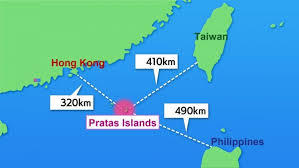
- Location: The Pratas Islands, also known as Dongsha Islands, are a group of coral atolls located in the northern part of the South China Sea.
- The islands lie roughly midway between southern Taiwan, Hong Kong, and the Chinese mainland.
- The atoll is currently administered and controlled by Taiwan.
- Population: The islands are lightly populated and mainly host Taiwan’s coast guard personnel and research facilities.
- Ecological Importance: The area also includes the Dongsha Atoll National Park, which is known for its marine biodiversity and coral reef ecosystems.
- Strategic Importance: The islands are situated at the northern edge of the South China Sea, making them strategically significant for maritime surveillance and naval operations.
Source: IE
Launch of JEEVAN App and SHATAYU Geriatric Caregiver Dashboard
Syllabus: GS2/Governance
Context
- A mobile application JEEVAN (Joint Elderly Empowerment and Virtual Assistance Network) has been launched by the Ministry of Social Justice and Empowerment.
About
- Aim: To strengthen support systems for senior citizens across the country.
- Features of JEEVAN App: Information on Government schemes and welfare programmes, emergency assistance and details of senior citizen homes.
- The platform has been designed with a user-friendly interface, simplified navigation and accessibility features.
- The ministry also launched Senior Holistic Care Assistance and Training for Your Utility (SHATAYU) Dashboard to support and strengthen caregiving services for senior citizens.
- The platform is designed to enhance the safety, welfare, healthcare access and social inclusion of senior citizens across the country.
- It provides features such as information on the availability of Geriatric Caregivers in a particular district and the State for the senior citizens.
Source: AIR
Pradhan Mantri Formalisation of Micro Food Processing Enterprises (PMFME) Scheme
Syllabus: GS2/Government Initiatives
Context
- Ministry of Food Processing Industries, addressed a media interaction regarding the implementation and achievements of the Pradhan Mantri Formalisation of Micro Food Processing Enterprises (PMFME) Scheme.
About
- The PMFME Scheme was launched in 2020 under the Ministry of Food Processing Industries as part of the Aatmanirbhar Bharat Abhiyan.
- The scheme was conceptualised to address the challenges faced by India’s unorganised micro food processing sector.
- It is the centrally sponsored scheme, with an outlay of Rs. 10,000 crore, approved for implementation during 2020-21 to 2024-25 and has been extended till September 2026.
- The Scheme also operationalizes the One District One Product (ODOP) approach, enabling economies of scale in procurement, common services, and market linkage.
- The scheme has so far identified 137 unique products across 726 districts in 35 States and Union Territories.
- Achievements: A total of 1,96,270 individual micro food processing enterprises have been supported under the Credit Linked Subsidy component with more than 40% of beneficiaries being women entrepreneurs.
- Under Branding and Marketing support, 32 proposals and 40 ODOP brands have been approved, resulting in the launch of more than 200 food products.
- A total of 1,164 micro enterprises have directly benefited from branding and marketing assistance.
Source: PIB
Fractional Quantum Hall Effect (FQHE)
Syllabus: GS3/ Science and Technology
Context
- Recent advances in quantum materials, especially in twisted multilayer graphene, have enabled physicists to recreate the Fractional Quantum Hall Effect (FQHE) without extremely strong magnetic fields.
Hall Effect
- The Hall Effect was discovered in 1879 by Edwin Hall.
- Principle: When electrons move through a conductor under a magnetic field, they experience a sideways force known as the Lorentz force.
- This force causes electric charges to accumulate on one side of the material, producing a transverse voltage called the Hall voltage.
- The Hall Effect helped scientists understand the nature of electric charge carriers in materials.
What is the Quantum Hall Effect (QHE)?
- The Quantum Hall Effect (QHE) is a quantum mechanical version of the Hall Effect observed in two-dimensional electron systems under extremely low temperatures and very strong magnetic fields.
- In ordinary conditions, electrical resistance changes smoothly with changes in magnetic field strength.
- However, under quantum conditions, the Hall resistance changes only in discrete steps rather than continuously. This phenomenon is known as quantisation of Hall resistance.
- The Quantum Hall Effect demonstrated that electron behaviour at microscopic scales follows the principles of quantum mechanics.
- Integer Quantum Hall Effect (IQHE): In the Integer Quantum Hall Effect, the Hall resistance takes only whole-number values such as 1, 2, 3, etc.
- The effect occurs because electrons occupy discrete energy levels known as Landau levels under strong magnetic fields.
- Fractional Quantum Hall Effect (FQHE): In the Fractional Quantum Hall Effect, the Hall resistance takes fractional values such as 1/3, 2/5, and 3/7.
- The phenomenon occurs due to strong interactions between electrons, which form collective quantum states.
- These collective states give rise to quasiparticles carrying fractional electric charge, known as anyons.
Applications of the Quantum Hall Effect (QHE)
- The Fractional Quantum Hall Effect produces quasiparticles called anyons, which are considered promising for fault-tolerant quantum computing.
- Anyons can store quantum information in a more stable manner than ordinary quantum particles.
- The Quantum Hall Effect provides extremely precise measurements of electrical resistance. It is used internationally to define resistance standards in metrology.
- QHE has contributed significantly to research on advanced quantum materials such as Graphene.
Source: TH
Carbon-Free Ferrocene Breakthrough
Syllabus: GS3/ Science and Technology
Context
- Researchers from IIT Madras and Indian Institute of Science have synthesized a new carbon-free molecule with a structure similar to ferrocene, solving a chemistry puzzle that had remained unresolved for more than 70 years.
What is Ferrocene?
- Ferrocene is a chemical compound discovered in the 1950s with a unique sandwich structure.
- It consists of an iron atom placed between two carbon-ring molecules.
- Ferrocene is an important compound in organometallic chemistry due to its high stability and unusual bonding.
- It is used in medicines, batteries, catalysts, advanced materials, and electronics.
What is the new Discovery?
- Researchers synthesized a completely carbon-free molecule similar to ferrocene.
- In the new molecule, Osmium replaces iron at the centre and Boron-based rings replace carbon rings.
- The discovery solved a scientific puzzle that had remained unresolved for more than seven decades.
Significance of the Discovery
- The breakthrough proves that stable ferrocene-like sandwich structures can exist without carbon.
- It expands scientific understanding of chemical bonding and molecular stability.
- The discovery opens new possibilities in advanced materials, nanotechnology, catalysis, and electronics.
Source: IE
Oreshnik Missile
Syllabus: GS3/Defence
Context
- Russia used its powerful Oreshnik hypersonic ballistic missile in an overnight missile and drone attack on Kyiv, Ukraine.
About
- Oreshnik is an intermediate-range hypersonic weapon believed to be based on Russia’s RS-26 Rubezh system. It can carry both nuclear and conventional warheads.
- Its strike range is estimated between 3,000 and 5,500 kilometres, allowing it to target large parts of Europe.
- It is almost impossible for modern air defence systems to intercept the missile owing to its speed of Mach 10, or nearly 2.5–3 kilometres per second.
- What makes Oreshnik especially significant is its ability to carry multiple warheads capable of striking different targets simultaneously, a feature generally associated with Intercontinental Ballistic Missiles (ICBMs).
Do you know?
- Oreshnik’s range falls within the category once banned under the Cold War-era Intermediate-Range Nuclear Forces (INF) Treaty, from which the United States withdrew in 2019, followed later by Russia.
Source: HT
Deaths Caused by Lightning have been Consistently Rising
Syllabus: GS3/Disaster Management
Context
- Lightning has emerged as the most lethal natural hazard in India, with the number of fatalities rising consistently over the years.
About
- A review of reports published by the National Crime Records Bureau (NCRB) showed that the country reported a total of 1,02,263 deaths due to lightning in the 50-year-period between 1975 and 2024.
- Over half of these deaths happened between 2005 and 2024.
- From 2016, lightning accounted for at least 50% of all deaths due to natural causes while cyclones and floods accounted for fewer.
- State-wise trends show that the majority of deaths caused by lightning happened in non-peninsular States.
- In 2024, five States — Madhya Pradesh, Bihar, Uttar Pradesh, Odisha, and Chhattisgarh — accounted for nearly 60% of total deaths.
What is Lightning?
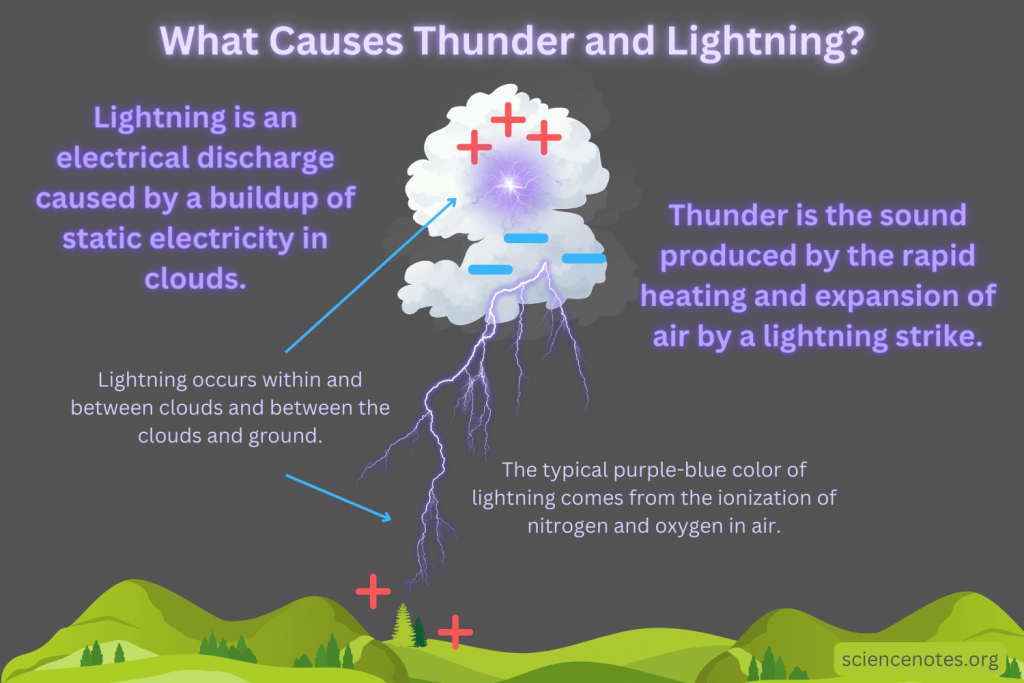
- It is a giant spark of electricity in the atmosphere between clouds, the air, or the ground.
- The thunderclouds possess millions of volts of electrical charge and different polarity within the cloud itself.
- In the early stages of development, air acts as an insulator between the positive and negative charges in the cloud and between the cloud and the ground.
- When the opposite charge builds up enough, this insulating capacity of air breaks down and there is a rapid discharge of electricity known as lightning.
- Lightning can occur between opposite charges within the thunderstorm cloud (intra-cloud lightning) or between opposite charges in the cloud and on the ground (cloud-to-ground lightning).
- The atmospheric conditions are quite conducive for formation of severe thunderstorms in the pre – monsoon season.
Forecasts and Awareness
- The India Meteorological Department currently provides thunderstorm forecasts, while the IITM provides real-time alerts on lightning through its mobile application Damini.
- The app also shares precautionary guidelines during thunderstorms in 23 regional languages, making safety information more accessible.
- The increasing fatalities emphasise the need for creating more awareness among the public on precautions to be taken during lightning attacks.
Source: TH
