


Syllabus: GS2/ Health, GS3/ Environmental Pollution
Context
- Several studies across India have detected per- and polyfluoroalkyl substances (PFAS) in groundwater, surface water, sewage and seawater, raising concerns about drinking-water safety and environmental pollution.
What are Forever Chemicals?
- Forever chemicals, scientifically known as Per- and Polyfluoroalkyl Substances (PFAS), are a large group of synthetic chemicals containing multiple carbon-fluorine bonds.
- Many PFAS are highly resistant to heat, water, oil and natural degradation, allowing them to persist in the environment for long periods.
- Uses: They are used in non-stick cookware, water-resistant textiles, stain-resistant coatings, food packaging, firefighting foams and various industrial products.
- Concerns: Certain PFAS can accumulate in the human body and wildlife, and exposure to some of them has been linked to adverse health effects, including cancer.
- PFAS can contaminate groundwater, surface water and soil, while conventional water treatment methods may not effectively remove them.
Challenges of Removing PFAS from Water
- Resistance to degradation: The strong carbon-fluorine bonds in many PFAS make them difficult to break down through conventional biological and chemical treatment.
- Regulatory Gaps: Under the current IS 10500:2012 standard, India enforces no specific drinking-water limits for PFAS.
- Transformation of precursors: Some precursor compounds can turn into more stable PFAS during water treatment, making contamination difficult to assess.
- Treatment challenges: Activated carbon adsorption, specialised ion exchange and reverse osmosis can remove many PFAS, but their costs, operational requirements and management of contaminated waste remain concerns.
- Source identification: PFAS may enter water from industrial discharge, sewage, landfill leachate and consumer products, making it difficult to identify the exact source of contamination.
Other Causes of Water Contamination
- India’s aquifers show simultaneous contamination with, Arsenic, Fluoride, Nitrate, Uranium, Salinity and Heavy metals.
- North Indian states like Punjab, Haryana, Rajasthan, Delhi, show alarming uranium levels in pre- and post-monsoon samples.
- Central India faces increasing fluoride and nitrate concentrations linked to agricultural intensification, while eastern states continue to struggle with arsenic pockets.
Drivers Behind the Crisis
- Agricultural Pollution: Excessive use of nitrogenous fertilisers leads to nitrate leaching.
- Paddy-wheat monoculture in north India accelerates groundwater depletion, increasing heavy-metal uptake from deeper strata.
- Geogenic Contamination: Fluoride and arsenic contamination partly originate from natural geological formations, but drilling deeper borewells intensifies exposure.
- Anthropogenic Factors: Industrial effluents, untreated sewage, landfill seepage, and peri-urban waste dumping add heavy metals and toxins.
- Weak Groundwater Governance: India still follows the principle that land ownership confers groundwater ownership, enabling unrestricted extraction.
- Fragmented institutional roles and limited monitoring hinder long-term aquifer management.
Constitutional Provisions
- Article 21 of the Constitution guarantees the Right to Life, which includes access to safe drinking water.
- Subhas Kumar v. State of Bihar (1991): The Supreme Court held that the right to live under Article 21 includes the right to enjoy pollution-free water and air.
- A.P. Pollution Control Board II v. Prof. M.V. Nayudu (1999): The court stated that access to safe drinking water is fundamental to life.
- Article 243W empowers Urban Local Bodies to manage water supply, sanitation, and public health.
- Article 47 of the Indian Constitution, part of the Directive Principles of State Policy (DPSP), directs the State to raise the level of nutrition, standard of living, and improve public health.
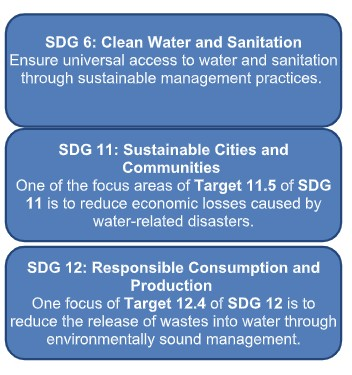
Way Ahead
- The Bureau of Indian Standards has set up a dedicated Working Group on Emerging Contaminants and Forever Chemicals to examine and introduce regulatory limits for PFAS in drinking water.
- CSIR–Indian Institute of Toxicology Research is participating in a UNEP-funded National Implementation Plan to develop baseline data on PFAS in environmental samples and consumer products.
- The Jal Jeevan Mission supports drinking-water quality monitoring and surveillance through state and union territory mechanisms, although PFAS-specific limits are not currently prescribed under IS 10500:2012.
Source: TH
Previous article
News In Brief 15-10-2026
Next article
Women-Led Development and Gender Justice
