


Syllabus: GS3/Economy
Context
- The Confederation of Indian Industry (CII) has unveiled a proposed National Framework for Global Capability Centres (GCCs).
What are Global Capability Centres?
- Global In-house Centres or Captives (GICs) or Global Capability Centres (GCCs), are mainly offshore centres established by global level firms/MNCs to provide various services to their parent organisations.
- These centres operate as internal organisations within the global corporate structure, providing specialised solutions such as IT services, Research and Development (R&D), customer support and other business tasks.
- GCCs have evolved from being cost-saving centres that were largely set up to gain from lower labour costs to becoming strategic hubs that encourage innovation and lead to value creation, over the past couple of decades.
India’s GCC Landscape
- India already hosts more than 1,800 GCCs employing 2.16 million professionals and contributing about $68 billion in direct gross value addition (GVA), which roughly works out as 1.8% of GDP.
- According to the CII framework, by 2030 the number of centres could rise to 5,000, generating $154–199 billion in direct GVA.
- Including indirect and induced effects, the overall impact could touch $470–600 billion.
- Employment potential: By 2030, it could translate into 20–25 million jobs, including 4–5 million high-quality direct roles in areas such as artificial intelligence, engineering R&D, cybersecurity and digital platforms.
Drivers of GCC Growth in India
- Talent Hub: India is known globally for its diverse pool of talent with expertise in domains ranging from IT, engineering, analytics, and finance.
- The availability of a skilled workforce has enabled GCCs to implement high-value and complex projects in India.
- Technological innovations: ML, AI, Internet of Things (IoT) and blockchain are some of the advanced technologies that have been adapted rapidly.
- This in turn has enabled GCCs in India to deliver innovative solutions and digitally transform their parent companies.
- Strategically focused: From being known as a cost-saving centre to becoming a strategic hub, over the years, MNCs have recognised the potential of setting up GCCs in India.
- These centres are now viewed as a strategic asset that enables businesses to drive growth, improve operational efficiency and gain competitive advantages.
- Government support: Various reforms of the Indian government, such as the Digital India Campaign aimed at enabling ease of doing business, have contributed to making a favourable environment in India for the growth of GCCs.
Recommendations by CII
- Investment facilitation: The policy recommends legislatively backed Digital Economic Zones with “plug-and-play physical and digital infrastructure, harmonised regulations and competitive incentives.”
- National Portal: It calls for a National Single Window Portal to provide seamless approvals, supported by a three-tier governance system anchored by a National GCC Council.
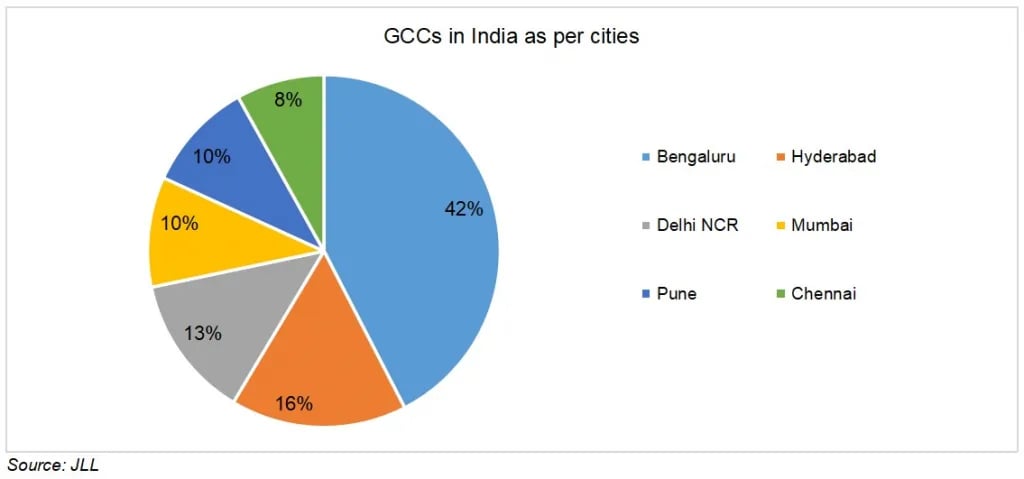
- Expansion: It suggests expanding GCCs beyond India’s six metro hubs.
- Tier-2 and Tier-3 cities such as Coimbatore, Kochi, Indore, Jaipur, and Bhubaneswar are flagged as future growth centres, offering lower costs, rising digital talent and better retention rates.
- Concessional Corporate Tax: The government should consider offering concessional corporate tax rates or tax holidays to GCCs set up within the notified special economic zones.
- It also called for the harmonisation of permanent establishment rules.
- Clarification on Services: The government should also provide clarification on the nature of services being provided by the GCCs, thereby removing them from the category of ‘intermediary’.
- This will help expedite goods and services tax (GST) refunds and detailed scrutiny by authorities on tax refund applications.
- To support the talent requirement of these GCCs, the government’s national policy should aim to develop specialised talent that aligns with the sector’s demands.
Way Ahead
- Global capability centres have transformed the landscape for corporations in India by shifting the perspective of viewing India as a cost-saving medium to a hub of innovation and strategic value.
- GCCs in India have enabled economic growth, job creation and regional development by utilising the country’s skilled workforce, technological advantage, and supportive government policies.
- GCCs can drive sustainable growth and contribute to India’s goal of becoming a US$ 5 trillion economy through continued innovation, collaboration, and investment in talent and infrastructure.
| Confederation of Indian Industry (CII) – Type: Non-government, not-for-profit, industry-led and industry-managed organization. – Established: 1895 (as Engineering and Iron Trades Association; renamed CII in 1992). – Headquarters: New Delhi. – Membership: Over 9,000 direct members (private and public enterprises, SMEs, MNCs) and 300,000 indirect members (through sectoral associations). – Coverage: All sectors of economy across 62 offices in India and 8 overseas offices. – CII charts change by working closely with governments and thought leaders and enhancing efficiency, competitiveness and business opportunities for industry. |
Source: BS
