



India Sends 5 Tonnes of Cowpea Seeds to Fiji
Syllabus: GS1/Places in news
In News
- India sent 5 metric tonnes of black-eyed cowpea seeds to Fiji as humanitarian aid to support agriculture, under its Act East Policy.
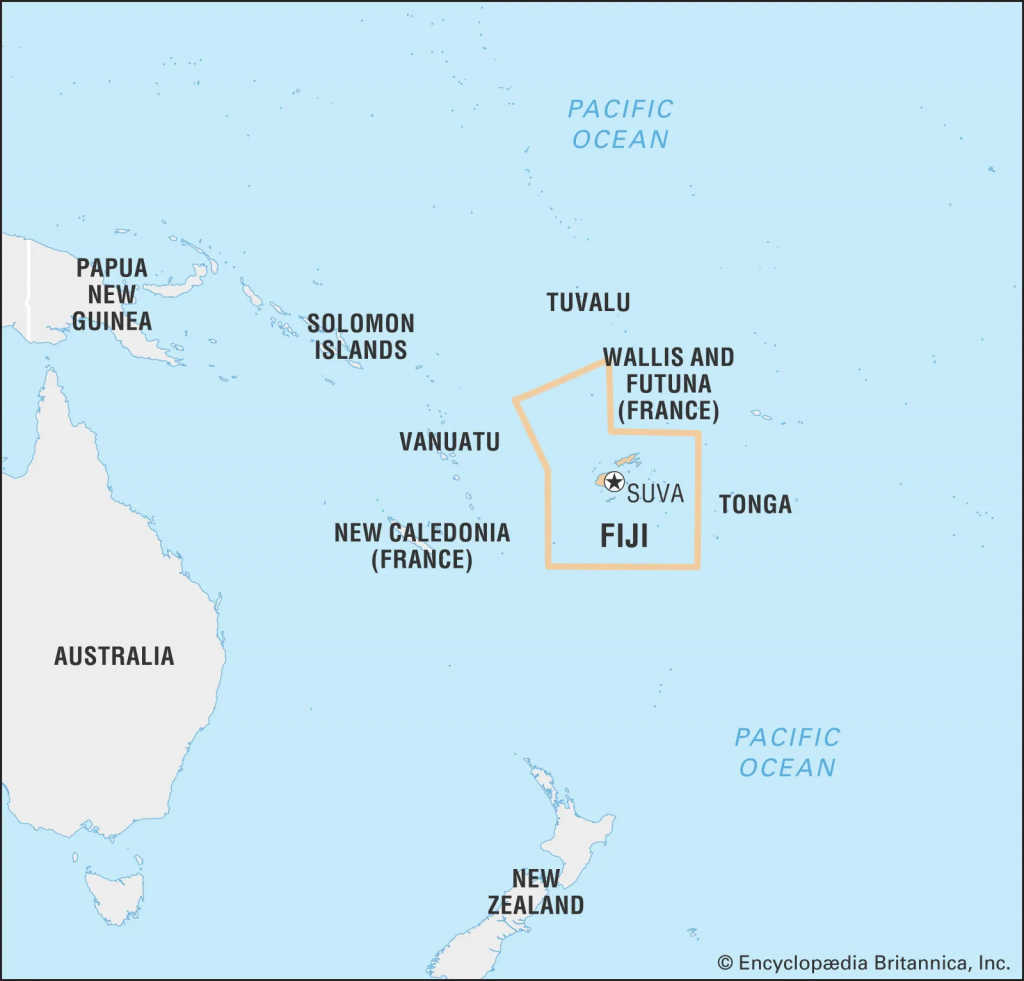
Fiji
- It is an island country in the South Pacific Ocean, surrounding the Koro Sea, about 2,100 km north of Auckland, New Zealand.
- It consists of about 330 islands and 500 smaller islets and reefs.
- The capital, Suva.
- The largest islands, Viti Levu and Vanua Levu, are volcanic, while smaller ones are coral-based.
- The highest point is Mount Tomaniivi (1,324 m).
Source: AIR
Perito Moreno Glacier
Syllabus: GS1/Geography
In News
- Recently, scientists warned of accelerated melting in Argentina’s Perito Moreno Glacier due to temperature rise.
Perito Moreno Glacier(‘White Giant’)
- It is located near the city of El Calafate in the Argentine province of Santa Cruz, and comes under the Los Glaciares National Park which is a UNESCO World Heritage Site.
- It is a 30 km-long glacier located in the Andes mountain range.
- It was formed around 18,000 years ago during the last Ice Age.
- It is a major freshwater source and a tourist attraction, known for dramatic ice calving events since 1917.
Source: IE
Nominations to J&K Assembly Outside the Realm of Elected Government
Syllabus: GS2/ Polity and Governance
Context
- The Union Ministry of Home Affairs has informed the Jammu and Kashmir High Court that the Union Territory’s Lieutenant-Governor can nominate five members to the J&K Legislative Assembly without the state government’s “aid and advice”.
- Critics say this reduces the role of any future elected J&K government, giving the Centre more control.
About
- The Jammu and Kashmir Reorganisation Act, 2019, bifurcated the erstwhile state into two Union Territories (J&K and Ladakh) and outlined legislative structure for J&K.
- The 2023 amendment to act added Sections 15, 15A, 15B to empower the LG to nominate;
- 2 Kashmiri migrants (including 1 woman)
- 1 member from the Pakistan-occupied Jammu & Kashmir (PoJK) community
- 2 women, if not adequately represented.
- The amendment increased Assembly strength from 114 to 119 (excluding 24 seats reserved for PoJK areas).
Source: TH
Ulchi Freedom Shield
Syllabus: GS2/IR
Context
- South Korea and the United States will conduct major joint military drills under Ulchi Freedom Shield.
About
- It is an annual exercise designed to reinforce readiness and cooperation across all domains to defend the Korean Peninsula and the broader region.
- These exercises trace back to the 1960s (Taeguk Exercise) and have evolved through various iterations including Ulchi-Focus Lens and, in 2008, were renamed Ulchi-Freedom Guardian.
- This year’s drill will test upgraded responses to heightened North Korean nuclear threats as well as cutting-edge technologies used in modern wars.
Source: TH
Etalin Hydroelectric Project
Syllabus: GS3/Infrastructure
Context
- An expert panel of the Union Environment Ministry has recommended environmental clearance for the 3,087 MW Etalin hydroelectric project.
About
- Etalin is a large run-of-river project on the Dri and Tangon Rivers.
- The project is located in Arunachal Pradesh’s Dibang valley.
- The Dri River, after meeting Mathun, flows downstream and is joined by Tangon near Etalin village, where it is called Dibang River.
- The project involves construction of concrete gravity dams to divert water through two separate waterway systems.
- The project will be developed by the Satluj Jal Vidyut Nigam (SJVN) Ltd.
Source: IE
Orbiting Carbon Observatories (OCO) Program
Syllabus: GS3/Space
In News
- The Trump administration reportedly asked NASA to shut down Orbiting Carbon Observatories.
Orbiting Carbon Observatory (OCO)
- OCOs are a series of dedicated Earth remote sensing satellites that were designed specifically to observe atmospheric carbon dioxide (CO2) from space in order to better understand the characteristics of climate change.
- Timeline: The first mission, OCO (2009), failed due to a launch vehicle malfunction.
- A replacement, OCO-2, launched in 2014, measures CO₂ levels and tracks photosynthesis in crops.
- In 2019, OCO-3 was sent to the ISS, offering varied observation times compared to OCO-2’s fixed daily schedule, thus enhancing data collection on CO₂ sources, sinks, and crop health.
- Relevance : The OCO missions are crucial for monitoring atmospheric CO₂ globally, helping scientists understand climate change more accurately.
- They revealed unexpected insights, like the key role of boreal forests in CO₂ absorption, and showed how forests can become carbon emitters.
- OCO data also aid in crop monitoring, drought tracking, and yield forecasting, benefiting farmers and policymakers alike.
Source :IE
Otters
Syllabus: GS3/Species in News
Context
- Otters are set to make a comeback at the National Zoological Park in Delhi after more than 20 years.
- The last otter at the zoo died in 2004.
About Otters
- Otters are members of the mammalian family called Mustelidae.
- Otters are mainly active around dawn and dusk, being, what is known as, crepuscular.
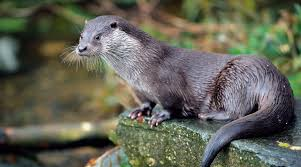
- Distribution: They are found the world over, except in Australia, New Zealand, Madagascar, and other oceanic islands.
- India is home to 3 of the 13 species of otters found worldwide, these are – Eurasian Otter (Lutra lutra); Smooth-coated Otter (Lutra perspicillata) and Small-clawed otter (Aonyx cinereus).
- Habitat: Rivers, lakes, coastal areas, and kelp forests.
- Diet: Carnivorous—eat fish, crustaceans, molluscs, and sometimes small mammals or birds.
- Sea otters are one of the few non-human animals to use tools—they crack open shellfish with rocks.
- Threats: Habitat loss, pollution, and hunting for their fur.
- IUCN Status:
- Smooth-coated otter (Lutrogale perspicillata): Vulnerable.
- Asian Small-Clawed Otter (Aonyx cinereus): Near threatened.
- Eurasian Otter (Lutra lutra): Near Threatened.
Source: IE
Pathaneer
Syllabus: Miscellaneous
Context
- In Tamil Nadu’s Thoothukudi district, palmyra climbers harvest pathaneer.
About Pathaneer
- Pathaneer, also known as palm nectar, is a traditional, refreshing, and sweet beverage made from the sap of palm trees.
- The sap is processed into karupatti (palm jaggery) and panangkarkandu (palm candy).
- It’s a popular drink in South India, Sri Lanka, and other parts of the world.
- Extraction: Pathaneer is typically extracted from the unopened spadices (flower stalks) of coconut or palmyra palms.
- The sap is collected in earthen pots, often with a bit of lime or calcium carbonate added to prevent fermentation.
Source: TH
Previous article
Landmark Study Offers New Insights into What Protects Against Dengue
Next article
LS Passed Indian Ports Bill, 2025
