


Syllabus: GS3/Economy
Context
- The World Bank has released The World Development Report 2026.
About
- It has been published annually since 1978, each report provides in-depth analysis and policy recommendations on a specific and important aspect of development
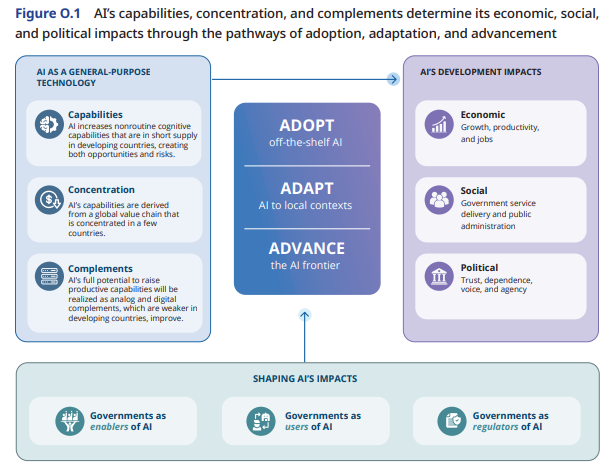
- The 2026 Report offers a clear framework to adopt, adapt, and advance for the road ahead to help countries capture AI’s benefits without wasting scarce resources or deepening dependence on any single supplier.
Major Findings
- Automation Risks: Jobs in high-income countries are more than three times as likely to face automation risk from generative AI as those in low- and middle-income countries.
- Boost in Productivity: AI could boost productivity in more than 16% of existing jobs in developing economies, compared with more than 18% in advanced economies.
- AI in Agriculture: Separate research on agriculture found that AI could improve productivity and resilience, but only with supportive policies, infrastructure and equitable access.
- Challenges:
- Trying to replicate the most sophisticated AI systems too early could prove expensive and ineffective.
- Developing countries still lack many of the basics needed to use AI effectively, including reliable electricity, internet access, data systems, skills and institutions.
- Without addressing these gaps, AI could widen the divide between rich and developing nations and increase inequality within countries.
- Recommendations:
- Countries should first adopt AI tools that are already available, then adapt them for local needs, and only later invest in building advanced AI capabilities of their own.
- Countries should encourage responsible AI practices, apply existing laws to address harms where necessary and build public trust by protecting privacy and preventing bias in AI-powered decision-making.
Source: DTE
Previous article
Rise of India’s Electric Vehicles Ecosystem
Next article
News In Short 06-08-2026
