


Qdenga (TAK-003)
Syllabus: GS2/ Health
Context
- Qdenga, developed by Takeda Pharmaceutical Company, has received clearance from India’s Subject Expert Committee under the Drugs Controller General of India for individuals aged 4–60 years.
What is Qdenga (TAK-003)?
- TAK-003 is a live-attenuated, tetravalent dengue vaccine, containing weakened forms of all four dengue virus serotypes (DENV-1, DENV-2, DENV-3, and DENV-4) to stimulate immunity.
- TAK-003 uses the DENV2 strain as the genomic backbone.
- The World Health Organization prequalified TAK-003 in 2024, recommending it for use in dengue-endemic areas.
- Uneven Serotype Protection:
- High efficacy against DENV-2 and moderate against DENV-1.
- Lower protection against DENV-3 and DENV-4, especially in dengue-naïve individuals.
- Concern: India is witnessing a rise in DENV-3 prevalence.
India’s first indigenous dengue vaccine
- DengiAll is an indigenous, tetravalent, single-dose dengue vaccine candidate being developed by Panacea Biotec in collaboration with the Indian Council of Medical Research (ICMR).
- It is designed to fight all four serotypes and is currently in Phase III trials.
What is Dengue?
- Dengue is a viral infection caused by the dengue virus (DENV), transmitted to humans through the bite of infected mosquitoes.
- DENV is an RNA virus of the Flaviviridae family with four serotypes (DENV-1 to 4).
- Symptoms: High fever, severe headache, pain behind the eyes, muscle and joint pains, nausea, vomiting, swollen glands, rash.
- Transmission: The virus is transmitted to humans through the bites of infected female mosquitoes, primarily the Aedes Aegypti mosquito.
- There is a possibility of maternal transmission of Dengue (from a pregnant mother to her baby), transmission via blood products, organ donation and transfusions.
- Prevention: There is no specific antiviral treatment for dengue, so prevention relies on controlling mosquito populations and raising public awareness.
- The mosquitoes that spread dengue are active during the day. The best way of protection is to protect yourself from mosquito bites.
Source: TH
GLP-1 Therapy
Syllabus: GS2/Health
Context
- Multiple variants of GLP-1 drugs have been recently introduced in the Indian market, and concerns have emerged regarding their on-demand availability.
About
- GLP-1 medication was approved by the United States’ Food & Drug Administration in 2005.
- GLP-1 drugs (glucagon-like peptide-1 receptor agonists) are medications developed to treat both type 2 diabetes and obesity by correcting hormonal imbalance.
- They slow down the gastric emptying, increasing the feeling of fullness.
- This decreases patients’ appetites and thereby leads to their weight loss.
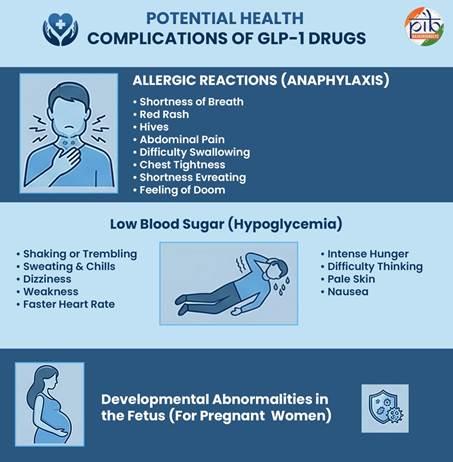
- To ensure ethical pharmaceutical practices in the supply chain of GLP-1, the Drug Controller General of India has intensified its regulatory surveillance against the drug’s unauthorised sale and promotion.
- In India, the drug can be prescribed only by endocrinologists, internal medicine specialists and cardiologists.
Source: PIB
Pradhan Mantri Awaas Yojana – Gramin (PMAY-G) Completed 10 Years
Syllabus: GS3/ Economy
In News
- PMAY-G completes 10 years of implementation in 2026, marking a decade of India’s flagship rural housing mission.
What is PMAY-G?
- Aim: Provide “Housing for All” in rural areas — financial assistance to eligible rural households, including houseless families and those living in zero, one, or two-room kutcha houses, to construct pucca homes with basic amenities.
- Beneficiary Selection: Using housing deprivation parameters from the Socio-Economic and Caste Census (SECC), 2011, verified by Gram Sabhas.
- Funding Pattern: 60:40 (Centre:State) in plain areas; 90:10 for North-Eastern and Himalayan states.
- Nodal Ministry: Ministry of Rural Development (MoRD).
- Financial Assistance:
- Minimum unit size of 25 sq. m.
- ₹1.20 lakh in plain areas; ₹1.30 lakh in hilly/North-Eastern states.
- Additional ₹12,000 for toilet construction via convergence with Swachh Bharat Mission.
Reforms in the Scheme
- Direct Benefit Transfer (DBT): Financial assistance released directly to beneficiaries’ bank accounts, eliminating middlemen.
- Geo-tagging: Time and date-stamped photographs uploaded at every construction stage for real-time monitoring.
- AI-driven monitoring: AI and Machine Learning tools for anomaly detection; Aadhaar face authentication (including eye-blink detection) to verify beneficiaries and prevent fraud.
- Village-level Functionaries: Each sanctioned house is tagged to a local functionary who follows up with the beneficiary.
- Social Audits: Every Gram Panchayat conducts a formal social audit at least once a year.
Source: PIB
Jan Vishwas (Amendment of Provisions) Bill, 2026
Syllabus: GS3/ Economy
In News
- The Lok Sabha passed the Jan Vishwas (Amendment of Provisions) Bill, 2026 with a voice vote.
What is the Jan Vishwas Bill?
- A legislative reform initiative that shifts India’s regulatory culture from a punitive, imprisonment-based model to a civil penalty and trust-based framework for minor, technical, and procedural offences.
- It reflects the principle that citizens and businesses should not face criminal sanctions for minor non-compliance.
Key Provisions
- Decriminalisation:
- Replaces imprisonment for minor, technical, or procedural defaults with civil and administrative enforcement mechanisms — monetary penalties or warnings.
- Example: Under the Drugs and Cosmetics Act, 1940, imprisonment for sale of cosmetics in contravention of the Act is replaced with civil penalty.
- Adjudication Mechanism:
- Provides for appointment of Adjudicating Officers and establishment of Appellate Authorities for speedy, time-bound enforcement — reducing litigation burden on courts while ensuring principles of natural justice.
- Graduated Response:
- Warnings or advisories for first-time or second-time lapses before imposing fines — avoiding immediate criminalisation of minor infractions.
- Dynamic Monetary Penalties:
- Fines and penalties shall be increased by 10% of the minimum amount after every 3 years — creating progressive deterrence while keeping penalties proportionate.
- Colonial-era Provisions Removed:
- Outdated and irrelevant provisions — including those under laws like the Cattle Trespass Act, 1871 — have been omitted.
Source: PIB
RBI Tightens Forex Rules, Bans Non-deliverable Re Contracts
Syllabus: GS3/Economy
Context
- The Reserve Bank of India (RBI) has directed authorised dealer (AD) banks to discontinue offering non-deliverable derivative contracts involving the Indian rupee to both resident and non-resident users.
About
- Aim: Strengthening oversight in the foreign exchange derivatives market.
- It is seen as part of a broader effort to curb speculative activity and enhance transparency in currency markets as the rupee has come under pressure in the wake of the West Asia conflict.
- New Guidelines:
- Authorised dealers may continue to offer deliverable foreign exchange derivative contracts, provided these are strictly used to meet genuine hedging requirements of clients.
- To ensure compliance, dealers have been granted the authority to request any necessary documentation or information from clients to verify the legitimacy and purpose of such transactions.
- The measures will bring greater discipline to the forex derivatives segment, ensuring that they are used for risk management rather than speculative purposes.
Forex Derivatives
- Forex Derivatives (Foreign Exchange Derivatives) are financial contracts whose value is derived from the exchange rate of one currency against another.
- They are mainly used to hedge risk, speculate, or arbitrage in foreign exchange markets.
- Specific foreign exchange derivatives include: foreign currency forward contracts, foreign currency futures, foreign currency swaps, currency options, and foreign exchange binary options.
- These instruments are called derivatives because their value is derived from an underlying asset, a foreign currency.
Source: IE
Ammonium Nitrate
Syllabus: GS3/ S&T
In Context
- Bharat Coal Gasification and Chemicals Ltd. and Mahanadi Coalfields Ltd. recently signed an agreement for a Coal to Ammonium Nitrate Project.
What is Ammonium Nitrate?
- A white, crystalline, water-soluble solid, not found in nature; synthetically produced by reacting ammonia with nitric acid.
- It is hygroscopic in nature and under high heat, it decomposes explosively, releasing nitrogen dioxide (NO₂).
- Example: 2015 Tianjin (China) explosion and 2020 Beirut port explosion.
- One of the world’s most widely used chemicals serving dual roles as a fertiliser and an industrial explosive.
- It is listed as a hazardous chemical under Hazardous Chemicals Rules, 1989.
Source: PIB
E-3 Sentry AWACS
Syllabus: GS3/ Defence
Context
- Iran’s missile and drone strike on Saudi Arabia’s Prince Sultan Air Base has reportedly destroyed a US E-3 Sentry AWACS aircraft.
About E-3 Sentry (AWACS)
- The E-3 Sentry is an airborne early warning and control aircraft developed by Boeing for advanced surveillance and battle management.
- The aircraft is commonly known as AWACS, which stands for Airborne Warning and Control System.
- It is equipped with a distinctive rotating radar dome mounted above its fuselage that enables long-range detection and tracking of aerial targets.
Airborne Warning and Control System in India
- The Indian Air Force (IAF) operates three Israeli-origin Phalcon Airborne Warning and Control Systems (AWACS) mounted on Russian Ilyushin Il-76 transport aircraft.
- These systems, known as “eyes in the sky,” provide 360-degree radar coverage, with capabilities to detect aircraft, cruise missiles, and drones at ranges of 370–500 km.
- The NETRA Airborne Early Warning and Control (AEW&C) system is an indigenous, multi-sensor platform developed by DRDO, primarily designed for aerial surveillance, target identification, and command-and-control capabilities.
- It is based on the Brazilian Embraer ERJ 145 aircraft.
Source: HT
Rice’s Whale
Syllabus: GS3/Environment
Context
- The US expansion of oil and gas drilling could push the Rice Whale to extinction.
Rice’s Whale (Balaenoptera ricei)
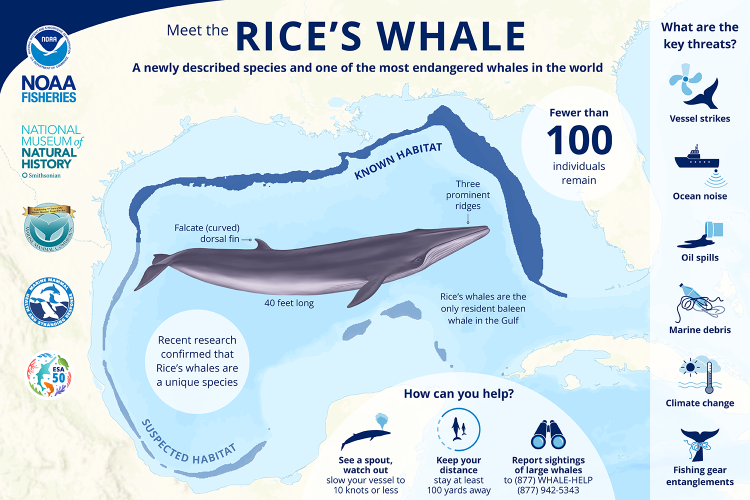
- Belonging to the baleen whale family Balaenopteridae, it is one of the rarest whale species, with fewer than 100 individuals remaining.
- Range and Habitat: It is endemic to the northern Gulf of Mexico and lives year‑round within this region without undertaking long migrations.
- Diet: Primarily feeds on small fish and squid.
- Threat: Oil drilling, vessel strikes, and climate change.
- Conservation status: It is listed as Critically Endangered on the IUCN Red List.
Do you know?
- The International Whaling Commission (IWC) was established in 1946 as the global body responsible for management of whaling and conservation of whales.
- Currently, the IWC has more than 80 member countries, including India.
Source: TH
Next article
India recorded 65 Internet Shutdowns in 2025
