


Sangita Kalanidhi Award
Syllabus: GS1/Art and Culture
Context
- Sangita Kalanidhi award was conferred on violinist R.K. Shriramkumar.
About
- The Sangita Kalanidhi award was instituted in 1942 by the Madras Music Academy.
- The award is considered the highest recognition for excellence in Carnatic music and is often regarded as the “Nobel Prize” of Carnatic music.
- The award comprises a gold medal and a birudu patra (citation).
- Since 2005, the Sangita Kalanidhi awardees have also received the MS Subbulakshmi Award instituted by The Hindu.
M.S. Subbulakshmi’s Legacy
- M.S. Subbulakshmi was an iconic Carnatic singer, she was the first Indian musician to receive the Ramon Magsaysay award in 1974 and the first Indian to perform at the United Nations General Assembly in 1966.
- She was the first musician to be awarded the Bharat Ratna, India’s highest civilian award, in 1998.
About Madras Music Academy
- The Music Academy, emerged as an offshoot of the All India Congress Session held in Madras in December 1927.
- It was conceived to be the institution that would set the standard for Carnatic music.
- One of the most notable events organized by the Music Academy is its annual music and dance festival.
- It also confers the various awards such as the Sangita Kalanidhi, Sangita Kala Acharya, TTK, and Musicologist awards for the year.
Source: TH
Alo Prabhat: Dance of the Dawn
Syllabus: GS1/ Culture
Context
- Dong, India’s easternmost village in Anjaw district of Arunachal Pradesh, celebrated India’s first sunrise of 2026 with “Alo Prabhat: Dance of the Dawn”.
About ‘Alo Prabhat: Dance of the Dawn’
- The sunrise was welcomed with a cultural performance titled “Alo Prabhat: Dance of the Dawn.”
- The performance drew from the cultural traditions of the indigenous Meyor and Mishmi communities, with traditional chants, songs and indigenous rhythms using traditional musical instruments.
Source: TH
Nimesulide
Syllabus: GS2/Health
In News
- The government has prohibited the manufacturing, sale and distribution of all oral formulations containing Nimesulide above 100 mg with immediate effect.
Nimesulide
- It is a non-steroidal anti-inflammatory drug (NSAID) which is widely used in the treatment of acute pain.
- It works by blocking the release of certain chemical messengers that cause pain and inflammation (redness and swelling).
Source :Air
Thorium
Syllabus: GS3/ Science and Technology
Context
- Chicago-based Clean Core Thorium Energy (CCTE) has partnered with NTPC Ltd to deploy thorium-based nuclear fuel in India’s existing PHWRs, marking a new phase in India–US civil nuclear cooperation.
About
- CCTE has developed a fuel that blends thorium with HALEU (high-assay low-enriched uranium), enabling its use in India’s existing Pressurised Heavy Water Reactors (PHWRs).
- The fuel, called ANEEL (Advanced Nuclear Energy for Enriched Life), allows large-scale thorium deployment in PHWRs, enhancing energy security, reactor safety, and proliferation resistance
What is Thorium?
- Thorium is a radioactive metallic element found naturally in the Earth’s crust.
- It is fertile, not fissile, meaning it cannot sustain a nuclear chain reaction on its own.
- Thorium Availability in India: Thorium is primarily extracted from monazite sands. India possesses one of the largest thorium reserves globally.
- Major deposits are found in:
- Coastal sands of Kerala, Tamil Nadu, Odisha, Andhra Pradesh, Maharashtra and Gujarat.
- Inland riverine sands of Jharkhand and West Bengal.
Significance of Thorium for India
- Resource Advantage: India has limited uranium but abundant thorium reserves, mainly in coastal and riverine sands.
- Energy Security: Reduces dependence on imported nuclear fuel.
- Nuclear Behaviour: Thorium is not fissile like uranium; it is fertile and converts into uranium-233 after absorbing neutrons, which can then sustain nuclear fission.
- Strategic Fit: Integral to India’s long-term three-stage nuclear power programme.
Source: IE
Land Stack
Syllabus: GS3/ Agriculture
In News
- Under the Digital India Land Record Modernisation Programme (DILRMP), the Minister of State for Rural Development and Communications launched the ‘Land Stack’ in the Pilot Locations of Union Territory of Chandigarh and Tamil Nadu.
About Land Stack
- The Land Stack is envisaged as an integrated, GIS-based digital platform inspired by the best practices in countries like Singapore, the UK, and Finland.
- Benefits of Land Stack:
- The Land Stack portal enables informed decision-making by citizens through integrated access to land-related information.
- It enhances citizen convenience, transparency and trust.
- It reduces the risk of inadvertent purchase of unauthorised or non-compliant properties.
- It improves inter-departmental coordination and supports data-driven governance.
- It represents a significant e-Governance reform in land administration.
Source: PIB
India Allows Banks to Sponsor Pension Funds Under NPS
Syllabus: GS3/ Economy
Context
- The Pension Fund Regulatory and Development Authority (PFRDA) has granted in-principle approval to banks to sponsor and independently set up pension funds under the National Pension System (NPS).
About
- Eligibility Conditions for Banks:
- Compliance with RBI-aligned norms.
- Also banks will have to meet eligibility criteria linked to networth, market capitalisation, and prudential soundness.
- Current Landscape: Currently, banks serve as points of presence, handling subscriber registrations, contributions, and other system services.
- At present, there are 10 registered pension funds under PFRDA.
- The regulator also revised the Investment Management Fee structure for pension funds starting April 1, 2026.
National Pension System (NPS)
- The National Pension System (NPS) is a market-linked, defined-contribution pension scheme launched by the Government of India.
- The Pension Fund Regulatory and Development Authority (PFRDA) regulates and administers NPS under the PFRDA Act, 2013.
- Investment: Funds are invested across four asset classes: Equity (max 75%), Corporate Bonds, Government Securities, and Alternate Assets (max 5%).
- NPS is available to all the citizens of India and offers different models depending on the following user segments:
- All Central Government employees joining on or after January 1, 2004, are covered under the NPS scheme, except for those in the armed forces and are also extended to the employees of Central Autonomous Bodies from the said date. It is also available to all State Government employees/employees of State Autonomous Bodies, if the respective State/UT opted for it.
- NPS can be voluntarily adopted by the corporations for their employees and contributions are made to the NPS account as per the terms of employment.
- NPS voluntary model is available to all the citizens of India including those residing abroad, between the age of 18 and 70 years.
Source: TH
BSNL Launches Voice over WiFi (VoWiFi)
Syllabus: GS3/ Science & Technology
In News
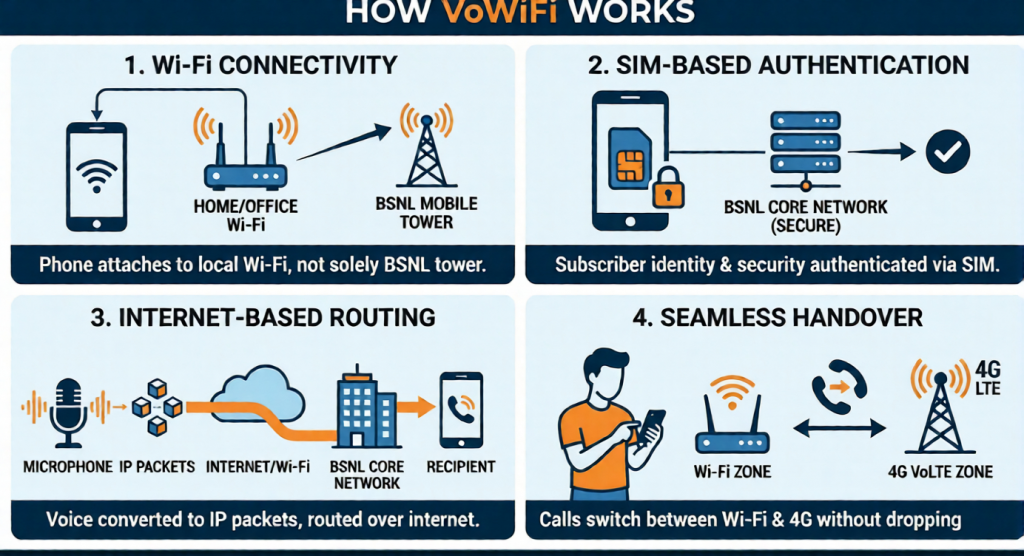
- State-owned telecom operator Bharat Sanchar Nigam Limited (BSNL) has launched Voice over WiFi (VoWiFi) services nationwide across all telecom circles, allowing users to make voice calls and send SMS over Wi-Fi networks.
What is VoWiFi?
- Voice over WiFi (VoWiFi) is a technology that enables users to:
- Make and receive voice calls and SMS using a Wi-Fi network instead of a mobile tower.
- Use the same mobile number and default phone dialer.
- Operate without any third-party app.
- It is built on IMS (IP Multimedia Subsystem) architecture, ensuring carrier-grade call quality and security.
Source: PIB
Secondary Pollutants
Syllabus: GS3/ Environment
In News
- Recent analysis by the Centre for Research on Energy and Clean Air (CREA) shows that secondary pollutants now contribute nearly one-third of Delhi’s annual PM2.5 load.
What are secondary pollutants?
- Secondary pollutants are not emitted directly.
- They are formed in the atmosphere when primary pollutants (gaseous precursors) undergo chemical reactions.
- These reactions depend on sunlight, humidity, temperature, and wind conditions.
- Unlike direct emissions, they accumulate over time and space, often far from the original source, making regulation difficult.
Types
- Inorganic aerosols: Ammonium sulfate (from SO2 + NH3), ammonium nitrate (from NOx + NH3).
- Organic aerosols: Secondary organic aerosols (SOA) from volatile organic compounds (VOCs) oxidation.
- Ground-level ozone: From NOx and VOCs photochemical reactions.
Source: TH
Ancient Marathi literature Reveals Savannas are not Degraded Forests
Syllabus: GS3/Environment
Context
- As per the study of medieval Marathi literature Savannas in western Maharashtra are far older than commonly believed and should not be treated as degraded forests.
Savannas
- A savanna is typically defined as a mixed tree-grass system with scattered trees amidst a continuous layer of grass.
- They are characterized by widely spaced trees, a continuous grass layer, and a distinct wet and dry season.
- It is a type of ecosystem found in tropical regions.
- Unlike dense forests, trees in the savanna are spread out, allowing plenty of sunlight to reach the ground, which supports a wide range of grasses and herbivores.
- Savannas occur where there isn’t enough rain to support a tropical rainforest, but there is enough to keep it from becoming a desert.
- Some examples of savanna habitat are the East African plains, the South American pampas, and the open woodlands of northern Australia.
- Savannas in India: Deccan Plateau: Rain-shadow regions of Maharashtra, Telangana, and Karnataka (Semi-arid).
- Terai Region: The Terai-Duar Savanna and Grasslands at the foothills of the Himalayas are highly productive tall-grass ecosystems (home to the Rhinoceros and Tiger).
- Western India: Parts of Rajasthan and Gujarat (transitioning to Thorn Forests).

Source: TH
India-Pakistan Exchange List of Nuclear Installations and Civilian Prisoners
Syllabus: GS2/ International Relations, GS3/ Internal Security
Context
- India and Pakistan exchanged lists of nuclear installations that cannot be attacked in the event of hostilities and lists of prisoners in each other’s custody.
About
- Exchange of Nuclear Installations list: Pakistan and India exchanged the lists of their respective nuclear installations pursuant to the agreement on Prohibition of Attacks against Nuclear Installations and Facilities between Pakistan and India signed on 31st December 1988.
- The pact mandates the two countries to inform each other of nuclear installations and facilities on the first of January of every year.
- This marks the 35th consecutive exchange of such lists between the two countries, with the first exchange having taken place on January 1, 1992.
- Exchange of Prisoners’ Lists: The two countries exchanged a list of prisoners under the consular access agreement signed on May 21, 2008.
- The lists include details of civilians and fishermen lodged in each other’s custody.
Source: TH
Previous article
Expansion of India’s Lab Grown Diamond Market
Next article
Urban Wastewater Management (UWM)
