


Syllabus: GS3/ Environment
In Context
- The white paper, “Transforming India’s Blue Economy”, lays out a strategic vision for unlocking the potential of India’s vast marine resources as a pivotal contributor to national development by 2035.
What is the Blue Economy?
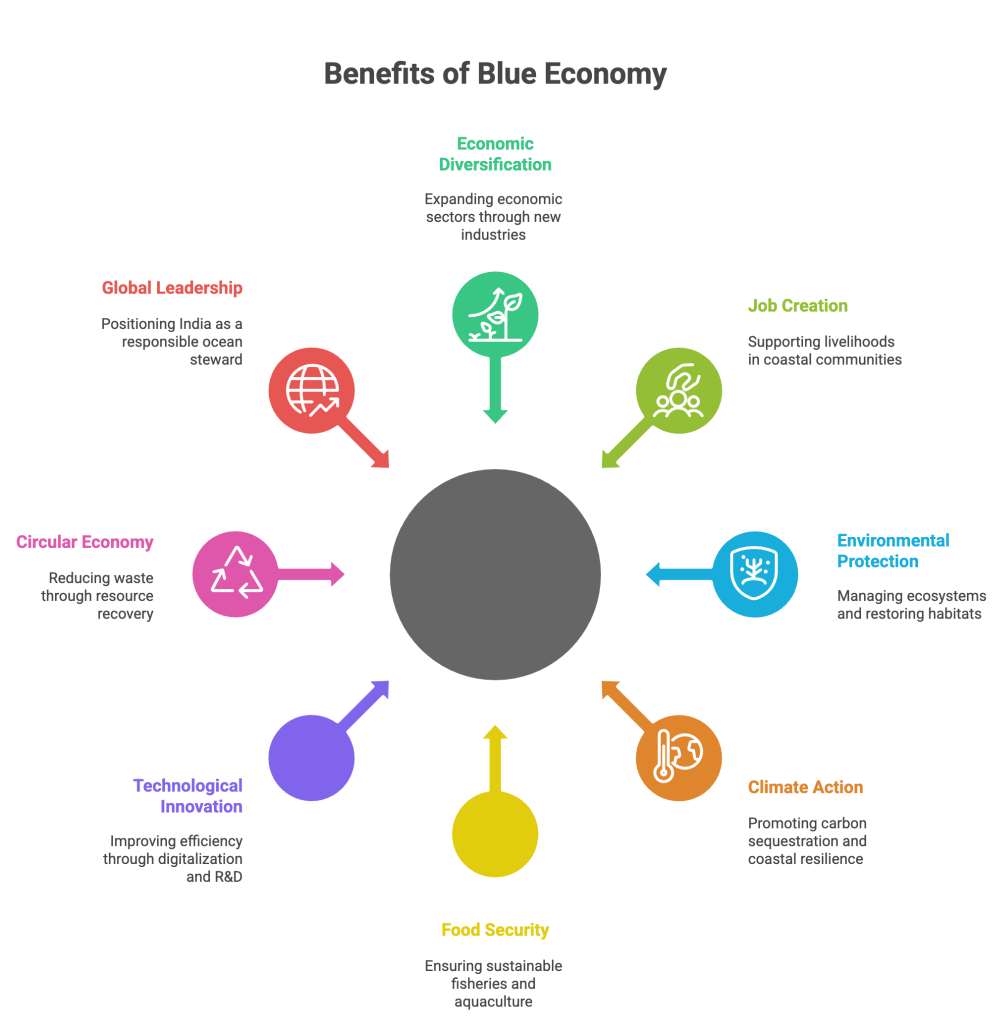
- The Blue Economy refers to the sustainable use of ocean resources for economic growth, improved livelihoods, and jobs while preserving the health of ocean ecosystems.
- It encompasses a range of ocean-linked activities—fisheries, aquaculture, shipping, ports, marine biotechnology etc.
Models of Blue Economy
- Community-led Seaweed Cultivation (Odisha): Seaweed farming diversifies coastal livelihoods, provides supplementary income, absorbs dissolved CO₂ (mitigating climate change), and improves water quality for over 10,000 households.
- Smart Port Transformation (Kochi): Introduction of digital twin technology increases operational efficiency, reduces vessel wait times, optimizes resources, and enhances sustainability through precise environmental monitoring.
- Green Ship Recycling (Alang, Gujarat): Upgrades to international standards (Hong Kong Convention) for shipbreaking recover steel and metals efficiently and ensure safe, environmentally sound hazardous waste management.
Key Initiatives of India’s Blue Economy
- Deep Ocean Mission (DOM): Explore polymetallic nodules, deep sea bioresources, and develop human submersibles for mapping and sustainable extraction within India’s exclusive economic zone.
- Sagarmala Programme: Modernize ports, improve logistics, and develop new coastal economic zones.
- Blue Economy 2.0: Restoring coastal ecosystems (mangroves, coral reefs), climate-proofing coastlines, and promoting sustainable aquaculture and mariculture, notably seaweed farming.
- Pradhan Mantri Matsya Sampada Yojana (PMMSY): Modernizes fisheries, encourages sustainable practices, and supports millions of fishers.
Source: PIB
Previous article
Surrogacy (Regulation) Act, 2021
Next article
News In Short 01-08-2025
