


New Tree Snake Species Discovered in the Western Ghats
Syllabus: GS3/Environment
Context
- Scientists have described a new tree snake species, Dendrelaphis beddomei, from the Western Ghats, resolving its taxonomic confusion with the large-eyed bronzeback (Dendrelaphis grandoculis).
About Dendrelaphis beddomei
- It has been named after Colonel Richard Henry Beddome (1830–1911), known for his contributions to the study of biodiversity in the Western Ghats. Its proposed common name is Beddome’s bronzeback.
- Identification: It has a red or pink tongue, unlike the black or dark-grey tongue of the large-eyed bronzeback. It also has white stripes or spots along its lower body.
- Habitat: It occurs on the western slopes of the Western Ghats, mainly in secondary forests, riverine forests and agricultural landscapes, including rubber and areca nut plantations.
- Threats: It is a diurnal, tree-dwelling snake, and roadkill is a major threat.
- Conservation Status: Researchers suggest that it may qualify as Near Threatened under IUCN criteria. However, it has not received an official IUCN assessment.
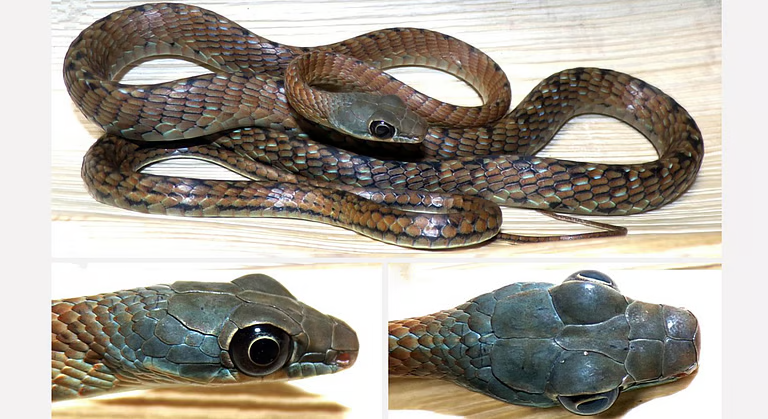
Source: DTE
National Overseas Scholarship Scheme
Syllabus:GS2/Governance
In News
The National Overseas Scholarship Scheme has extended international higher education opportunities to Scheduled Tribe students across India.
National Overseas Scholarship Scheme
- The National Overseas Scholarship (NOS) Scheme for Scheduled Tribe (ST) students provides financial assistance to meritorious tribal students seeking Master’s and PhD degrees at reputed universities abroad.
- It is operated by the Ministry of Tribal Affairs as a Central Sector Scheme since 1954-55.
- It is implemented through Indian Embassies and Missions abroad under the Ministry of External Affairs.
- Eligibility framework:
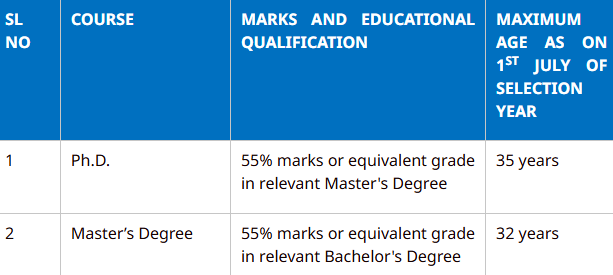
- Only one child from the same family is eligible for the scholarship, subject to self-certification by the applicant.
- Each candidate can avail of the scholarship only once and cannot receive another award at the same or higher level under the scheme.
- Income Criteria: The applicant’s annual family income from all sources must not exceed ₹6 lakh to be eligible for the scholarship.
Features
- The Scheme enables eligible ST students to pursue higher education abroad by providing financial support for tuition, living expenses, travel, and other approved costs.
- It offers 20 fresh scholarships annually for Master’s and PhD programmes.
- 17 scholarships are allocated to Scheduled Tribe candidates
- 3 are reserved for Particularly Vulnerable Tribal Groups (PVTGs).
- It places particular emphasis on promoting women’s participation in international higher education, with 30% of scholarships earmarked for female candidates.
- It provides financial assistance to ST students throughout their studies abroad.
- It offers an annual maintenance allowance of USD 15,400 (US Dollars) or GBP 9,900 (British Pounds Sterling) for students pursuing courses in the United States and the United Kingdom, respectively
- The scholarship also covers tuition fees and other compulsory, non-refundable fees charged by educational institutions, along with actual visa fees and applicable poll taxes. Medical insurance premiums are reimbursed at actual rates, subject to assessment by the respective Indian Embassy or Mission. Incidental journey expenses of up to USD 20 or its equivalent in Indian rupees are permissible.
Latest Developments
- From the 2026-27 academic year, it supports Master’s and PhD studies at foreign universities and institutions ranked among the top 1,000 in the latest QS (Quacquarelli Symonds) World University Rankings.
Source : PIB
Elias 2-24 b planet
Syllabus:GS3/Space
In News
Astronomers have confirmed the existence of a Jupiter-sized planet, Elias 2-24 b
that is less than a million years old.
Elias 2-24 b
- Elias 2-24 b is a gas giant exoplanet that orbits a K-type star.
- It is roughly as massive as Jupiter and orbits a star about 450 light-years from Earth.
- It was observed using the coronagraph at the W. M. Keck Observatory in Hawaii, which collaborates with NASA under a cooperative agreement.
- It is the youngest known planet, offering scientists a rare opportunity to observe a world in the early stages of its formation.
Source : Air
Measles Elimination
Syllabus:GS2/Health
In News
According to recent data, India is unlikely to fulfil the WHO’s regional aim to eradicate measles and rubella by 2026 despite tremendous progress in immunisation.
Measles
- It is a preventable, highly contagious, acute febrile viral illness that remains an important cause of global morbidity and mortality, particularly in Africa and Southeast Asia.
- Transmission: Measles is one of the world’s most contagious diseases, spread by contact with infected nasal or throat secretions (coughing or sneezing) or breathing the air that was breathed by someone with measles.
- The virus remains active and contagious in the air or on infected surfaces for up to two hours.
- Impacts: It can lead to life-threatening complications, like brain inflammation and pneumonia.
- It can cause severe disease, complications, and even death.
- It can affect anyone but is most common in children.
- It infects the respiratory tract and then spreads throughout the body.
- Symptoms include a high fever, cough, runny nose, red eyes, and a characteristic generalized rash.
Findings of Latest Data
- According to data from WHO-UNICEF, India has achieved 98 per cent coverage for the first dose and 95 per cent for the second dose of the measles-containing vaccine and has, for the first time since 2001, exited the list of the 10 nations with the largest number of unvaccinated children.
- 65,150 measles cases in 2023 fell to 17,995 in 2025.
- However, there remain huge hurdles in the form of unvaccinated children in distant and underprivileged communities, vaccination reluctance, and disinformation.
- WHO seeks to stop indigenous transmission of measles by 2029 and verify its extinction by 2032.
Source : IE
RBI Relaxes CRR Maintenance Requirement to 90%
Syllabus: GS3/ Economy
Context
- The Reserve Bank of India (RBI) eased the minimum daily maintenance requirement for the cash reserve ratio (CRR) from 99% to 90%.
About Cash Reserve Ratio (CRR)
- It is the proportion of a bank’s Net Demand and Time Liabilities (NDTL) that it is required to maintain as cash balance with the RBI. Banks cannot use these reserves to invest or lend to customers.
- Regulatory Role: It is used by the RBI to regulate liquidity in the banking system, control inflationary pressures and maintain monetary stability.
- A high cash reserve ratio may lead to higher interest rates on loans. With less money available to lend, banks may charge more to borrowers to compensate for the reduced loanable funds.
- With the prescribed CRR currently at 3% of a bank’s net demand and time liabilities (NDTL), banks will now have greater flexibility in managing their daily cash balances, while continuing to meet the overall fortnightly requirement.
Source: TH
Stealth Frigate Vindhyagiri
Syllabus: GS3/Defence
Context
- Vindhyagiri was delivered to the Indian Navy, marking the successful culmination of Project 17A ship deliveries.
About Vindhyagiri
- It is named after the Vindhyagiri mountain range in Karnataka
- It is the seventh and final ship of the Nilgiri class.
- It is a reincarnation of the erstwhile INS Vindhyagiri, a Leander-class frigate, that was part of the Indian Navy fleet from 1981 to 2012.
- Built by: Garden Reach Shipbuilders and Engineers Ltd (GRSE), Kolkata.
Project 17A (Nilgiri-class Programme)
- Project 17A is the follow-on class to the Project 17 (Shivalik-class) frigates.
- It includes 7 stealth frigates:
- 4 being built by Mazagon Dock Shipbuilders Limited (MDL), Mumbai;
- 3 by Garden Reach Shipbuilders & Engineers (GRSE), Kolkata.
- The warships have a displacement of 6,670 tonnes, are 149 metres long, can reach a top speed of 28 knots, and carry 225 personnel.
- Key Features:
- Stealth capabilities: Advanced design features enhance stealth, survivability and combat effectiveness.
- Multi-mission capability: Designed for operations across:
- Anti-Surface Warfare (ASuW).
- Anti-Air Warfare (AAW).
- Anti-Submarine Warfare (ASW).
- Indigenous content: Around 75% indigenous content, reflecting growing domestic shipbuilding capabilities.
Source: TH
Chandrayaan-5 Mission
Syllabus: GS3/Space
Context
- The Japan Aerospace Exploration Agency (JAXA) has showcased the prototype of the lunar rover for the upcoming Chandrayaan-5 mission.
About Chandrayaan-5 (LUPEX)
- International Collaboration: Also known as the Lunar Polar Exploration (LUPEX) mission, it is a collaborative mission between ISRO and JAXA, with scientific contributions from the European Space Agency (ESA) and NASA.
- Mission Components: JAXA is developing the approximately 350-kg rover, equipped with seven scientific instruments, while ISRO is developing the lander.
- Scientific Objectives:
- Study lunar surface temperatures and geological features.
- Detect water and water ice on and beneath the lunar surface.
- Conduct surface surveys to identify suitable drilling sites and analyse lunar soil (regolith) samples from depths of up to 1.5 metres.
- Launch: The mission is scheduled for 2028 aboard Japan’s H3 rocket from the Tanegashima Space Centre.
- Mission Life: It is designed to operate for three and a half months after landing, with a possible extension to one year.
Source: IE
Previous article
Cotton Sector of India
Next article
News In Brief 28-11-2026
