


Syllabus: GS3/Economy; Science & Technology
Context
- India’s growing emphasis on critical mineral auctions has raised an important policy question i.e. whether securing mineral deposits can ensure reliable supplies of processed materials for domestic industries.
About Critical Minerals and Their Significance
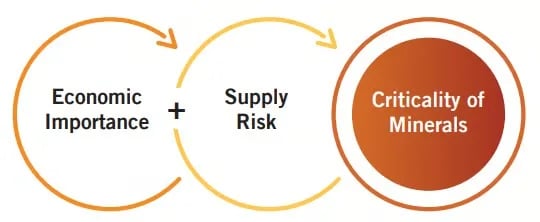
- Critical minerals are minerals essential for economic development, advanced technologies and national security, whose supply may face disruption due to geographical concentration, limited substitutes or geopolitical risks.
- India has identified 30 critical minerals, including lithium, cobalt, nickel, graphite and rare earth elements (REEs).
- Their significance includes:
- Clean Energy Transition: Lithium, cobalt and nickel are important battery materials, while rare earths are used in electric vehicle motors and wind turbines.
- Strategic Security: Gallium, germanium, titanium and other minerals support defence, aerospace, electronics and semiconductor industries.
- Industrial Competitiveness: Reliable mineral supplies are essential for domestic manufacturing, technological advancement and the Atmanirbhar Bharat initiative.
- Economic Resilience: Diversified supply chains reduce exposure to export restrictions, price fluctuations and geopolitical tensions.
India’s Expanding Critical Minerals Policy
- India has shifted from a mining-focused approach towards securing the entire mineral value chain.
- The MMDR Amendment Act, 2023 empowered the Central Government to auction mining leases and composite licences for 24 specified critical and strategic minerals.
- India approved the National Critical Mineral Mission (NCMM) with a proposed outlay of ₹34,300 crore over seven years, comprising ₹16,300 crore in government expenditure and ₹18,000 crore in expected investments by public sector undertakings and others in January 2025.
- It targets 1,200 domestic exploration projects during 2024–25 to 2030–31, alongside overseas mineral acquisition, processing, recycling and strategic stockpiling.
Issues and Gaps in India’s Critical Minerals Policy
- Limited Processing and Refining Capacity: Mining provides raw ore, not necessarily industry-ready materials. Minerals require beneficiation (removing impurities), chemical processing and refining before manufacturers can use them.
- According to the IEA’s Global Critical Minerals Outlook 2026, the leading refining country’s average market share, excluding rare earths, reached 72% in 2025. China dominates refining for several key minerals.
- India therefore risks remaining import-dependent despite possessing mineral resources.
- Delays in Developing Domestic Mines: Land acquisition, environmental clearances, inadequate infrastructure and high investment requirements can delay mining projects. Uncertain mineral quality and commercial viability further discourage investors.
- Underdeveloped Recycling Ecosystem: Recycling can recover minerals from discarded batteries, electronic waste, mine tailings, fly ash and red mud, potentially supplying industries faster than new mines.
- According to NITI Aayog (2026), India’s estimated e-waste generation could increase from 6.19 million tonnes in 2024 to 14 million tonnes by 2030.
- However, fragmented waste collection, informal recycling, weak traceability and inconsistent recovery quality restrict its potential.
- Limitations of Strategic Stockpiling: Strategic reserves can protect industries against temporary supply disruptions and export restrictions. However, stockpiling cannot replace domestic processing capacity or diversified sourcing.
- Determining which minerals to reserve, how much to maintain and when to release supplies remains challenging, particularly as technologies evolve.
Efforts and Initiatives in India’s Critical Minerals Sector
- Recycling Incentives: A ₹1,500 crore scheme approved in 2025 aims to establish at least 270,000 tonnes of annual recycling capacity, yielding approximately 40,000 tonnes of critical minerals annually.
- Processing & Research: The government is supporting critical mineral processing parks in Andhra Pradesh, Gujarat, Odisha and Maharashtra. CSIR-NML is also researching mineral extraction from primary resources and waste.
- Overseas Partnerships: Khanij Bidesh India Limited (KABIL) has secured exploration rights for lithium-bearing areas in Argentina, while India participates in the Minerals Security Partnership.
- Rare Earth Manufacturing: A ₹7,280 crore scheme approved in 2025 aims to establish 6,000 tonnes of annual rare-earth permanent magnet manufacturing capacity. Budget 2026–27 announced dedicated rare-earth corridors in four States.
Way Forward: Building Material Security
- Strengthen domestic value chains by developing mining, refining, testing and advanced manufacturing facilities together. Public-private partnerships and assured purchase agreements can attract investment.
- Promote a circular economy through stronger Extended Producer Responsibility (EPR), organised waste collection and integration of informal workers with authorised recyclers.
- Diversify supply sources through overseas partnerships, long-term procurement contracts and carefully designed strategic reserves.
- Encourage technological innovation in mineral separation, substitution and recovery while ensuring environmentally responsible mining.
Conclusion
- India’s critical minerals strategy has gained considerable momentum. Its real test, however, lies in turning mineral resources into reliable industrial inputs.
- The transition from mineral auctions to material security will be crucial for achieving technological self-reliance, energy security and sustainable industrial growth.
| Daily Mains Practice Question [Q] ‘Securing mineral resources does not necessarily ensure material security’. Examine this statement in the context of India’s critical minerals policy. Suggest measures to strengthen domestic processing, refining and recycling capacities. |
Previous article
Turning Police Reform Into Practice
