


Special Executive Magistrates
Syllabus: GS2/Polity and Governance
Context
- A Special Executive Magistrate (SEM) court in Delhi accepted the sureties and granted bail to Cockroach Janta Party (CJP) activists Saurav Das and Ashutosh Ranka.
About Special Executive Magistrate (SEM)
- Legal Basis: State governments appoint SEMs for specific areas or purposes and give them the powers exercised by the Executive Magistrates under the Bharatiya Nagarik Suraksha Sanhita (BNSS), 2023.
- Functions: They are appointed for a specified period, area or function, such as particular situations that require preventive action or maintenance of public order.
- Their powers also depend on the authority conferred on them by the State government.
- Nature of Powers: The powers of SEMs are intended to allow authorities to intervene when there is a likelihood of disturbance rather than responding after the offence has occurred.
- They maintain public order and prevent breaches of peace by performing preventive and administrative functions.
- SEMs are limited to administrative functions and cannot conduct criminal trials or convict people through these proceedings.
- Judicial Review: SEMs’ actions are subject to judicial review and administrative oversight to ensure legality and that the rights of citizens are protected.
What is a Peace Bond?
- Section 126 of the BNSS allows an Executive Magistrate to require a person to execute a peace bond for up to one year to prevent breach of peace.
- In case of a breach of a peace bond, the Magistrate may order that the person be arrested or detained for the remaining period of the bond.
Source: TH
Anaemia
Syllabus: GS2/Health
In News
- Anaemia continues to be one of India’s most pressing public health challenges.
Anaemia
- Meaning: Anaemia is a condition in which the number of red blood cells or the haemoglobin concentration within them is lower than normal.
- It mainly affects women and children.
- Causes: Anaemia can be caused by poor nutrition, infections, chronic diseases, heavy menstruation, pregnancy issues and family history.
- It is often caused by a lack of iron in the blood.
- It occurs when there isn’t enough haemoglobin in the body to carry oxygen to the organs and tissues.
- Affects: In severe cases, anaemia can cause poor cognitive and motor development in children.
- It can also cause problems for pregnant women and their babies.
- Treatment: Treatment and prevention of anaemia varies depending on aetiology.
- A well-rounded diet rich in iron, folate, vitamin B12, vitamin A and other important nutrients, plus supplements when advised by a skilled healthcare provider, can treat it.
- Prevention also includes controlling infections such as malaria and parasitic worms, excellent hygiene, vaccinations and management of chronic disorders.
- India’s Steps: The Government of India’s 7X7X7 Anaemia Mukt Bharat (AMB) strategy, which was launched recently, rightly recognises the multifactorial nature of anaemia through a comprehensive approach spanning prevention, screening, treatment, dietary diversification and behaviour change.
Source :TH
SAMHiTA Project
Syllabus: GS2/International Relation
In News
- India and Sri Lanka have launched the SAMHiTA Project at Gangaramaya Temple, Colombo.
About the project
- Full form: South Asian Manuscript Histories and Textual Archive. “Samhita” is a Sanskrit word meaning compilation.
- Who runs it: The India International Centre (IIC), New Delhi, is carrying it out with grant assistance from the Government of India.
- Origin: It was launched in 2022 with Ministry of External Affairs support. Its original goal was to build a digital database of Indian manuscripts that went abroad over time.
- It is steered by Dr Sudha Gopalakrishnan, who was the founding director of India’s National Mission for Manuscripts.
- Wider goal: To create a relational database and digital archive of South Asian manuscripts held in libraries and archives outside India. It is the first attempt to bring repositories from outside India and South Asia onto one platform.
Why it matters?
- Heritage protection: Palm-leaf and other old manuscripts decay with time, climate and neglect. Digital copies keep their content safe and open to scholars.
- Cultural diplomacy: It builds on the old Buddhist and civilisational links between India and Sri Lanka. It also fits India’s neighbourhood-first approach and soft power outreach.
- Local partnership: Sri Lankan experts do the digitisation, so the effort is shared and not one-sided.
- Regional reach: SAMHiTA also works with institutions in Bhutan, Cambodia, Nepal and Sri Lanka.
Source: PIB
‘Click to Cancel’ Rule
Syllabus: GS2/IR; GS3/Science and Technology
In News
- New York City Mayor Zohran Mamdani announced the enforcement of the city’s ‘Click to Cancel’ rule, which allows residents to cancel subscriptions as easily as they sign up, ideally with a single click.
‘Click to Cancel’ Law
- The ‘Click to Cancel’ regulation was created to safeguard customers from unfair subscription practices by making it as easy to cancel a service as it was to sign up for it.
- Companies will commonly use digital “dark patterns”, difficult menus, lengthy procedures, or obligatory calls and in-person visits to dissuade cancellation.
Features
- The law covers most subscriptions that include automatic renewals or continuing services, with few exclusions.
- It requires firms to give an easy cancellation procedure through the same medium used to sign up.
- Residents can file complaints to be mediated, and offenders can be subject to civil penalties starting at $525.
- The law is also anticipated to save New Yorkers up to $162.5 million per year by increasing openness, fairness, and customer convenience.
India’s Stand
- India doesn’t have a complete ‘Click to Cancel’ policy like the one outlined in New York City.
- However, the RBI’s Digital Payments – E-mandate Framework requires customers to receive a pre-transaction notification at least 24 hours before the recurring payment.
- The notification should include details like the merchant’s name, transaction amount, debit date, etc., and is followed by a post-transaction notification.
- This helps avoid silent deductions, but it doesn’t fully address deceptive cancellation methods or digital “dark patterns.”
- The Dark Patterns Consumer Perception Study by Datum Intelligence in June 2026 showed that e-commerce and quick-commerce platforms like Nykaa, Amazon, Flipkart, Zepto and Blinkit did not provide pre-renewal reminders on free-trial billing, and cancellation required more than four steps.
- This means that even with the existing payment protections, Indian consumers are still left with the huge challenge of readily and transparently terminating undesirable subscriptions.
Source: TH
India Opens the Door For E100 Flex-Fuel Vehicles
Syllabus: GS3/ Environment
In News
- The Ministry of Road Transport and Highways (MoRTH) has amended the Central Motor Vehicles Rules (CMVR), 1989 by legally allowing the testing, certification and commercial rollout of flex-fuel vehicles that can run on blends up to E100.
About
- E100: Almost pure bio-ethanol. It is made by fermenting sugarcane juice, molasses, maize or damaged food grain, with small additives that denature the ethanol and prevent corrosion.
- Flex-fuel vehicles (FFVs): Petrol engines fitted with special fuel systems and sensors. They adjust engine settings automatically, so they can run on petrol, E100 or any blend in between (E20, E85).
Why the move?
- Cut crude oil imports and to reduce exposure to global price swings.
- Lower emissions from road transport.
- Create a steady market for farm produce like more demand for sugarcane, maize and grain, which helps farmers, distilleries and rural jobs.
How are FFVs different?
- Ethanol-proof fuel system: Stainless steel, special polymers and seals resist corrosion, since ethanol absorbs moisture.
- Smart control unit: It reads the ethanol share and adjusts the fuel-air mix and ignition timing.
- High-octane advantage: Ethanol resists engine knocking, so engines can be tuned for better efficiency.
- Bigger injectors and pumps: They deliver about 30% more fuel to make up for ethanol’s lower energy content.
- Cold-start help: Fuel heating or a little petrol injection helps the engine start in cold weather, when ethanol vaporises poorly.
Challenges
- Lower mileage: Ethanol carries about 30% less energy, so savings depend on fuel pricing and tax support.
- Water stress: Sugarcane and paddy need a lot of water. More ethanol could pressure groundwater and divert land from food crops.
- Old vehicles can’t use it: E10/E20 vehicles cannot safely run on E100 without modification. Corrosion, leaks and engine damage are risks.
- Supporting systems: Oil companies are expected to set up dedicated E100 pumps in key cities and farm regions, and carmakers must widen their flex-fuel range.
Source: IE
Hydroseeding
Syllabus: GS3/ Environment
In News
- Tata Steel has introduced hydroseeding at its West Bokaro Division in Ramgarh district, Jharkhand.
What is hydroseeding?
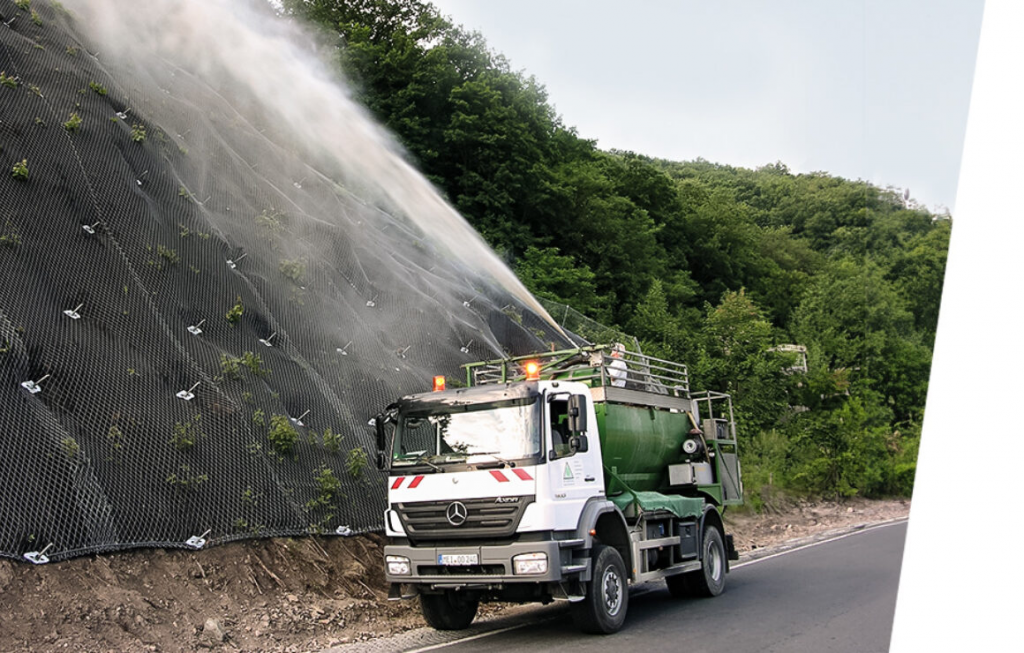
- It is a mechanised way of planting. Seeds, mulch, fertilizer and a binding agent are mixed with water into a slurry. This slurry is then sprayed over bare ground using a high-pressure machine.
- It allows for quickly growing green cover on damaged land, holding slopes in place, stop soil erosion by wind and water, and restoring overburdened dumps without heavy manual planting.
Advantages
- Controls erosion: It binds soil particles at once, reducing rain washouts, rill erosion and dump-slope landslides.
- Faster growth: The nutrient-rich slurry gives seeds water and nutrients from day one, leading to even germination and dense roots.
- Cost-effective: It cuts labour and transport costs compared with sodding or hand planting on large industrial sites.
Source: IE
Protein Bioavailability
Syllabus: GS2/Health; GS3/Science and Technology
Context
- Scientists investigated whether protein bioavailability (meaning protein in a form that’s nutritively useful to the body) of traditional meat was the same as that of plant-based meat.
- The study showed higher bioavailability of plant-based meat than their meat counterparts,
About
- Plant-based protein is protein that comes from plants rather than animal sources.
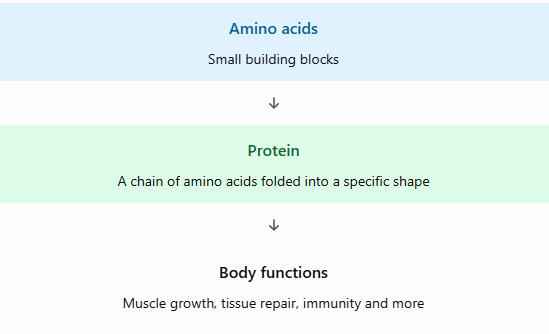
- Proteins are essential nutrients that help the body grow, repair itself, and function properly.
- Proteins are made up of hundreds or thousands of smaller units called amino acids, which are attached to one another in long chains.
- There are 20 different types of amino acids that can be combined to make a protein.
- Amino acids are coded by combinations of three DNA building blocks (nucleotides), determined by the sequence of genes.
- Essential amino acids are organic compounds that the human body can’t produce on its own.
- The nine essential amino acids—histidine, isoleucine, leucine, lysine, methionine, phenylalanine, threonine, tryptophan, and valine play vital roles in building proteins, hormones, and neurotransmitters.
Source: TH
Previous article
Cyclone Arnab
Next article
News In Brief 27-10-2026
