


Syllabus: GS3/ Economy
Context
- India has completed a decade of inflation targeting (IT) as a formal policy framework of the Reserve Bank of India (RBI).
India’s Inflation Targeting Framework
- India adopted a Flexible Inflation Targeting Framework (FITF) in 2016 on recommendation by an Expert Committee headed by Dr. Urjit Patel.
- As per Section 45ZA of the RBI Act, 1934, the Central Government, in consultation with the RBI, determines the inflation target once every five years.
- The Consumer Price Index (CPI) — which measures retail inflation — is the chosen benchmark.
- The Monetary Policy Committee (MPC) is mandated to maintain inflation as set by the Government.
Working of Inflation Targeting
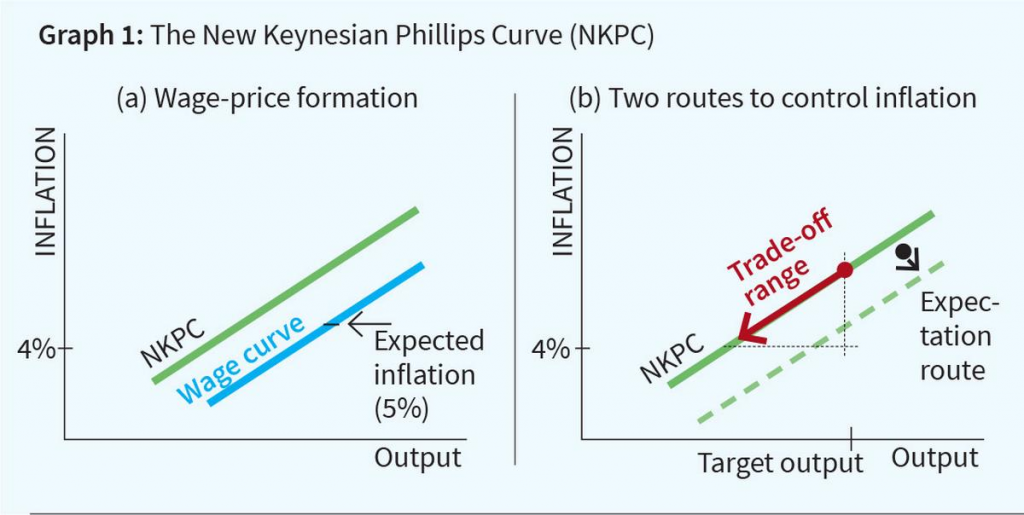
- Demand channel: To lower consumption and investment demand and manage inflation, the RBI raises the repo rate to increase the borrowing cost.
- Expectations channel: The RBI tries to anchor households’ and firms’ inflation expectations to its inflation target, so that expected inflation does not translate into increased salaries and prices.
- Both techniques rely heavily on the New Keynesian Phillips Curve (NKPC) which posits a positive link between output and inflation.
Concerns Regarding the Effectiveness of Inflation Targeting
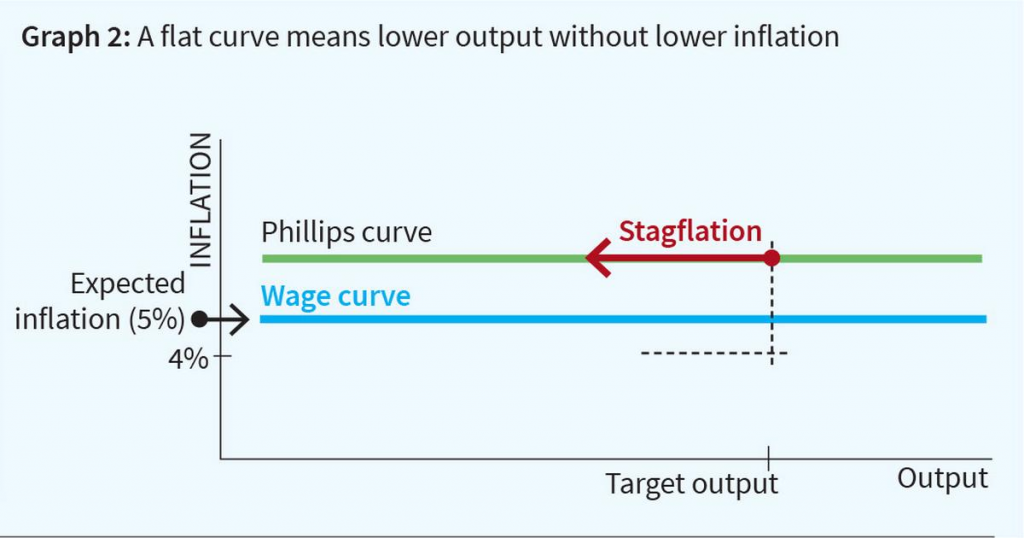
- Flat Phillips Curve: Analysis of industrial output and CPI inflation for April 2012–March 2026 indicates that India’s Phillips Curve is largely flat.
- This suggests that changes in output and employment may have a limited effect on inflation.
- Limited Wage Bargaining Power: A large proportion of India’s workforce is employed in the informal sector and has limited bargaining power.
- Hence higher output and employment may not necessarily lead to significant wage increases.
- The assumed wage-output-inflation mechanism underlying the Phillips Curve may therefore be weaker in India.
- Unanchored Inflation Expectations: Household inflation expectations have regularly been beyond RBI’s inflation estimates. On average, the margin has been roughly four percentage points.
- Supply-side nature of Indian inflation: Indian inflation is often supply-side driven due to food-price shocks, weather and climatic disasters, supply-chain disruptions; and global crude oil prices.
- Increases in interest rates have little direct power to deal with such supply side limitations.
- Risk to Growth: Higher interest rates could dampen private investment and household borrowing, posing a risk to growth.
- If inflation is unresponsive due to a flat Phillips Curve or supply side shocks, then monetary tightening may be costly in terms of lower output and employment.
New Keynesian Phillips Curve (NKPC)
- The New Keynesian Phillips Curve (NKPC) explains the relationship between inflation, economic activity and inflation expectations.
- It states that current inflation is influenced by expected future inflation and the level of output or economic activity.
- When aggregate demand and output increase, employment and production costs may rise.
- Higher costs, particularly wages, are passed on to consumers through higher prices.
- Therefore, higher economic activity can lead to higher inflation.
Source: TH
