

Syllabus: GS3/Science & Technology
Context
- The recent integration of Google DeepMind’s Gemini Robotics-ER 1.6 and Boston Dynamics’ Spot robot exemplifies the rise of Embodied Artificial Intelligence (Embodied AI).
About Embodied AI & Scientific Foundation
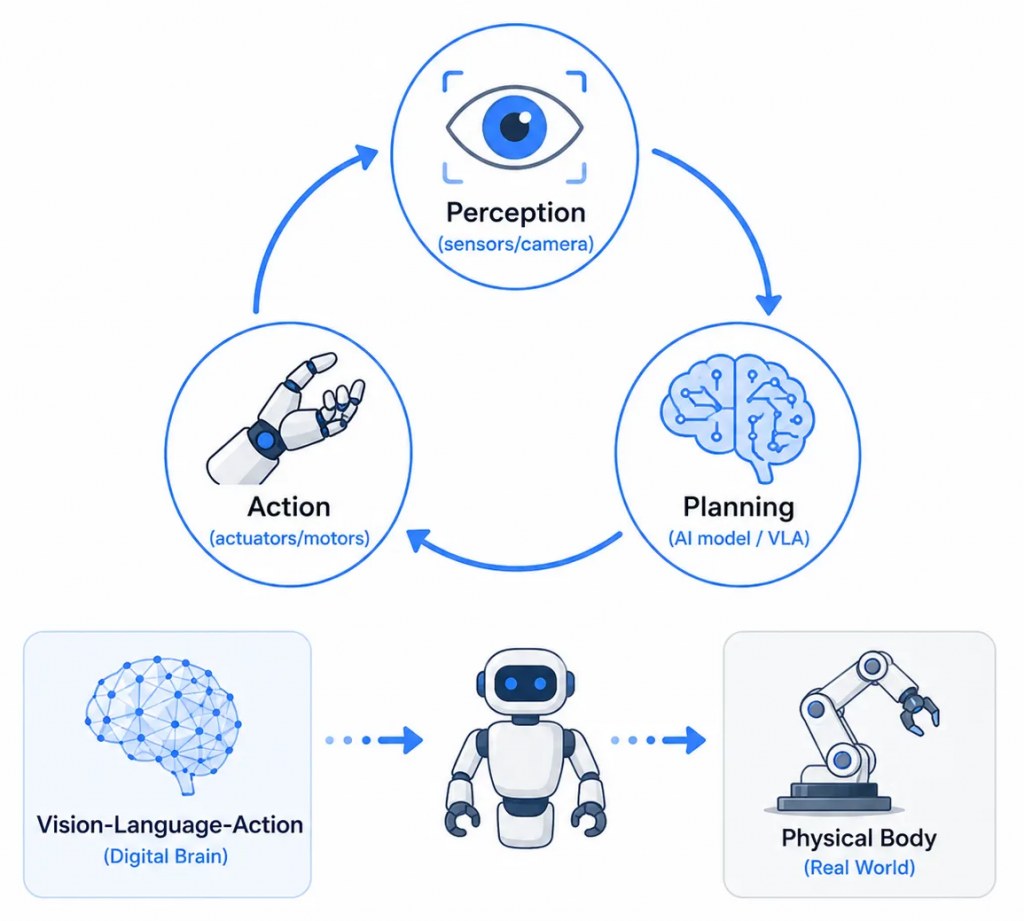
- Embodied AI is a kind of AI that claims intelligence is not separate from the physical body interacting with the environment.
- It learns from movement, perception, feedback and physical experience, not like conventional artificial intelligence systems that learn from digital data.
- The idea is more than just putting AI in a robot, and the form of the body, its sensors, and how it interacts with the world affect cognition.

Basic Principles
- Intelligence is distributed across the brain, the body and the environment.
- Learning takes place through constant interaction with real-world conditions.
- Some of the computation occurs in the physical structure of the body (morphological computation).
- The behaviour arises from sensor-motor feedback, rather than complex internal world models alone.
- Co-evolution of robot bodies and neural controllers, as in biological evolution.
| Embodied AI vs Neuromorphic AI | |
| Embodied AI | Neuromorphic AI |
| Focuses on where intelligence exists | Focuses on how computing hardware works |
| Intelligence is distributed across body and environment | Mimics biological neurons through spiking neural networks |
| Hardware-independent | Hardware-centric |
| Emphasises interaction | Emphasises brain-like computation |
| Used in robotics and autonomous systems | Used for energy-efficient AI chips |
Indian Perspective
- India is moving towards Industry 4.0 and embedded artificial intelligence can help in boosting productivity, precision agriculture, disaster response and delivery of public services.
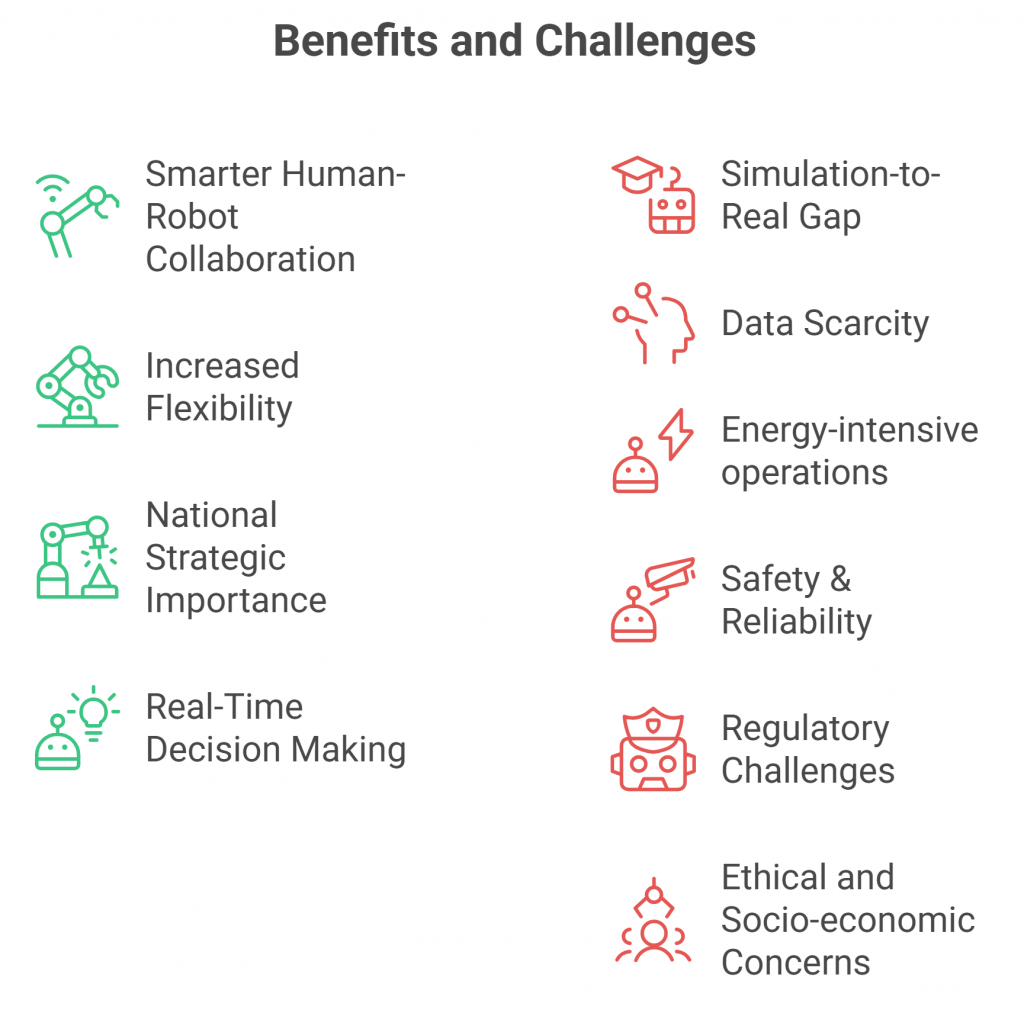
- Robots being used in manufacturing, healthcare, agriculture, logistics and smart infrastructure.
- It needs high standards of safety, privacy and workforce reskilling.
- IndiaAI Mission, National Strategy for Artificial Intelligence, Digital India are continuously strengthening the AI ecosystem in India.
Way Ahead: Protecting Embodied AI
- Strengthen the Research Ecosystems: Fund Robotics, AI, Materials Science and Neuroscience.
- Promoting interdisciplinary partnerships between academia, industry and research institutions.
- Build Indian Datasets: Develop large Indian datasets on agriculture, manufacturing, healthcare, logistics and disaster management to improve model robustness in local conditions.
- Campaign for Safe-by-Design Robotics: Hardware and software should be designed with safety as a consideration.
- It needs to include human supervision, emergency shutdowns, constant surveillance and safe communication channels.
- Build Adaptive Regulatory Systems: India can draw on global developments on trustworthy AI and responsible innovation to develop standards to test, certify and regulate learning-enabled robots before their large-scale deployment.
- Increase Hardware Efficiency: By designing batteries, low-power AI chips, neuromorphic processors, light-weight materials, and strong sensors for longer operation.
- Encourage Public Private Partnerships: Accelerate deployment in strategic sectors through innovation, start-ups, research labs, industry and government programmes.
Previous article
News In Short 18-07-2026
Next article
M.P. Cabinet Approves Draft UCC Bill
