

Falkland Islands
Syllabus: GS1/Geography; GS2/IR
Context
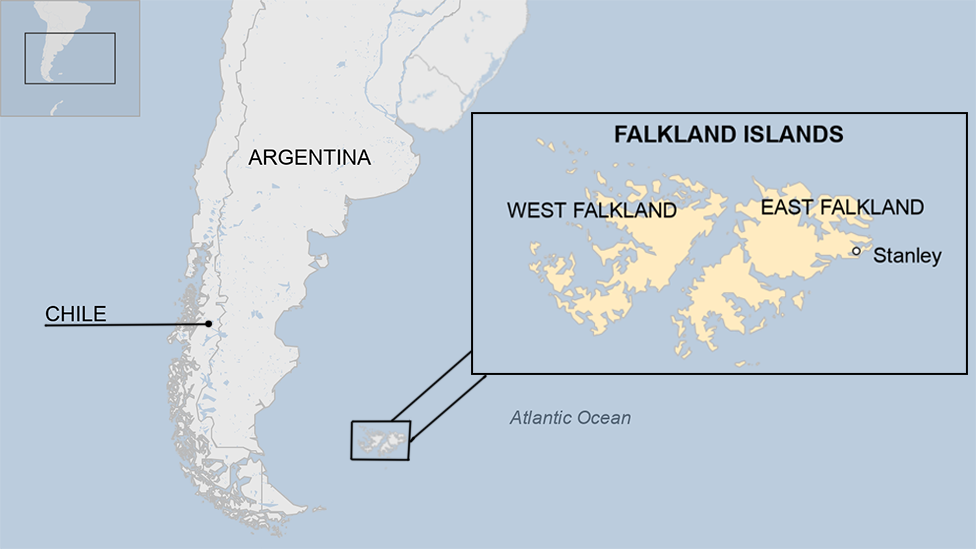
- Argentina’s post-match celebration after defeating England in the 2026 FIFA World Cup semi-final sparked controversy after players displayed a banner claiming the Falkland Islands as Argentine territory.
About
- The banner revived a nearly 200-year-old sovereignty dispute between Argentina and the United Kingdom.
- The Falkland Islands, known as Islas Malvinas in Argentina, have remained disputed since Britain reasserted control over the islands in 1833.
- Argentina claims it inherited the sovereignty of these islands from Spain upon gaining independence in 1816, and therefore regards Britain’s occupation as illegal.
- In 1982, the two countries fought a 74-day war that resulted in 649 Argentine casualties and 255 British deaths.
- In 2013, an overwhelming majority of the islanders voted to remain a British Overseas Territory, a result Argentina does not recognise.
Source: IE
Manasbal Lake
Syllabus: GS1/Places in News
Context
- Manasbal Lake is on the path of ecological recovery with the return of migratory birds.
About
- It is the country’s deepest freshwater lake in central Kashmir’s Ganderbal district.
- The name Manasbal is said to be a derivative of Lake Manasarovar.
- The Mughal garden, called the Jaroka built by Nur Jahan overlooks the lake.
- The Mansbal lake was home to more than 46 species of birds belonging to 23 families, including Mallard, White Headed Duck, Eurasian Hoopoe, Eurasian Collared Dove, Lesser Pied Kingfisher, Golden Eagle, Grey Backed Shrike, Tickell’s Thrush etc.
- It is classified as a warm monomictic lake and circulates once in a year for a short time.
- A warm monomictic lake is a waterbody that never freezes, remaining thermally stratified for most of the year.
- An outlet channel connects the lake with the Jhelum River. The outflow of water is regulated artificially.
Source: TH
World Artificial Intelligence Cooperation Organisation (WAICO)
Syllabus: GS2/ Governance
In News
- China formally launched the World Artificial Intelligence Cooperation Organisation (WAICO) in Shanghai, at the 2026 World Artificial Intelligence Conference.
About WAICO
- It is an intergovernmental body for AI cooperation, capacity building, and shared governance standards among developing nations, headquartered permanently in Shanghai.
- It’s the first standing institution of its kind aimed squarely at the Global South. It has representatives from 29 countries.
- China will provide 5,000 AI training opportunities and establish joint AI cooperation centres with ASEAN, African Union, BRICS, SCO, League of Arab States, and CELAC.
- It will promote open-source AI models, technology sharing, and collaborative AI development.
- The nations aligning with WAICO’s framework won’t need AI regulations compatible with the EU AI Act, OECD AI Principles, or G7 Hiroshima Process.
Why it matters?
- The platform will strengthen China’s influence in global AI governance with the Global South.
- It’s the first real institutional rival to Western-led AI governance (OECD, EU AI Act, G7 Hiroshima Process) built specifically around Global South membership.
Source: India Today
Investment Friendliness Index (IFI)
Syllabus: GS2/Governance
Context
- NITI Aayog has released the report titled “Investment Friendliness Index (IFI)”.
About
- It presents a structured and data-driven framework for assessing how effectively States and Union Territories create, enable, and sustain an environment conducive to investments.
- It evaluates investment attractiveness across the following eight pillars: Infrastructure, Business climate, Resources, Government policy, Regulatory Ease, Institutional Environment, Financial Health; and Environmental Resilience.
- The framework comprises 84 indicators, incorporating both secondary data and perception-based measures derived from a primary survey of investors.
- State Categorisation: States and Union Territories have been classified into four performance categories:
- Top Performers (scores above 50).
- Frontrunners (45–50).
- Emerging Performers (≥40 – <45).
- Aspiring States (below 40).
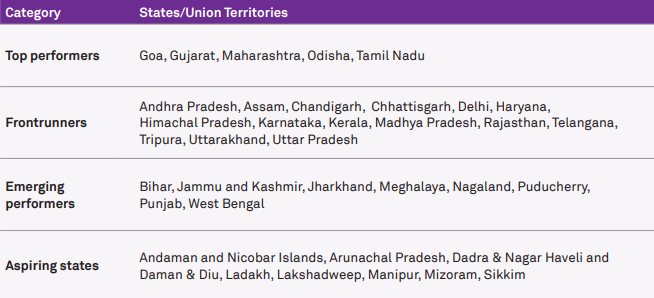
- Among the Large States, Gujarat secured the first rank, followed by Maharashtra and Tamil Nadu, which are also the top three performers in the overall Index.
- In the Hilly and North-Eastern States category, Uttarakhand emerged as the highest-ranked State, followed by Assam and Himachal Pradesh.
- Among the City States and Union Territories, Goa secured the top position, followed by Delhi and Chandigarh.
Source: TH
National Commission for Minorities
Syllabus: GS2/ Polity
Context
- The Union government appointed Harjit Singh Grewal as the Chairperson of the National Commission for Minorities (NCM).
National Commission for Minorities (NCM)
- The Union Government set up the National Commission for Minorities (NCM) under the National Commission for Minorities Act, 1992.
- The first Statutory National Commission was set up in 1993.
- Initially five religious communities, viz., Muslims, Christians, Sikhs, Buddhists and Zoroastrians (Parsis) were notified as minority communities by the Union Government.
- In 2014, Jains were also notified as another minority community.
- As per Section 3(2) of the NCM Act 1992, the Commission consists of: A Chairperson, a Vice- Chairperson, and Five Members.
- Total of 7 persons to be nominated by the Central Government from amongst persons of eminence, ability and integrity.
- Each Member holds office for a period of three years from the date of assumption of office.
- Objective: The organisation is set-up to safeguard and protect the interests of minorities as provided in the Constitution of India and laws enacted by the Parliament and the State Legislatures.
Functions of NCM
- Making recommendations for the effective implementation of safeguards for the protection of the interests of minorities by the Central Government or the State Governments;
- Looking into specific complaints regarding deprivation of rights and safeguards of minorities and taking up such matters with the appropriate authorities;
- Getting studies to be undertaken into the problems arising out of any discrimination against minorities and recommending measures for their removal;
- Making periodical or special reports to the Central Government or any matter pertaining to minorities and in particular the difficulties confronted by them.
Source: TH
ICMR i-DRONE Initiative
Syllabus: GS2/Health
In News
- Recently, the Indian Council of Medical Research (ICMR) under its i-DRONE initiative has successfully demonstrated the use of drone-assisted transport of TB sputum samples to improve access to tuberculosis diagnosis in remote areas.
i-DRONE initiative
- ICMR’s Drone Response and Outreach for North East (i-DRONE) was launched in 2021.
- It aimed to evaluate the use of drones to deliver vaccines and medical supplies to remote areas of Manipur and Nagaland.
- The i-DRONE project developed a hub and spoke drone network to connect 60 sub-centres, 11 primary health centres and four TB units in Telangana to transport sputum samples for TB diagnosis.
- Outcomes: The median time to diagnosis was reduced from 15 days to 5 days.
- Average out of pocket expenditure (OOPE) dropped from ₹9,451 to about ₹91 with a large number of patients having zero travel costs.
Source :PIB
India Becomes 3rd Country With Private Launch Capability
Syllabus: GS3/ Science and Technology
Context
- Skyroot Aerospace’s Vikram-1 Test Flight-1 has successfully reached orbit, officially establishing India as only the third country in the world with private orbital launch capability.
What is Vikram-1?
- Vikram-1 under Mission Aagaman, is a four-stage orbital launch vehicle developed by Skyroot Aerospace, an Indian space-tech start-up.
- The first three stages are solid-fuelled, providing robust initial thrust, while a hypergolic liquid upper stage allows for precise orbital manoeuvres.
- It is built with an all-carbon composite structure, reliable solid-fuel boosters and a 3D-printed liquid engine.
- It is India’s first privately developed orbital-class rocket.
- Vikram-I can deploy up to 350 kg into low Earth orbit (LEO) and 260 kg into a sun-synchronous orbit (SSO).
Payloads deployed on Vikram-1
- Payloads celebrating creativity and India’s scientific heritage:
- Cosmic Bloom, developed by Cosmos Diamonds, featuring a diamond jewellery creation mounted on an aluminium base plate.
- Microart: An 18K gold rocket holding micro-sculptures of Sir C.V. Raman, Dr. Vikram Sarabhai, and Dr. A.P.J. Abdul Kalam — each smaller than a grain of rice.
- Technology Demonstration Payloads:
- Robotic Arms by Cosmoserve
- SOLARAS by Grahaa Space
- SCOPE by Skyroot Aerospace
- One international payload — uD3PP and mD3RN — developed by Dcubed GmbH, Germany.
White Rabbit Technology Based Network Demonstration
Syllabus: GS3/ Science & Technology
Context
- Union Minister Pralhad Joshi inaugurated the White Rabbit Technology-based Indian Standard Time (IST) Distribution Demonstration Network at the Regional Reference Standards Laboratory (RRSL), Jakkur, Bengaluru, under the “One Nation, One Time” initiative.
What is the “One Nation, One Time” Initiative?
- The One Nation, One Time initiative aims to establish a single, accurate, secure, and indigenous source of Indian Standard Time (IST) for all sectors across the country.
- It seeks to provide uniform and traceable time synchronization to critical infrastructure.
- It reduces India’s dependence on foreign Global Navigation Satellite Systems (GNSS) such as GPS for time dissemination.
What is White Rabbit Technology?
- White Rabbit (WR) is an Ethernet-based precision time synchronization technology that combines:
- Precision Time Protocol (PTP – IEEE 1588) for clock synchronization.
- Synchronous Ethernet (SyncE) for frequency synchronization.
- Optical fiber communication for ultra-low latency.
- Key Features:
- Synchronization accuracy of less than one nanosecond (sub-nanosecond precision).
- High reliability over long-distance fibre-optic networks.
- Open-source technology originally developed at CERN for particle physics experiments and now adapted for industrial and national timing applications.
How Does the Indian IST Distribution Network Work?
- National Physical Laboratory (NPL) maintains India’s official atomic clocks and generates the official Indian Standard Time.
- IST is transmitted through a secure White Rabbit fibre-optic network.
- Time reaches regional laboratories and critical institutions with extremely high precision.
- Banks, stock exchanges, telecom operators, power grids, defence systems, and data centres synchronize their clocks with the official IST.
Source: PIB
ASW Shallow Water Craft Malvan
Syllabus: GS3/Defence
Context
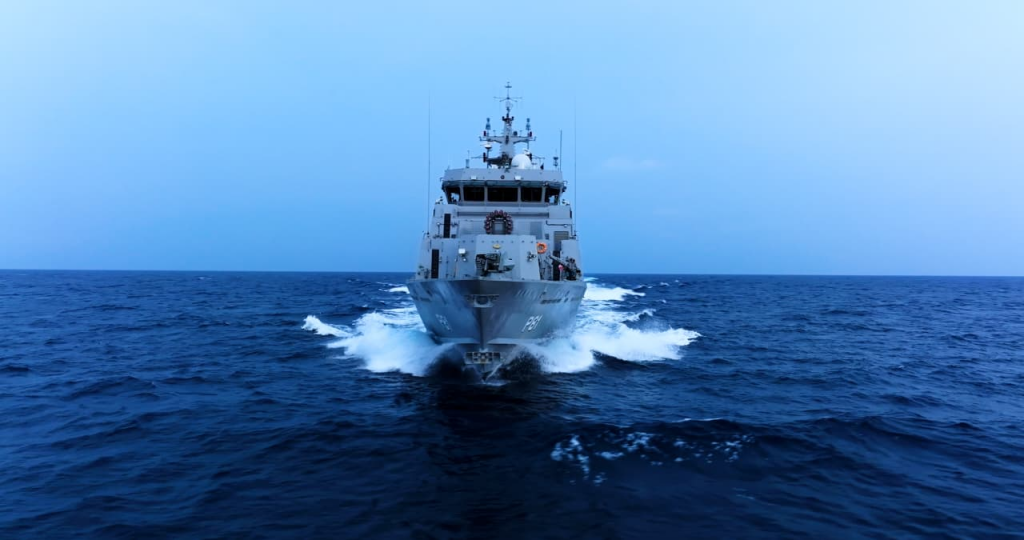
- The Indian Navy is set to commission Malvan, the second of the Mahe-class Anti-Submarine Warfare Shallow Water Craft (ASW-SWC).
About
- Built by Cochin Shipyard Limited in Kochi, Malvan has more than 80 per cent indigenous content, reflecting India’s growing self-reliance in warship design, construction and systems integration under the Aatmanirbhar Bharat initiative.
- The Mahe-class ASW Shallow Water Craft are designed to operate effectively in coastal and shallow waters, enhancing the Navy’s anti-submarine warfare capabilities.
- The Mahe-class ASW-SWC vessels are being inducted to replace the ageing Abhay-class corvettes.
- Features: It has a twin-shaft diesel propulsion generating over 6 MW of power and this gives it a top speed of 25 knots, a range of 1,800 nautical miles at 14 knots, and an endurance of 14 days.
Source: PIB
Previous article
AI Hallucinations
Next article
Embodied AI: Next Frontier in Robotics
