


Syllabus: Science & Technology
Context
- Scientists from BITS Pilani, in collaboration with IBM Quantum, have developed a quantum algorithm that demonstrated quantum advantage by simulating the behaviour of subatomic particles on a 120-qubit quantum processor.
Key Findings
- The quantum processor completed the simulation in 20 seconds. A classical computer required around two hours for the same calculation.
- The achievement has been recognised as “active” by the Quantum Advantage Tracker (QAT).
- In the reference of the QAT “active” means that the claim of quantum advantage is currently valid and has not been disproved or overtaken by classical computing methods.
- Significance: It is the first quantum advantage claim from an Indian laboratory to receive active status.
What is Quantum Computing?
- Quantum computing refers to a new class of computers that use the principles of quantum mechanics rather than classical binary logic.
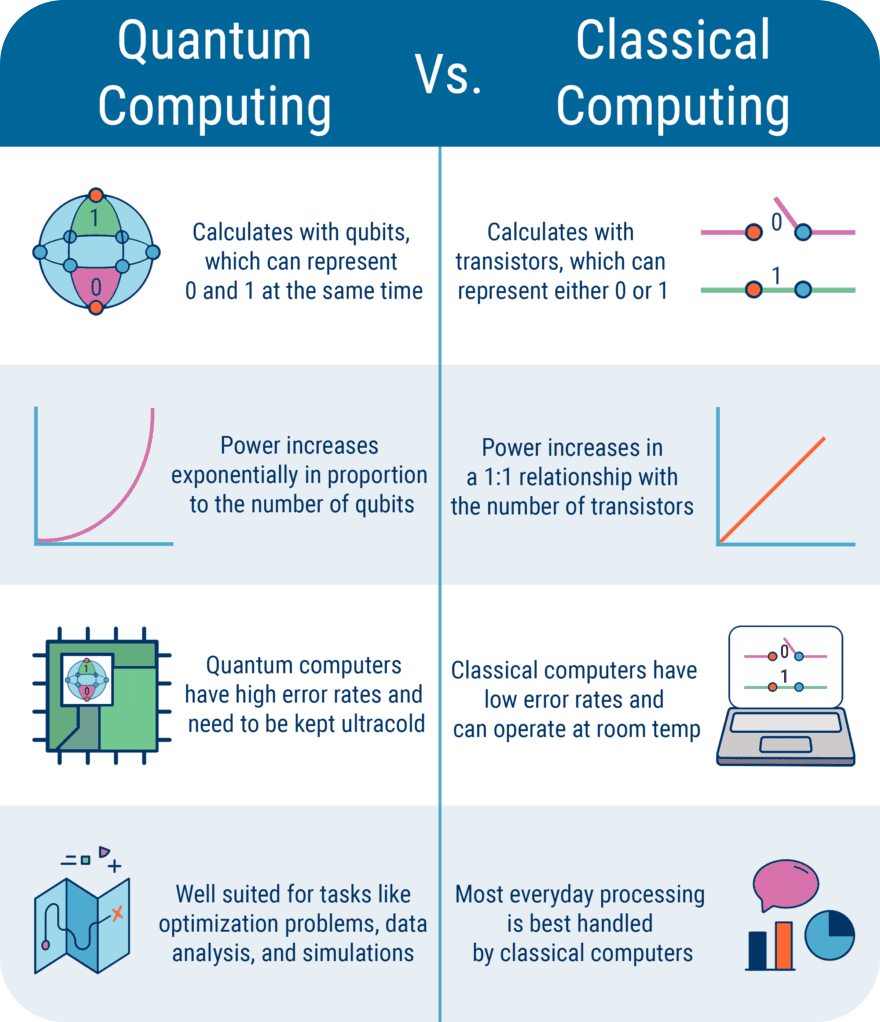
- Classical computers process information using bits (0 or 1), while quantum computers use qubits, which can exist in multiple states simultaneously.
- This capability allows quantum computers to perform certain calculations exponentially faster than conventional computers.
Principles of Quantum Computing
- Superposition: It allows a qubit to exist in multiple states simultaneously, enabling quantum computers to perform many calculations in parallel.
- Entanglement: It occurs when two or more qubits become strongly correlated, such that the state of one instantly determines the state of the other.
- This property allows quantum computers to process and link information efficiently, helping solve complex problems faster.
- Decoherence: Decoherence refers to the loss of a qubit’s quantum state due to interaction with the environment (such as radiation or heat).
- Preventing or delaying decoherence is a major challenge in building stable quantum computers.
What is Quantum Advantage?
- Quantum advantage refers to an information processing task performed more efficiently, cost-effectively, or accurately using a quantum computer than is known to be possible with classical computers alone.
- Quantum advantage is not universal; quantum computers are not faster for every type of calculation.
Quantum Advantage Tracker (QAT)
- The Quantum Advantage Tracker (QAT) is an open-source, platform-agnostic framework designed to collect, validate, and compare experimental results in the pursuit of quantum advantage.
- It verifies claims of quantum computing superiority. QAT requires users to match quantum results against classical methods to stop exaggerated claims.
- It uses three paths: observable estimations, variational problems, and classically verifiable problems.
- Importance: Prevents exaggerated claims regarding quantum computing capabilities and provides credibility to genuine breakthroughs.
Challenges in Quantum Computing
- Lack of Indigenous Quantum Hardware: India currently depends on foreign quantum processors for advanced research.
- Quantum Error and Noise: Maintaining stable qubits for longer durations is difficult.
- Limited Real-World Applications: Most quantum demonstrations are still experimental and commercial applications require further technological maturity.
National Quantum Mission (NQM)
- The Union Cabinet approved the National Quantum Mission (NQM) in 2023 at a total cost of Rs.6003.65 crore from 2023-24 to 2030-31.
- It aims to seed, nurture and scale up scientific and industrial R&D and create a vibrant & innovative ecosystem in Quantum Technology (QT).
- The Mission objectives include developing intermediate-scale quantum computers with 50-1000 physical qubits in 8 years in various platforms like superconducting and photonic technology.
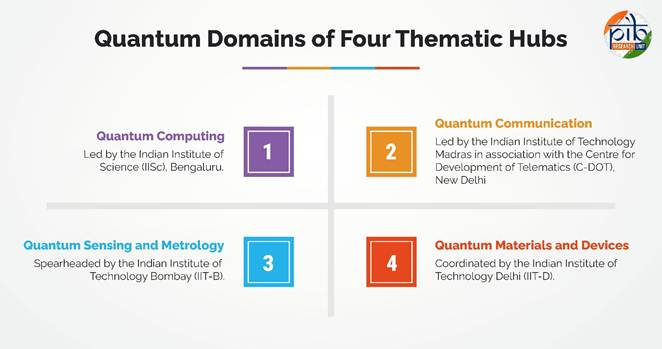
- Four Thematic Hubs (T-Hubs) have been established under NQM to strengthen India’s position as a global leader in quantum technology.
Source: TH
Previous article
Weaving Sustainability Into India’s Textile Future
Next article
News In Short 13-07-2026
