


Syllabus: GS3/Economy
Context
- India’s Micro, Small and Medium Enterprises (MSME) sector has become a key driver of economic growth, employment generation, exports and grassroots entrepreneurship, particularly in rural and semi-urban areas.
What are MSMEs?
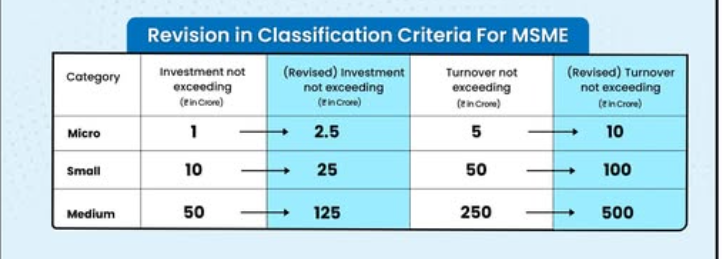
- MSMEs are enterprises classified on the basis of investment in plant and machinery or equipment and annual turnover.
- The Union Budget 2025-26 revised the MSME classification criteria to expand coverage and encourage enterprises to scale up without losing benefits.
Why MSMEs Are Important?
- MSMEs contribute about 31.1% to India’s GDP, account for 48.58% of total exports, and generate around 35.4% of manufacturing output.
- The sector encompasses more than 7.47 crore enterprises across manufacturing, services, and trade activities.
- It provides livelihoods to approximately 32.8 crore people, making it the second-largest source of employment after agriculture.
- A large share of these enterprises operate in rural and semi-urban areas. They support local value chains, promote non-farm employment, and contribute to regional economic development.
Key Challenges Faced by MSMEs
- Access to Finance: MSMEs, particularly micro enterprises in rural areas, face significant credit gaps due to collateral requirements, limited credit history and risk aversion among lenders.
- Increased Competition: Globalisation and e-commerce have exposed MSMEs to competition from large domestic players and cheap imports, particularly in textiles, handicrafts and electronics.
- Lack of Technological knowledge: A large proportion of MSMEs — especially in rural areas — lack awareness and capacity to adopt digital tools, automation and modern production techniques.
- Marketing and Networking Opportunities: Limited market linkages and poor brand visibility restrict MSMEs from accessing national and global markets effectively.
- Regulatory Burden: Complex compliance requirements across labour, taxation and environmental regulations disproportionately affect small enterprises with limited administrative capacity.
- Skilled Labour Shortage: MSMEs struggle to attract and retain skilled workers, particularly as urban migration pulls labour away from rural manufacturing clusters.
- Vulnerability to External Shocks: As demonstrated during COVID-19, MSMEs — especially micro enterprises — have limited financial buffers to absorb demand shocks, supply chain disruptions or raw material price volatility.
Government Initiatives
- PM Vishwakarma: Launched in 2023, it is a central sector scheme for 2023-24 to 2027-28.
- It aims to uplift traditional artisans and craftspeople by enhancing product quality and connecting them to wider markets.
- Credit Guarantee Scheme for Micro and Small Enterprises (CGSMSE): A Credit Accessibility Breakthrough, the CGSME provides credit guarantees for credit facilities extended by Member Lending Institutions to MSEs without collateral security or third-party guarantees.
- Udyam Registration Portal: It was launched in 2020, offers a free, paperless, and self-declared registration process for MSMEs.
- Prime Minister’s Employment Generation Programme (PMEGP): PMEGP is a credit-linked subsidy scheme that supports self-employment by helping set up micro-enterprises in the non-farm sector.
- MSME Hackathon 4.0 (2024): Supports 500 young entrepreneurs with funding up to Rs. 15 lakh each for innovation and incubation.
- MSME-TEAM Scheme (2024): A trade enablement initiative with an outlay of Rs. 277.35 crore, supporting 5 lakh MSEs (including 2.5 lakh women-led) in digital onboarding, cataloguing, logistics and packaging.
- Khadi and Village Industries: The Government is promoting the Khadi and Village Industries (KVI) sector through the Khadi and Gramodyog Vikas Yojana (KGVY), a Central Sector Scheme with no state component.
- International Cooperation Scheme: Supports MSMEs in entering global markets by facilitating participation in international fairs, exhibitions and knowledge-sharing events on a reimbursement basis.
Conclusion and way forward
- As India moves towards becoming a $5 trillion economy and achieving the vision of Viksit Bharat 2047, MSMEs are expected to remain central to the country’s economic transformation by driving employment, local manufacturing, exports, innovation and inclusive growth.
- However, addressing challenges related to credit access, technology adoption, delayed payments, skilling and global competitiveness will be crucial to unlocking the sector’s full potential, particularly in rural and semi-urban India.
Source: PIB
Previous article
Achievements Across India’s logistics Sector
Next article
News In Short 15-05-2026
