


Central Bureau of Investigation (CBI)
Syllabus: GS2/Polity and Governance
Context
- The Appointments Committee of the Cabinet (ACC) has approved a one-year extension in the tenure of Praveen Sood as Director of the Central Bureau of Investigation.
Central Bureau of Investigation (CBI)
- CBI, functioning under the Ministry of Personnel, Pension & Public Grievances, Government of India, is the premier investigating police agency in India.
- History: The CBI came into being during World War II, when the colonial government felt the need to probe cases of corruption in the War and Supply Department. A law came in 1941. It became the DSPE Act in 1946.
- It was established by a resolution of the Ministry of Home Affairs, Government of India, in 1963.
- The Santhanam Committee on Prevention of Corruption recommended the establishment of the CBI.
- Functions: CBI was established with a view to investigate serious crimes related to the defense of India, corruption in high places, serious fraud, cheating, and embezzlement and social crime, particularly hoarding, black marketing, and profiteering in essential commodities, having all-India and inter-state ramifications.
- It is also the nodal police agency in India that coordinates investigations on behalf of Interpol member countries.
- Jurisdiction: CBI derives power to investigate from the Delhi Special Police Establishment Act, 1946.
- Section 2 of the Act vests DSPE with jurisdiction to investigate offenses in the Union Territories only.
- The jurisdiction can be extended by the Central Government to other areas including Railway areas and States under Section 5(1) of the Act, provided the State Government accords consent under Section 6 of the Act.
Source: TH
Tracing the Evolutionary Origins of Snakes
Syllabus: GS3/ Environment
Context
- Recent fossil discoveries and advances in genetic analysis, 3D imaging, and evolutionary biology are helping scientists better understand the origins and evolution of snakes.
Evolutionary Origin of Snakes
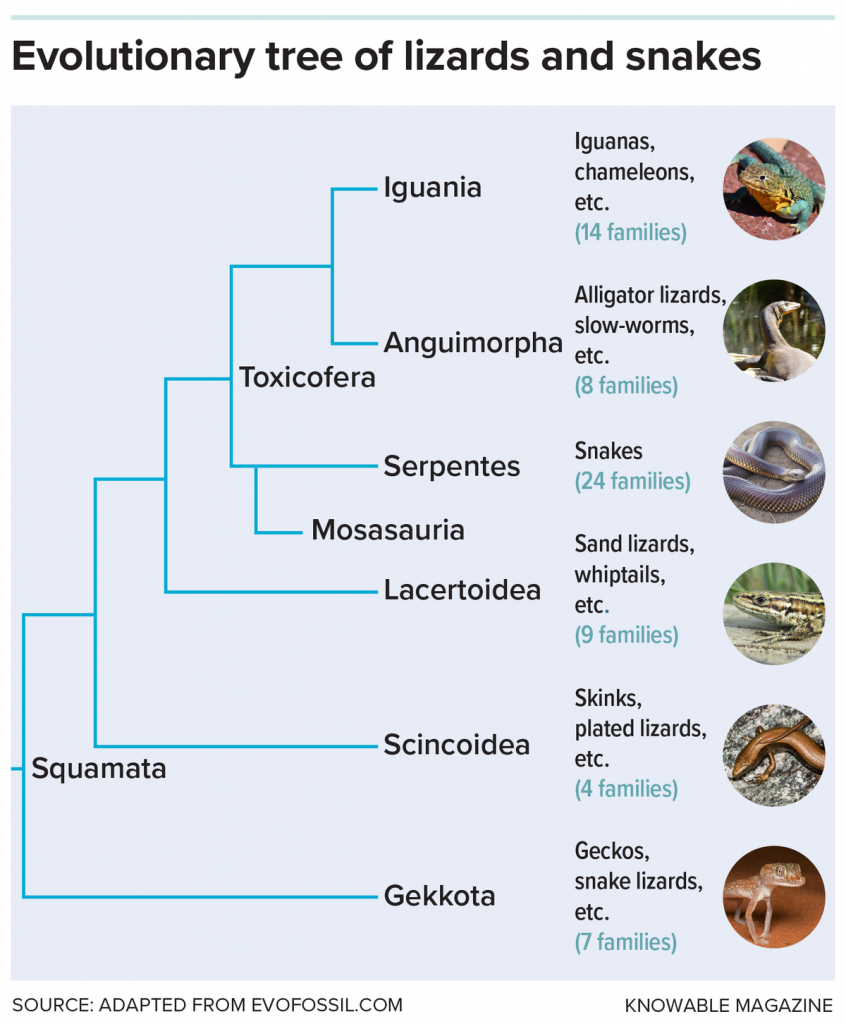
- Snakes are legless reptiles belonging to the suborder Serpentes under the larger reptile group of lizards.
- Scientists estimate that snakes evolved around 160 million years ago.
- However, the earliest ancestral snake fossils are still missing, making the evolutionary history incomplete.
- India hosts several important snake species, including King Cobra, Indian Cobra, Russell’s Viper and Common Krait.
- Fossils discovered in Patagonia, such as Najash rionegrina and Dinilysia patagonica, indicate that early snakes likely evolved in terrestrial and semi-burrowing environments rather than marine habitats.
Key Evolutionary Adaptations
- Snakes gradually lost their limbs, an adaptation useful for burrowing and moving through dense vegetation.
- Their highly flexible skull structure evolved to allow swallowing of large prey whole.
- Snakes developed elongated bodies with hundreds of vertebrae, improving locomotion on land, underground, and in water.
- These adaptations enabled snakes to diversify into different ecological niches across continents and oceans.
Source: TH
Revving up Immune Cells Might Help Fight HIV: Study
Syllabus: GS2/Health
Context
- Scientists are tweaking a powerful cancer therapy in hopes it could fight HIV instead, by supercharging patients’ own immune cells.
HIV AIDS
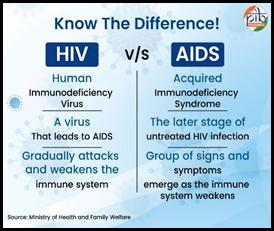
- Human immunodeficiency virus (HIV) is a virus that attacks the body’s immune system.
- HIV targets the body’s white blood cells, weakening the immune system. This makes it easier to get sick with diseases like tuberculosis, infections and some cancers.
- Acquired immunodeficiency syndrome (AIDS) occurs at the most advanced stage of infection.
- Spread: HIV is spread from the body fluids of an infected person, including blood, breast milk, semen and vaginal fluids. It can also spread from a mother to her baby.
- Treatment: There is no cure for HIV infection. It is treated with antiretroviral drugs, which stop the virus from replicating in the body. Untreated HIV can progress to AIDS, often after many years.
Source: TH
Cabinet Approves ₹37,500 cr. Package To Boost Coal Gasification
Syllabus: GS3/Energy
Context
- The Union Cabinet approved a Rs 37,500 crore scheme to promote surface coal and lignite gasification projects.
About
- Aim: To accelerate India’s coal gasification programme and strengthen the country’s energy security.
- The scheme is expected to support the national target of gasifying 100 million tonnes of coal by 2030 while reducing dependence on imports of key products such as liquefied natural gas (LNG), urea, ammonia and methanol.
- India currently holds around 401 billion tonnes of coal reserves and nearly 47 billion tonnes of lignite reserves.
- Coal contributes more than 55% to the country’s energy mix.
- India has the fourth-largest coal reserves globally.
- Coal gasification would help convert domestic coal and lignite into synthesis gas, or syngas, which can be used for producing fuels and chemicals domestically, thereby reducing exposure to global supply disruptions and price volatility.
What is Coal Gasification?
- Coal gasification is a thermochemical process of converting coal into synthesis gas (syngas), which is a mixture of fuel-rich gases like carbon monoxide (CO), carbon dioxide (CO2), hydrogen (H2), and methane (CH4).
- The syngas can be used for producing Synthetic Natural Gas (SNG), electricity generation, energy fuel (methanol and ethanol), ammonia for fertilisers, and chemicals.
- The coal gasification process involves oxidation of coal at higher temperatures and pressures to produce syngas.
- There are two main types of gasification: Surface gasification and Underground coal gasification (UCG).
- In surface coal gasification, coal is first mined and then converted into gas in above-ground industrial reactors using oxygen, steam and high temperatures.
- Underground coal gasification converts coal into gas while it is still buried deep underground by injecting air or oxygen into coal seams through wells and extracting the resulting gas to the surface.
Source: TH
Alzheimer’s Disease
Syllabus: GS2/Health
In News
- Eli Lilly and Company has launched a new Alzheimer’s treatment in India called Lormalzi, marking one of the first disease-modifying therapies for the condition in the country.
Alzheimer’s Disease
- It is the most common form of dementia, a brain disorder that slowly destroys a person’s memory and thinking skills.
- It is characterized by a loss of cognitive functioning — thinking, remembering, and reasoning — and behavioral abilities to such an extent that it interferes with a person’s daily life and activities. Eventually, people with Alzheimer’s lose the ability to perform simple daily tasks, such as eating or walking.
- Drugs like lecanemab and aducanumab exist globally, benefits are modest and come with complexity, high cost, and safety concerns.
- It affects about 8.8 million people in India and is expected to nearly double by 2036, making new treatments significant despite their limitations.
Lormalzi Drug
- It is a monoclonal antibody, is given as a once-a-month infusion and works by removing amyloid-beta plaques in the brain, which are linked to Alzheimer’s progression.
- Clinical trials suggest it can slow cognitive decline in early-stage patients by around 30–35% over about 18 months, but it does not reverse existing damage and carries risks such as brain swelling or bleeding (ARIA), which can be serious in some cases.
Source:IE
India’s Gold and Silver Import Duty Hike
Syllabus: GS3/Economy
In News
- The Indian government increased the effective import tax on gold and silver from 9.2% to 18.4%.
- Customs duty was raised from 5% to 10%, while the Agriculture Infrastructure and Development Cess (AIDC) increased from 1% to 5%.
Key Terms
- Current Account Deficit (CAD): The CAD is the margin by which a country’s total imports of goods, services, and transfers exceeds its exports.
- The Agriculture Infrastructure and Development Cess (AIDC) was introduced in the Union Budget 2021–22 as a tax levied on certain goods, including agricultural produce and related items, at specified rates.
- Its main purpose is to generate funds for the development and improvement of agricultural infrastructure in India.
- The cess applies to products such as gold, silver, alcoholic beverages, crude edible oils, apples, coal, fertilizers, pulses, and cotton
- Import duty: It is a tax collected on imports and some exports by a country’s customs authorities
Reason behind the latest decision
- The decision came soon after the Prime Minister urged citizens to reduce gold purchases temporarily to help protect the rupee and forex reserves.
- The government linked the move to concerns over
- Rising current account deficit (CAD),
- Pressure on foreign exchange reserves
- Global uncertainty due to the West Asia crisis
- Volatility in crude oil prices and shipping routes.
- Foreign exchange should be prioritised for essential imports like crude oil, fertilisers, defence equipment, and industrial goods.
Impacts
- Industry bodies and economists criticised the government’s sharp increase in gold and silver import duties, calling it a “retrograde” and “blunt” measure that is unlikely to reduce India’s demand for gold, which is deeply rooted in savings habits, cultural traditions, festivals, and weddings.
- Experts warned that higher duties could instead encourage gold smuggling, grey-market trade, and illegal supply chains.
- Concerns were also raised about the impact on the jewellery industry, especially MSMEs, which account for nearly 80% of the council’s membership and may face higher costs, liquidity pressures, reduced competitiveness, and lower employment and exports.
- Global Trade Research Initiative criticised the government’s customs notifications as overly complex and difficult to interpret, arguing that they reduce transparency and make compliance harder for importers and businesses.
Source: TH
Mule Accounts
Syllabus: GS3/ Economy/Cyber security
In News
- The Indian Cyber Crime Coordination Centre (I4C) signed an MoU with Reserve Bank Innovation Hub to strengthen collaboration in combating cyber-enabled financial frauds and curtailing mule accounts across the banking and digital payments ecosystem.
What is Money Mule Fraud?
- Money mule fraud is a type of financial crime in which cybercriminals use another person’s bank account to transfer or launder illegally obtained money.
- Fraudsters often target students, unemployed individuals, gig workers, or digitally unaware people by offering easy money or commissions in exchange for allowing transactions through their bank accounts.
- In many cases, victims unknowingly become “money mules” by receiving stolen money and forwarding it to other accounts while keeping a small percentage as payment.
- This helps criminals move money quickly across banking channels and makes it harder for authorities to trace the original source of the fraud.
Source:Air
National Social Assistance Programme (NSAP)
Syllabus: GS2/Welfare schemes
In News
- A recent evaluation of the National Social Assistance Programme (NSAP), commissioned by the Union Ministry of Rural Development, has found that the centre’s contribution to social pensions has lost much of its value due to inflation.
National Social Assistance Programme (NSAP)
- It was launched in 1995 and is a key social welfare scheme.
- It provides pensions to vulnerable groups, including the elderly, widows, and persons with disabilities.
- It is 100% Centrally Sponsored Scheme
- Funds under NSAP are released to States/UTs based on the number of beneficiaries digitized or State/UT-wise cap, whichever is lower.
- Thereafter, pensions are disbursed to beneficiaries at district/panchayat level by the State/UT.
Coverage
- Currently, NSAP covers five schemes, including:
- Indira Gandhi National Old Age Pension Scheme (IGNOAPS) : Under IGNOAPS, the Centre provides financial assistance of Rs 200 per month to individuals aged 60–79 years and Rs 500 per month to those aged 80 and above.
- Indira Gandhi National Widow Pension Scheme (IGNWPS): Under IGNWPS, the Centre provides Rs 300 per month to widows aged 40–79 years and Rs 500 to those 80 and above.
- Indira Gandhi National Disability Pension Scheme (IGNDPS) : Financial assistance of Rs 300 per month is provided to individuals with severe or multiple disabilities aged 18–79, and Rs 500 to those aged 80 years and above.
- National Family Benefit Scheme (NFBS): The amount of one-time financial assistance under NFBS is fixed at Rs 20,000.
- This is provided to families after the death of a primary breadwinner aged 18 to 59.
- Annapurna Scheme: Under the Annapurna Scheme, 10 kg of food grains per month, free of cost, are provided to those senior citizens who, though eligible, were not receiving old-age pension.
Source: IE
Previous article
India–Sri Lanka Economic Cooperation
