


Luzon Island
Syllabus: GS1/Places in News
Context
- China conducted military drills including live-fire exercises in waters east of the Philippines’ Luzon Island.
About
- It is the largest and most important island of the Philippines.
- It is located in the northern part of the Philippine archipelago and is bounded by the Philippine Sea to the east, the Sibuyan Sea to the south, and the South China Sea to the west.
- To the north, the Luzon Strait separates Luzon from Taiwan.
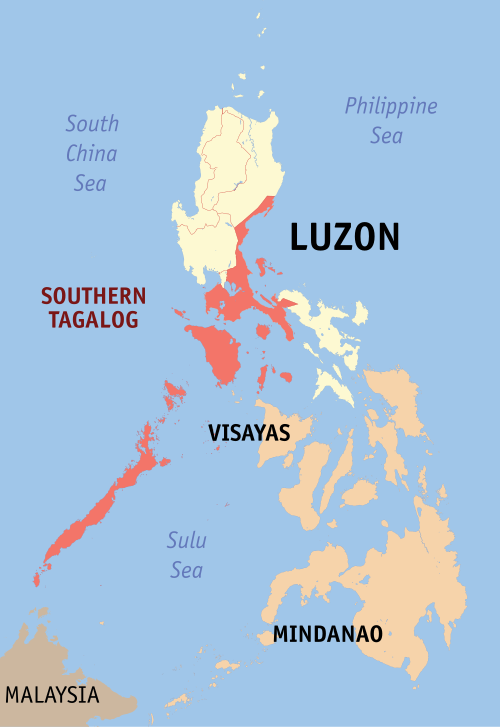
- Luzon represents about one-third of the land area of the Philippines.
- It is a part of the Pacific Ring of Fire, making it prone to earthquakes & volcanoes.
- Natural Landmarks:
- Mount Pinatubo is famous for its 1991 eruption (global climatic impact).
- Mayon Volcano is known for its near-perfect symmetry.
- Banaue Rice Terraces is the UNESCO World Heritage site.
Source: TP
China’s New Atlas Drone Swarm System
Syllabus: GS3/Science and Technology, Defence
In News
- Recently, Chinese People’s Liberation Army (PLA) launched its new Atlas drone swarm system (atelasi).
“Atlas” (or Atelasi) drone swarm system
- It is a Chinese PLA mobile platform designed to launch and control large numbers of drones in coordinated operations from a single operator interface.
- It is a truck-based swarm warfare unit made up of three vehicles: a launch vehicle (Swarm-2), a command/control vehicle, and a support vehicle.
- Together, they function as a compact, mobile “drone battlefield node.”
- Compared to systems like the US “Perdix” and DARPA’s “Offset,” which focus mainly on the number of drones deployed, the Atlas system is presented as more advanced due to its emphasis on coordinated intelligence rather than scale alone.
Key features
- Mass launch capability: Up to 96 drones can be deployed in one coordinated swarm, with very short launch intervals (under 3 seconds per drone), meaning a full swarm can be released in about 5 minutes.
- Centralized control: A single operator can manage the entire swarm simultaneously, directing drones for reconnaissance, electronic disruption, formation flying, or strikes.
- Flexible mission roles: The drones can operate collectively for scouting, attacking, confusing enemy defenses, or forming coordinated patterns.
- Mobility and concealment: The system is vehicle-based, small enough to be hidden or rapidly repositioned, making it suitable for distributed and hard-to-detect operations.
Source :IE
International Big Cat Alliance (IBCA)
Syllabus: GS3/ Environment
In News
- Ahead of the global big cat summit, the International Big Cat Alliance (IBCA), is deliberating on a New Delhi Declaration, which, if adopted, will be the first international declaration on big cat conservation.
About International Big Cat Alliance (IBCA)
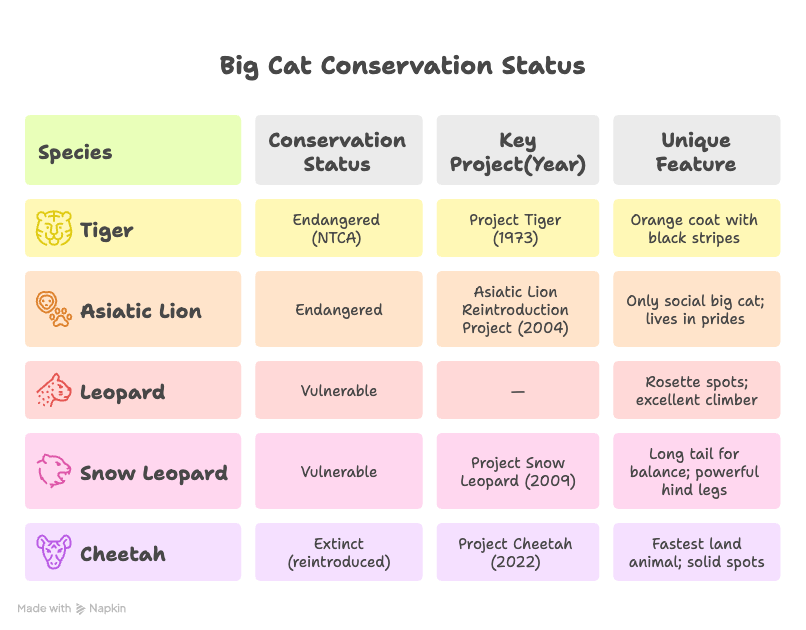
- It was launched by India in 2023 to facilitate global cooperation for the conservation of seven big cat species:
- Tiger, Lion, Leopard, Snow Leopard, Cheetah, Jaguar, and Puma.
- Out of the seven big cats under IBCA, five are found in India: Tiger, Lion, Leopard, Snow Leopard & Cheetah.
- Open to 97 “range countries” where these big cats are found.
- Aims to mobilise global knowledge, resources, and best practices to protect big cats and their ecosystems.
Source: TH
World Tapir Day
Syllabus: GS3/Environment
In News
- Recently, World Tapir Day was observed globally to raise awareness about Tapirs.
Tapirs
- Tapirs are large herbivorous mammals.
- Tapirs inhabit jungle and forest regions of South America, Central America, and Southeast Asia.
- Tapirs form an important part of the ecosystem as seed dispersers and form one of the oldest surviving genera in the animal kingdom.
- Threats posed are habitat loss, hunting, and human encroachment.
Types and IUCN Red List status
- Lowland Tapir(Tapirus terrestris) – Vulnerable
- Mountain Tapir(Tapirus pinchaque) – Endangered
- Malay Tapir(Tapirus indicus) – Endangered
- Baird’s Tapir(Tapirus bairdii) –Endangered.
Source :Air
CAR-T Cell Therapy
Syllabus: GS3/ Biotechnology
Context
- A recent study demonstrated that engineered CAR-T cells can detect “faint” tumour signals, offering a breakthrough in treating solid tumours such as kidney, ovarian, and pancreatic cancers.
About CAR-T Cell Therapy
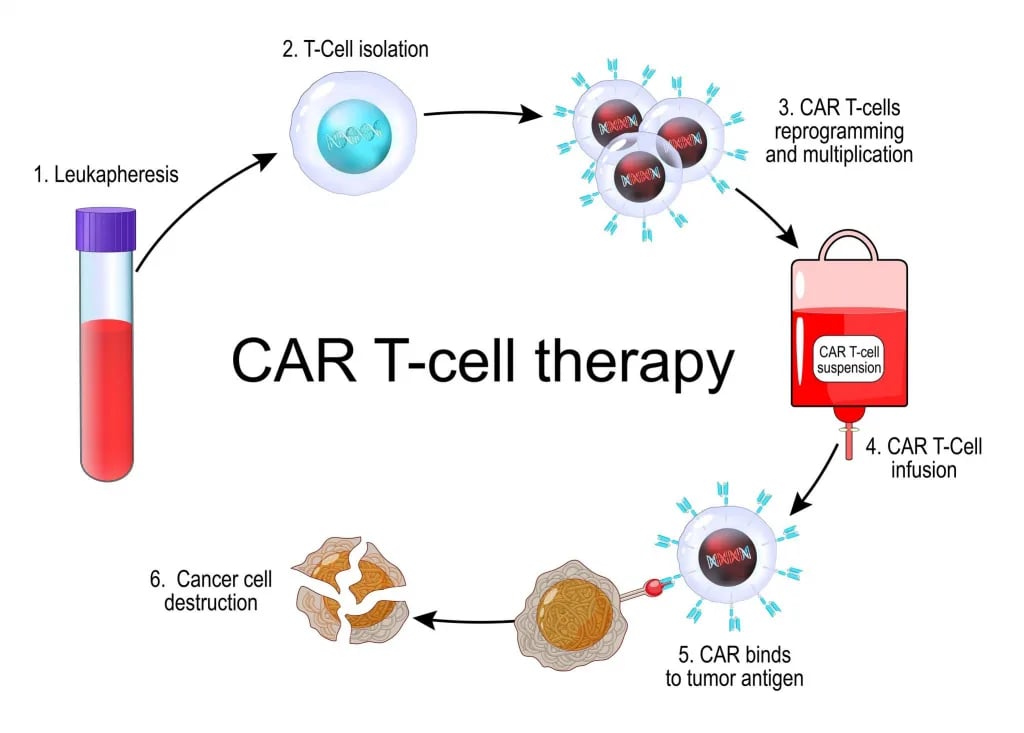
- CAR T-cell therapy is a type of immunotherapy (treatment that uses the body’s immune system to fight disease).
- It involves modifying a patient’s T cells (white blood cells that kill infected or abnormal cells).
- These T cells are engineered to express a Chimeric Antigen Receptor (CAR).
- Once reintroduced into the body, CAR T cells target and destroy cancer cells.
- Most commonly, CAR T cells target CD19 (a protein found on B cells, often overexpressed in certain blood cancers).
Key Challenge: Antigen Heterogeneity
- Solid tumours have diverse cells. Traditional CAR-T cells kill only “high-antigen” (visible) cells, leaving “low-antigen” cells behind to cause relapse.
- Pseudo-Heterogeneity: Research shows many “negative” cells actually have tiny amounts of target protein (CD70). This protein is hidden by the EZH2 enzyme, which tightens DNA to suppress gene expression.
Source: TH
Atacama Desert
Syllabus: GS1/Places in News
Context
- Light pollution threatens the world’s darkest skies in the Atacama.
About
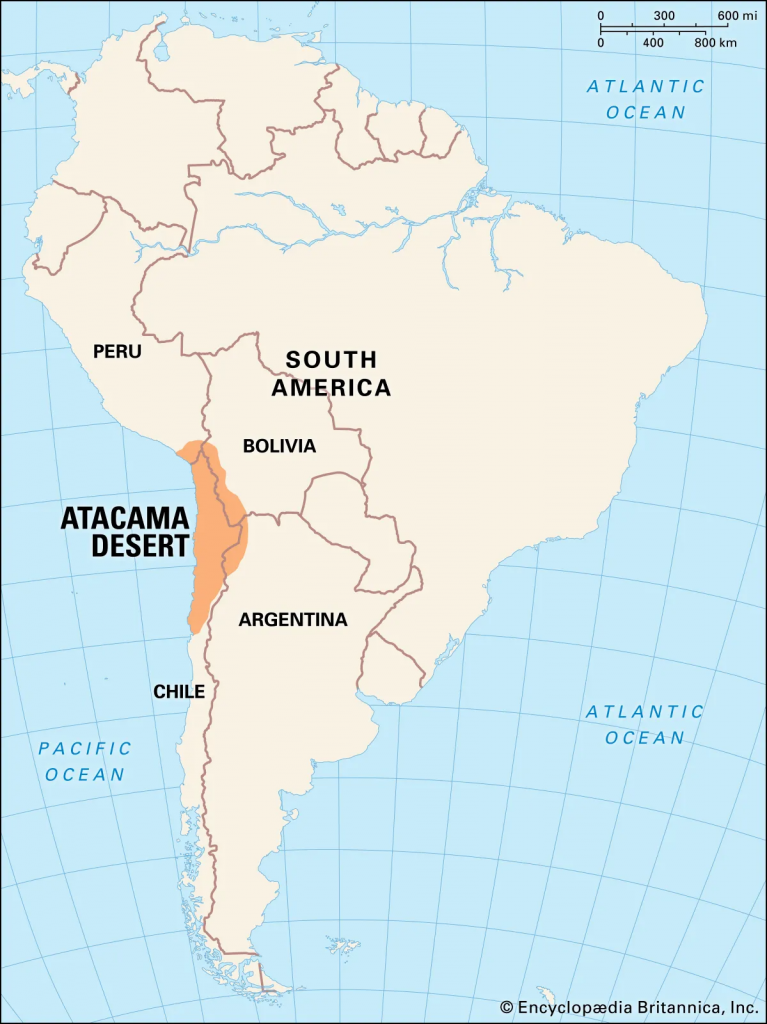
- Atacama desert is located in Chile stretching into parts of Peru, Bolivia, and Argentina, it is considered the driest non-polar desert on the earth.
- It lies between the Pacific Ocean (west) and the Andes Mountains (east).
- There are more than 300 clear nights per year, meaning no clouds and no rain.
- Scientific Significance: A rare combination of dry climate, high altitude, and isolation from urban light pollution makes the Atacama home to the world’s largest ground-based astronomical projects.
- Every year, the Atacama Desert draws thousands of scientists to investigate the origins of the universe.
Source: TH
