

Adipose Tissue
Syllabus: GS2/ Health, GS3/ Science and Technology
Context
- Recent scientific research has highlighted that adipose tissue (fat) is not merely a passive storage site for excess calories but an active metabolic and endocrine organ.
What is Fat (Adipose Tissue)?
- Adipose tissue is a specialised connective tissue responsible for storage of excess energy in the form of fat, regulation of metabolism through hormone secretion and protection and insulation of vital organs.
- It functions as an endocrine organ by releasing hormones such as:
- Leptin: Regulates appetite and energy balance
- Adiponectin: Enhances insulin sensitivity.
Types of Fat (Adipose Tissue)
- White Adipose Tissue (WAT): It is the most abundant form of fat in adults and has functions like;
- Storing energy as triglycerides
- Acting as a metabolic reserve during energy deficit
- Providing insulation and mechanical cushioning
- Secreting hormones regulating metabolism
- Brown Adipose Tissue (BAT): It is the specialized fat that burns energy to generate heat (thermogenesis). It is rich in mitochondria and contains Uncoupling Protein-1 (UCP1).
- Beige adipose tissue (BeAT): It is a thermogenic, “brown-like” fat that emerges within white adipose tissue (WAT) depots, typically in response to cold exposure or adrenergic stimulation, a process known as “browning”.
Source: TH
North Atlantic Treaty Organisation (NATO)
Syllabus: GS2/IR
Context
- US President Donald Trump has warned of leaving the North Atlantic Treaty Organisation (NATO) after its allies declined to assist in securing the Strait of Hormuz.
About NATO
- Establishment: A military alliance founded in 1949 with the signing of the North Atlantic Treaty, more popularly known as the Washington Treaty, in the aftermath of World War II.
- Aim: To ensure the security and defence of member states through the principle of collective defence.
- Collective Defense: The cornerstone of NATO is Article 5, which states that an armed attack against one or more of its members shall be considered an attack against all.
- Members:
- Founding members: Belgium, Canada, Denmark, France, Iceland, Italy, Luxembourg, the Netherlands, Norway, Portugal, the United Kingdom, and the United States.
- Present strength: 32 member countries (Finland and Sweden became the 31st and 32nd members respectively).
- Decision-Making: Decisions within NATO are made on the basis of consensus among member countries.
- The North Atlantic Council, which includes the ambassadors of all member countries, is the principal political decision-making body.
- Headquartered: Brussels, Belgium.
Source: IE
PM POSHAN Scheme
Syllabus: GS2/ Welfare Scheme
In News
- A Parliamentary Standing Committee has recommended the inclusion of breakfast in the PM POSHAN Scheme & extension of coverage up to Class 12.
About PM-POSHAN
- Earlier known as Mid-Day Meal Scheme (MDMS) and renamed as PM POSHAN (Pradhan Mantri Poshan Shakti Nirman) in 2021.
- It operates under the Ministry of Education and is approved for the period 2021-22 to 2025-26.
- It is a centrally sponsored scheme (jointly funded by Centre and States) providing one hot cooked meal to students in government and aided schools up to Class 8.
- It aims to address hunger (lack of adequate food intake) and educational outcomes (attendance, retention, learning) simultaneously.
Source: TH
Bharat Audyogik Vikas Yojna (BHAVYA)
Syllabus: GS3/Infrastructure
Context
- The Union Cabinet approved the Bharat Audyogik Vikas Yojna (BHAVYA), with an allocation of ₹33,660 crore.
About
- Aim: To create 100 “future ready” industrial parks that will integrate with the PM GatiShakti programme so that they can avail of that programme’s multi-modal connectivity and last-mile access.
- These parks will set new benchmarks in industrial infrastructure, ensuring reliability, reducing inefficiencies, and enhancing productivity across sectors.
- Land Use: Industrial parks ranging from 100 to 1,000 acres will be taken up for the development.
- Funding: While the Central government will provide funding of up to Rs 1 crore per acre, the scheme is meant to include the involvement of the respective State governments as well as the private sector.
- Infrastructure: Core infrastructure like internal roads, underground utilities, drainage, common treatment facilities, ICT and administrative systems.
- The National Industrial Corridor Development Corporation (NICDC), under the Department for Promotion of Industry and Internal Trade, will play a key role in implementing the initiative.
- The scheme duration would be for six years starting in 2026-27.
- The first phase of development would see 50 parks being set up.
Source: TH
Methane Emission Hotspot
Syllabus: GS3/ Environment
Context
- Recent satellite-based research by the Stop Methane Project (UCLA) has revealed that a small number of oil and gas sites account for disproportionately high methane emissions.
Key Findings of the Report
- Around 4,000+ methane plumes were detected globally across thousands of oil and gas sites.
- The top 25 sites are responsible for the most acute hourly emission rates recorded, ranging from 3.7 to 10.5 metric tonnes per hour.
- Turkmenistan dominates the list, hosting over two-thirds of the worst emitters, while other major emitting regions include Iran, Venezuela, Texas (USA) and Sindh (Pakistan).
About Methane
- Methane (CH₄) is a colorless, odorless, and highly flammable gas, and it is the primary component of natural gas.
- It has a relatively short atmospheric lifetime of about 12 years, compared to carbon dioxide.
- Methane as a Greenhouse Gas: Methane is a highly potent greenhouse gas with a strong short-term warming impact.
- It is over 80 times more effective than carbon dioxide at trapping heat over a 20-year period.
- It is responsible for around 30% of the current global warming since the pre-industrial era.
- Major Sources: Human-driven emissions arise mainly from oil and gas production, coal mining, livestock enteric fermentation (burps), and decomposing waste in landfills.
- Natural sources include Wetlands, marine sediments and hydrates and geological Sources like volcanoes.
Source: DTE
Ancient Hill Range
Syllabus: GS1/ Geography
In News
- The central empowered committee of the Supreme Court (SC) has assigned the task of mapping mining areas in the Aravalli hills of Rajasthan to the Forest Survey of India.
Defining an Ancient Hill Range
- An ancient hill range (geologically old, highly eroded mountain system) like the Aravallis cannot be reduced to a single measurable parameter such as elevation.
- Its definition must integrate geomorphology (study of landforms), slope, geological continuity, and ecological spread, ensuring that both physical form and environmental function are captured.
Concerns in the Current Approach
- The committee’s 100m elevation criterion is criticized as arbitrary and reductionist, failing to account for the fragmented, eroded nature of ancient ranges.
- This threshold risks excluding ecologically vital low-lying segments, inviting exploitation.
- Conversely, the 2011 FSI mapping offers a scientifically validated alternative using remote sensing, GIS, and digitized contour data.
- It utilizes a 3-degree slope threshold, which more accurately captures terrain morphology than elevation alone.
- The committee’s framework recognizes only 37 districts, significantly omitting 25 of the 62 districts previously identified by the FSI, thereby compromising territorial and scientific consistency.
Implications
- Rajasthan has only ~8% forest and tree cover (vegetative land area), largely concentrated in the Aravalli region.
- Misclassification could lead to loss of legal protection, accelerating mining, deforestation, and groundwater depletion, thereby disturbing an already fragile ecological balance.
Do you Know?
- The Forest Survey of India (FSI) (estd.1981), under the Ministry of Environment and Forests, is the premier national body for monitoring India’s forest resources.
- Its core mandate includes publishing the biennial State of Forest Report to assess cover changes and maintaining a comprehensive inventory of tree resources in forest and non-forest areas.
Source: TH
Japanese Chum Salmon
Syllabus: GS3/Environment
Context
- Researchers found that suitable marine habitats for chum salmon have shifted significantly over the past 25 years.
- Suitable habitats have declined overall due to ocean warming, reduced zooplankton which are an important food source, and increasingly frequent marine heatwaves.
About Japanese chum salmon
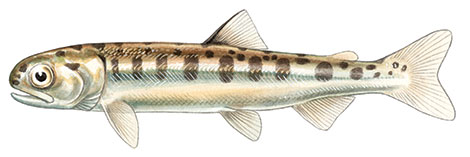
- It is known in Japan as “shirozake,” or salmon.
- It has faint vertical stripes and silvery sides.
- Chum are a staple for people in the western Pacific and for native peoples in Alaska and British Columbia.
- Today, most of the salmon consumed in Japan is imported from countries like Chile and Norway.
- But just two decades ago, Japanese chum salmon made up a much larger share of domestic salmon consumption.
Source: DTE
Previous article
National Vaccination Day
