

Syllabus: GS1/ History and Culture
Context
- India is hosting the 20th session of the UNESCO Intergovernmental Committee for Safeguarding of the Intangible Cultural Heritage, 2025 in Red Fort complex, New Delhi.
- This will be the first time that India hosts the ICH Committee session and the Ministry of Culture and Sangeet Natak Akademi (SNA) are the nodal agencies for hosting the Session.
About the Intangible cultural heritage
- Intangible cultural heritage, includes the practices, knowledge, expressions, objects, and spaces that communities see as part of their cultural identity.
- Passed down over generations, this heritage evolves, strengthening cultural identity and appreciation of diversity.
- Historical Background: For the Safeguarding of Intangible Cultural Heritage, UNESCO adopted the 2003 Convention during its 32nd General Conference in Paris.
- India ratified the convention in 2005.
Significance of Intangible Cultural Heritage
- Preserves Cultural Identity and Continuity: Intangible heritage anchors communities to their roots, reinforces identity, and strengthens belonging across generations.
- Promotes Social Cohesion and Harmony: Shared cultural practices create a sense of collective memory and mutual respect.
- Supports Livelihoods: Protecting ICH helps sustain rural economies, promotes cultural tourism, and creates employment opportunities.
- Preserves Traditional Knowledge Systems: Indigenous ecological knowledge, healing practices, agricultural wisdom, and craftsmanship offer sustainable solutions relevant for contemporary challenges such as climate change and biodiversity loss.
- Intergenerational Learning: ICH carries values, ethics, local histories, and skills that enrich curricula, build cultural literacy, and strengthen intergenerational bonding.
- Boosts Cultural Diplomacy and Soft Power: Yoga, classical arts, festivals, and traditional crafts enhance India’s global cultural presence, build goodwill, and strengthen international relationships.
Functions of the Intergovernmental Committee
- The Intergovernmental Committee for Safeguarding of the Intangible Cultural Heritage advances the objectives of the 2003 Convention and ensures their effective implementation across Member States. The committee:
- Prepares and submits to the General Assembly the draft plan for the use of the Intangible Cultural Heritage Fund.
- Examines periodic reports submitted by States Parties and compiles summaries for the General Assembly.
- Evaluates requests from States Parties and makes decisions regarding, Inscription of elements on UNESCO’s ICH Lists (as per Articles 16, 17 and 18).
India’s Intangible Cultural Heritage Inscribed by UNESCO
- To date, 15 Indian elements have been inscribed on the UNESCO Representative List, and the country has served on the UNESCO Intergovernmental Committee for three terms.
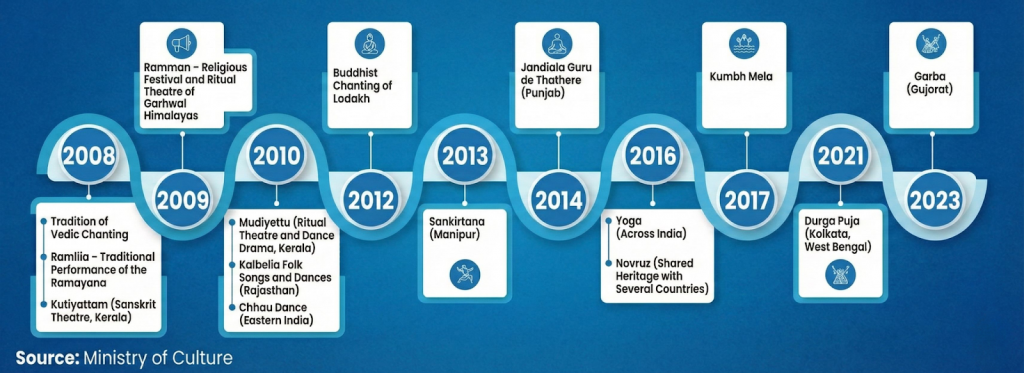
Source: PIB
Previous article
News In Short 06-12-2025
