

Syllabus:GS2/Government Policies & Interventions, GS3/Economy
Context
- About 10 Indian marine and saline fish and shrimp varieties are set to get the global Marine Stewardship Council (MSC) certification soon. The first batch is set to be submitted for the certification in 2026.
About
- The Marine Stewardship Council (MSC) is an international non-profit organisation that sets globally recognised, science-based standards for sustainable fishing and seafood traceability.
- It is a market-driven label certification, known as an eco-label which is voluntary and ensures sustainability in the sector.
- 20% of global fisheries are MSC certified at present.
- Ashtamudi clam was the first variety to get MSC certification, it’s going to be re- certified now.
- Significance:
- The certification is likely to increase the revenue of the fisheries sector by 30% and help fishermen and traders find new markets other than the U.S. in the event of further trade restrictions.
- The certification will also help fishing communities begin ecologically sustainable fishing practices and ensure steady incomes.
India’s Seafood Industry
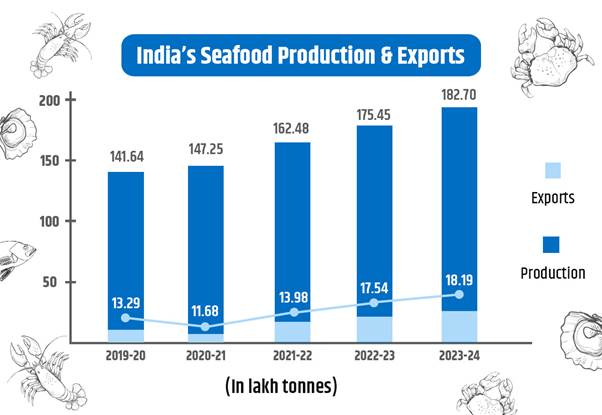
- India is the second largest fish producing country with around 8% share in global fish production.
- India mainly has eight major fish-producing states: Andhra Pradesh, Gujarat, Karnataka, Kerala, Maharashtra, Odisha, Tamil Nadu, and West Bengal.
- India’s total seafood exports in 2024–25 reached $7.38 billion, amounting to 1.78 million metric tonnes.
- Frozen shrimp remained the top export, accounting for 66% of earnings with $4.88 billion.
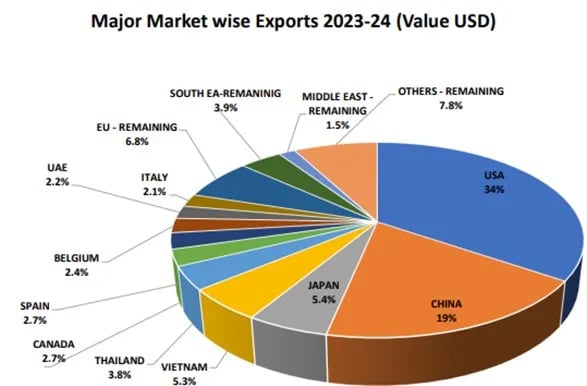
- India exported marine products to 132 countries, demonstrating its extensive reach in the global seafood market. Top five destinations are: USA, China, Japan, Vietnam and Thailand.
Challenges and Existing Issues
- Decline in Export Revenue: The U.S. accounts for 34.53% of India’s seafood export value.
- Higher tariffs will make Indian seafood less competitive, leading to decline in volumes and prices.
- Overfishing: Excessive catch limits and unsustainable practices are threatening marine biodiversity and long-term productivity.
- Climate Change and Pollution: Rising ocean temperatures, acidification, and coastal pollution are disrupting breeding cycles and lowering catch volumes.
- Infrastructure and Export Hurdles: Inadequate cold chain infrastructure, poor handling practices, and stringent international quality standards hamper seafood exports.
Government Initiatives to Boost Seafood Exports:
- Infrastructure Development: The Marine Products Export Development Authority (MPEDA) offers assistance to upgrade processing facilities, establish quality testing laboratories, and participate in international trade fairs.
- This helps enhance the quality and competitiveness of Indian seafood products in global markets.
- Aquaculture Support: This support includes the transfer of advanced technologies and best practices to increase production and productivity.
- Duty Reduction: The government in Budget 2024-25 has reduced import duties on essential ingredients used in seafood feed.
- Key reductions include the complete removal of duties on fish lipid oil, algal prime, crude fish oil, and pre-dust breaded powder.
- Additionally, import duties on krill meal, mineral and vitamin premixes, and prawn/shrimp and fish feed have been significantly lowered.
- Export Incentives: The government has enhanced the Remission of Duties and Taxes on Export Products (RoDTEP) scheme.
- The refund rate for various seafood products has been increased from 2.5% to 3.1% of the export value.
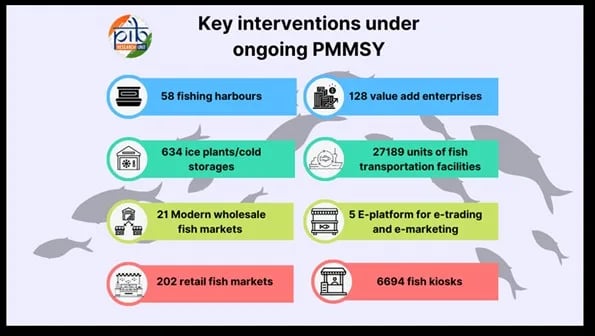
- Pradhan Mantri Matsya Sampada Yojana (PMMSY): This flagship scheme aims to modernize the fisheries sector, including developing cold chain infrastructure, reducing post-harvest losses, and improving overall productivity.
Source: TH
Previous article
WHO Global Report on Trends in Prevalence of Tobacco Use
Next article
Reforming Passive Euthanasia in India
