


Syllabus: GS2/IR
Context
- The President of the Philippines first time visited India since assuming office in 2022.
About
- India and the Philippines have decided to boost their defence and maritime links, begin direct flights and start negotiating a new trade deal as they upgrade their ties to the level of a strategic partnership.
- Both sides also announced the commencement of talks for a preferential trade agreement.
- The Defence agreements will cover “capacity building, joint maritime activities, exchange of training programmes between officials.
- India also invited the Philippines to participate in its Information Fusion Centre for the Indian Ocean Region.
Brief on India and the Philippines Relations
- Historical Background: Established diplomatic relations in 1949.
- Rooted in shared colonial history, democratic values, and mutual interests across defence, trade, investment, and cultural exchange.
- 75th Anniversary of diplomatic ties celebrated in 2024–25.
- Look East and Act East Policy: When India launched the Look East Policy and intensified partnership with ASEAN in 1992, this also resulted in stronger relations with countries in the region including the Philippines.
- With the Act East Policy initiated in 2014, the relationship with the Philippines has diversified further into political-security; trade and industry and people-to-people realms.
- Defence and Security Cooperation: Defence Cooperation Agreement was signed in 2006.
- BrahMos Supersonic Missile Deal: $375 million contract signed in 2022, India delivered the first batch of BrahMos missile system in 2024, making Philippines the first foreign nation to acquire the missile weapon system.
- Maritime Security: Joint patrols, capacity building, and hydrographic cooperation.
- Regular dialogues: Joint Defence Cooperation Committee (JDCC) and Service-to-Service Staff Talks.
- Bilateral Trade: Bilateral trade between the two countries had grown steadily to reach US$ 3.5 billion in 2023-24.
- To facilitate bilateral trade, both countries signed an Agreement on Cooperation and Mutual Assistance in Custom Matters ratified in 2023.
- Negotiations on the Preferential Trade Agreement (PTA) were revived in 2023.
- Indian Diaspora: It is estimated to be more than 70,000 in the Philippines.
- There has been a growing number of Indian professionals, estimated around 800, who are working in Indian and multinational corporations in the Philippines.
- Multilateral and Regional Cooperation Both countries are members of: ASEAN Regional Forum (ARF), East Asia Summit (EAS), India-ASEAN Dialogue Mechanism and BIMSTEC (Observer status by Philippines).
Significance of Philippines for India
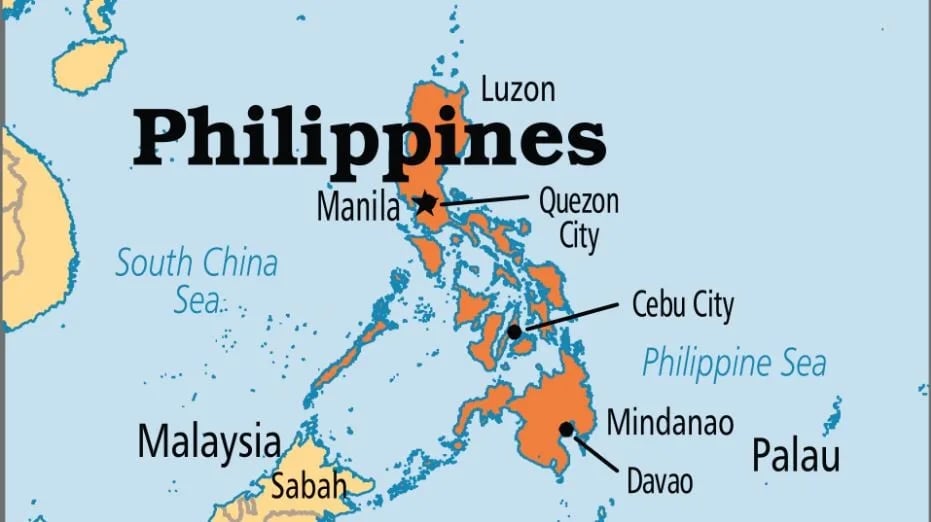
- Strategic and Security Interests: The Philippines is a key player in Southeast Asia, a region of strategic importance to India.
- The two countries share common interests in maintaining freedom of navigation in the South China Sea and countering regional security threats.
- Economic Opportunities: The Philippines is an emerging market with potential for trade and investment.
- Both countries are exploring opportunities for cooperation in areas such as renewable energy, education, and tourism.
- Regional Cooperation: Both countries are members of regional forums such as the Association of Southeast Asian Nations (ASEAN) and the East Asia Summit.
- Their collaboration in these forums is important for addressing regional challenges and promoting economic integration.
Challenges in the Relations
- Limited Economic Engagement: Despite growth, bilateral trade remains modest considering the size of both economies.
- Progress on the Preferential Trade Agreement (PTA) is slow, with negotiations still in early stages.
- Maritime Security Gaps: Although MoUs exist, real-time maritime collaboration and joint patrols are limited.
- South China Sea tensions constrain deeper military cooperation, especially due to Philippines sensitivity to external involvement.
- Regional Geopolitics and China Factor: The Philippines’ complex ties with China and its dependency on US defence support limit its willingness to openly align with India in strategic domains.
Conclusion
- The geopolitical dynamics in the Indo-Pacific region, particularly concerns about maritime security and China’s growing influence, have led both nations to explore deeper strategic and defense collaborations.
- India’s strength in technology and innovation, coupled with the Philippines’ growing tech sector, presents opportunities for collaboration in areas such as IT, digital economy, and start-ups.
- Continued efforts in these areas could lead to a robust and multifaceted partnership.
Source: TH
Previous article
Cloudburst Triggers Flash Floods in Dharali, Uttarakhand
