


OPEC+ Countries to Boost Oil Production
Syllabus: GS3/Economy;
Context
- Recently, the OPEC+ alliance announced that it will increase oil production by 547,000 barrels per day (bpd) starting in September, 2025.
About OPEC+
- OPEC+ is an extended alliance of OPEC, having 22 members, made up of 10 major, non-OPEC oil producing countries (Russia, Kazakhstan, Azerbaijan, Brunei, Bahrain, Mexico, Oman, South Sudan, Sudan and Malaysia), along with the 12 OPEC members.
- It was formed in 2016 after the adoption of the ‘Algiers Accord’ by OPEC countries and signing of the ‘Vienna Agreement’ between OPEC and other major oil exporting countries.
- OPEC+ was created to counterbalance US shale oil growth and stabilize prices amid global volatility.
Market Influence and Production Strategy
- OPEC+ controls nearly 48% of global oil output, making it a dominant force in energy pricing.
- The group has shifted from price defense to market share strategy, ramping up production to pressure US shale producers.
| About OPEC – It was established in 1960 at the Baghdad Conference by Saudi Arabia, Iran, Venezuela, Kuwait and Iraq. – It has 12 members, viz. Algeria, Congo, Equatorial Guinea, Gabon, Iran, Iraq, Kuwait, Libya, Nigeria, Saudi Arabia, the United Arab Emirates and Venezuela. – Angola withdrew its membership effective 1 January 2024. – It is headquartered in Vienna, Austria. – It aims to coordinate and unify petroleum policies among member countries and ensure stable oil markets. |
Impact of Recent Move
- Brent crude fell to around $69.27 per barrel, while WTI crude dropped to $66.96.
- Analysts from Goldman Sachs and BNP Paribas predict prices could dip further to $55–$59 per barrel by late 2025.
“Joint Sea-2025” Drills
Syllabus :GS3/Defence
In News
- China and Russia began “Joint Sea-2025” naval drills in the Sea of Japan
“Joint Sea-2025” Drills
- The three-day exercises near Vladivostok involve operations like submarine rescue, anti-submarine warfare, air defence, and maritime combat, with four Chinese warships participating.
- These annual drills, started in 2012, reflect growing military cooperation between the two nations, especially after Russia’s invasion of Ukraine in 2022.
- Following the drills, joint patrols will be conducted in the Pacific.
- It aims to strengthen their strategic partnership and counter the U.S.-led global order.
Source :TH
Pingali Venkayya
Syllabus :GS1/History
In News
- The Prime Minister, Shri Narendra Modi paid tribute to Shri Pingali Venkayya ji on his birth anniversary.
Pingali Venkayya
- He was born on 2 August 1876, in Krishna district, Andhra Pradesh
- He was a freedom fighter and the designer of the Indian national flag, which later evolved into the present-day Tricolour.
Flag Design
- In 1921, he presented a flag design to Mahatma Gandhi at a Congress session in Vijayawada.
- His original design featured three stripes representing India’s major communities and a spinning wheel (charkha) symbolizing self-reliance.
- In 1947, the design was modified to include the Ashoka Chakra, symbolizing law and progress.
Legacy
- His work laid the foundation for the official adoption of the national flag by the Constituent Assembly on 22 July 1947.
- He is remembered as a symbol of unity and patriotism, and his efforts are commemorated annually during Azadi Ka Amrit Mahotsav and Har Ghar Tiranga campaigns.
Recognition
- The Government of India has issued postage stamps in his honor and organized events like Tiranga Utsav to celebrate his legacy.
Source :PIB
1st-ever BIMSTEC Traditional Music Festival
Syllabus :GS2/IR
In News
- The first-ever BIMSTEC Traditional Music Festival, titled ‘SaptaSur: Seven Nations, One Melody’ was held at Bharat Mandapam, New Delhi
The Bay of Bengal Initiative for Multi-Sectoral Technical and Economic Cooperation (BIMSTEC)
- It is a grouping of seven Member States lying in the littoral and adjacent areas of the Bay of Bengal.
- It is a unique link connecting South Asia with South-East Asia – five Members from South Asia (Bangladesh, Bhutan, India, Nepal and Sri Lanka) and two from South-East Asia (Myanmar and Thailand).
- The BIMSTEC region brings together 1.7 billion people – 22% of world population with a combined GDP of US$ 5 trillion.
Focus
- BIMSTEC had initially focused on six sectors in 1997 (trade, technology, energy, transport, tourism, and fisheries) and expanded in 2008 to incorporate agriculture, public health, poverty alleviation, counter-terrorism, environment, culture, people-to-people contact, and climate change.
| Historical Linkages – The organization came into existence on 6 June 1997 through the ‘Bangkok Declaration’. – It was originally formed with four Member States with the acronym ‘BIST-EC’ (Bangladesh, India, Sri Lanka and Thailand Economic Cooperation). 1. Following the inclusion of Myanmar in December 1997, it was renamed ‘BIMST-EC’ (Bangladesh, India, Myanmar, Sri Lanka and Thailand Economic Cooperation). With the inclusion of Nepal and Bhutan in 2004, the name of the grouping was changed to BIMSTEC. |
Source :Air
Also Read: BIMSTEC Summit 2025
The India UN Global South Capacity Building
Syllabus :GS2/IR
In News
- India launched the first tranche of four projects under the India-UN Global Capacity Building Initiative.
India-UN Global Capacity Building Initiative
- It is aimed at supporting the Global South in achieving SDG goals through specialized training.
- The initiative, announced in September 2023, is a collaboration between India’s Ministry of External Affairs (MEA) and UN agencies.
- It builds on India’s longstanding ITEC programme, which offers over 12,000 training slots annually to nearly 160 countries.
- Under this initiative, UN agencies help identify projects, while training is conducted via ITEC.
Progress
- In the first phase of the India-UN Global Capacity Building Initiative, four projects have been launched:
- Rice Fortification in Nepal (with WFP),
- Digital Health Platforms for Zambia and Lao PDR (with UNDP),
- Census Preparedness in Caribbean nations (with UNFPA),
- Vocational Training in South Sudan (with UNESCO).
Source :Air
Stablecoins
Syllabus: GS3/ Economy
Context
- Hong Kong is set to enforce the Stablecoins Ordinance from August 1, 2025, marking a significant regulatory intervention in the global cryptocurrency ecosystem.
What are stablecoins?
- Stablecoins are cryptocurrencies designed to maintain price stability by pegging their value to underlying assets such as:
- Fiat currencies (e.g., USD, Euro),
- Commodities (e.g., gold),
- Other cryptocurrencies, or
- Algorithm-based systems.
- Stablecoins are different from CBDCs, or Central Bank Digital Currencies, which are digital currencies officially issued and controlled by a government’s central bank.
- Meanwhile, stablecoins can be privately issued and can also be pegged to foreign currencies.
Global Scenario in Stablecoins
- USA: The GENIUS Act mandates 100% reserve backing for stablecoins and monthly public disclosures.
- Japan & Singapore: Have introduced targeted regulations for stablecoins.
- China: Bans crypto domestically but is exploring Hong Kong as a stablecoin hub via its tech firms.
Source: TH
Bairabi–Sairang Railway Line in Northeast India
Syllabus: GS3/ Infrastructure
Context
- The Indian Railways has commissioned a new 51.38 km broad gauge railway line from Bairabi to Sairang in Mizoram, just 18 km short of the State capital, Aizawl.
About the
- Bairabi in Kolasib district, near the border with Assam, has so far been the only railhead in Mizoram.
- Sairang is a satellite town of Aizawl, around 20 km from the city.
- The project was part of the Indian Railways’ plan in the early 2010s to connect all the northeastern State capitals to the country’s rail network.
- The Bairabi-Sairang section has 48 tunnels with a total length of 12.85 km and 142 bridges.
What is the Act East Policy?
- The Act East Policy, announced in 2014, was a more ambitious version of the Look East Policy initiated in 1991 with the key objective of transforming the northeastern region into India’s gateway to the ASEAN bloc.
- Related Rail & Road Projects:
- Dimapur–Zubza Railway (Nagaland): Progressing steadily
- Imphal–Moreh Railway (Manipur): Delayed due to ethnic unrest
- Asian Highway-1: From Assam to Moreh via Kohima and Imphal
- Agartala–Akhaura Line (Tripura–Bangladesh)
Challenges to Transnational Connectivity
- The implementation of the Act East Policy has encountered geopolitical setbacks, including the ongoing civil conflict in Myanmar following the military coup in February 2021, and political instability in Bangladesh after the change in government in August 2024.
- The Agartala-Akhaura railway project, which would have provided Tripura faster access to Kolkata through Bangladesh and connectivity to the Chittagong Port, has been stalled.
- Kaladan Multi-Modal Transit Transport Project Delay: ₹2,904 crore project would reduce Mizoram–Kolkata distance by 1,000 km but is stalled due to instability in Myanmar.
Source: TH
ICRISAT’s AI Advisory for Small Farmers
Syllabus: GS2/Welfare Initiative
Context
- ICRISAT, in collaboration with ICAR and others, has launched an AI-powered climate advisory initiative to boost farming.
The International Crops Research Institute for the Semi-Arid Tropics (ICRISAT)
- ICRISAT is an international organisation that conducts agricultural research for development in Asia & sub-Saharan Africa.
- It helps farmers by providing improved crop varieties and hybrids and also helps smallholder farmers in the drylands fight climate change.
- It was established under a Memorandum of Agreement between the Government of India and the CGIAR on 28 March 1972.
Recent Advisory
- It is Supported under the Union Government’s Monsoon Mission III, the project is titled AI-powered Context-Specific Agromet Advisory Services for Climate-Resilient Agriculture at Scale.
- It aims to equip smallholder farmers with hyper-local, actionable weather and climate insights.
- By integrating real-time weather forecasts, crop models, and machine learning analytics, the initiative will offer precise recommendations on sowing, irrigation, and pest management.
- Advisories will be delivered through user-friendly digital channels, including an AI-powered WhatsApp bot, ensuring accessibility even in remote areas.
- The project will first be implemented in Maharashtra, through ICAR’s Agro-Meteorological Field Units (AMFUs) to reach smallholder farmers. Insights from this phase will inform a national rollout and serve as a model for South-South expansion.
Source: AIR
Calls grow to set up permanent National Commission for DNTs
Syllabus: GS2/Polity and Governance
Context
- Calls are growing for the establishment of a permanent national commission for Denotified, Nomadic, and Semi-Nomadic Tribes at the national conference of Denotified Tribes (DNTs).
Nomadic, Semi Nomadic, and Denotified Tribes (NTs, SNTs, and DNTs)
- Nomadic communities: Communities that move frequently instead of settling in one place. They are often engaged in traditional occupations like herding, trading, or crafts.
- Semi-nomadic Tribes: Partially nomadic and partially settled, migrating seasonally but also establishing temporary settlements.
- Denotified tribes (DNTs): Formerly classified as “criminal tribes” under the Criminal Tribes Act, 1871 during British rule. The Act was repealed in 1952, and these communities were “de-notified.”
- While most DNTs are spread across the Scheduled Castes (SC), Scheduled Tribes (ST) and Other Backward Classes (OBC) categories, some DNTs are not covered in any of the SC. ST or OBC categories.
- Status: The Idate Commission had concluded there were a total of 1,526 DNT, NT, and SNT communities across the country, of which 269 were not yet categorised as either SC, ST, or OBC.
- There are a total of 425 Denotified Tribes, 810 Nomadic Tribes and 27 Semi Nomadic Tribes in India.
- Of DNT communities, Lambadas (STs) are the most vocal and visible, followed by Vadderas (BCs) in government sector and political spheres.
Committees Linked to DNTs
- Ayyangar Committee (1949-50): It was set up to review the Criminal Tribes Act, it recommended its repeal and emphasized the need for welfare and rehabilitation of these communities.
- The Act was repealed in 1952.
- Kalelkar Committee (1953): It was The first Backward Class Commission which was appointed on 29 January 1953 under the Chairmanship of Mr. Kakasaheb Kalelkar.
- It suggested dropping the term “Criminal Tribes” and instead using “Denotified Communities.”
- It also recommended their integration into mainstream society through dispersed settlement.
- Idate Commission (2014-2017): It was Tasked with identifying and listing Denotified, Nomadic, and Semi-Nomadic Tribes (DNT/NT/SNT), assessing their development, and recommending systematic welfare measures.
- Based on its report, the Development and Welfare Board for DNTs (DWBDNC) was established in 2019.
Source: TH
T cell
Syllabus: GS3/Biotechnology, GS2/ Health
Context
- A team of Harvard scientists has used artificial intelligence (AI), in the form of AI-designed proteins, to generate large numbers of immune cells and enhance immunity against diseases ranging from cancer to viral infections.
About
- Significance of the Discovery:
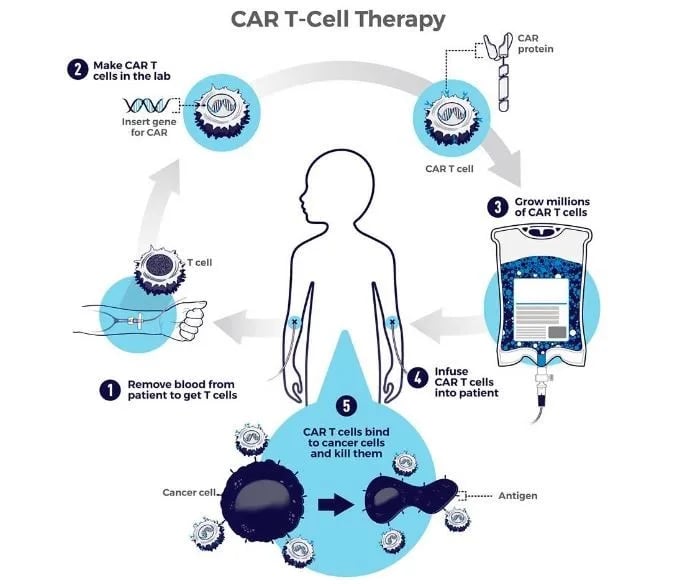
- Enabled large-scale T cell production in lab bioreactors, important for CAR T-cell immunotherapies.
- In mice, injections of these agonists enhanced immune responses and boosted memory T cell production, improving the effectiveness of vaccines.
- Potential Applications:
- Immunotherapy.
- Vaccine development.
- Immune cell regeneration.
What are B and T-Cells?
- B-cells and T-cells are a specific type of white blood cell called lymphocytes.
- They help the immune system to fight germs and protect from disease.
- Types of T cells:
- Cytotoxic T-cells: They kill cells infected with viruses and bacteria, and they also destroy tumor cells.
- Helper T-cells: They send signals that direct other immune cells to fight infection.
- Regulatory T-cells (Tregs): These cells suppress excessive immune responses to prevent autoimmune reactions and maintain immune tolerance.
- They play a crucial role in preventing the immune system from attacking the body’s own cells and tissues.
- T-cells start in bone marrow, mature in thymus and eventually relocate to lymph tissue or bloodstream.
- B-cells make antibodies in response to antigens (antibody generators).
- There are two main types of B-cells: plasma cells and memory cells. Both types help to protect from infection and disease.
Source: TH
Operation Muskaan-XI
Syllabus: GS2/Government Initiative
Context
- Telangana Police rescued over 7,600 children during the last month as part of the nationwide Operation Muskaan-XI initiative.
About the Initiative
- Objective: To rescue children involved in child labour, begging, or living in unsafe conditions.
- High-risk areas targeted: Railway and bus stations, brick kilns, mechanic shops, construction sites, tea stalls, and religious places.
- Conducted in coordination with: Women Development and Child Welfare Department, Labour and Health Departments, Child Welfare Committees (CWCs), District Child Protection Units (DCPUs), and NGOs.
Did You Know?
- Operation Muskaan, also known as Operation Smile, is a Ministry of Home Affairs (MHA) initiative.
- It is a month-long campaign led by State Police forces that aims to trace, rescue, rehabilitate, and reunite missing or trafficked children with their families.
Source: TH
Previous article
India’s Economy Gains Momentum as Inflation Eases and Exports Surge
Next article
Women’s Inclusion in Armed Forces a Priority
