Stem Cell Therapy is a revolutionary medical treatment that utilises stem cells’ unique ability to regenerate damaged tissues and organs. Its significance lies in its potential to address a wide range of diseases, from cancer to neurodegenerative disorders, offering hope for improved patient outcomes. This article aims to study in detail the various types of stem cells, their therapeutic applications, and the ethical considerations surrounding their use.
What is Stem Cell Therapy?
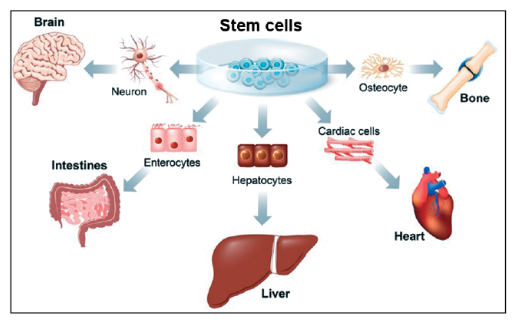
- Stem cells are undifferentiated or “blank” cells. This means they can develop into cells that serve numerous functions in different parts of the body. Most cells in the body are differentiated cells.
- These cells can only serve a specific purpose in a particular organ.
For example, red blood cells are specifically designed to carry oxygen through the blood.
Features of Stem Cells
The features of stem cells are as follows:
- Potency is the capacity to differentiate into specialised cell types and give rise to any mature cell type.
- When a stem cell divides, each new cell has the potential either to remain a stem cell or become another type of cell with a more specialised function, such as a muscle cell, a red blood cell, or a brain cell.
- Totipotent stem cells can differentiate into embryonic and extra-embryonic cell types.
- These cells are produced from the fusion of an egg and sperm cell and can construct a complete, viable organism.
- The only totipotent cells are those of the fertilized egg, and the cells produced by the first few divisions of the fertilized egg are also totipotent.
- Pluripotent stem cells are the descendants of totipotent cells and can differentiate into nearly all cells, i.e. cells derived from any of the three germ layers.
- These are true stem cells potentially making any differentiated cell in the body. Embryonic Stem Cells come under this category.
- Multipotent stem cells can differentiate into a number of cells, but only those of a closely related family of cells, i.e., they can only differentiate into a limited number of types. For example:
- The bone marrow contains multipotent stem cells that give rise to all the blood cells but not to other types of cells.
- Oligopotent stem cells can differentiate into only a few cells, such as lymphoid or myeloid stem cells.
- Unipotent cells can produce only one cell type, their own, but have the property of self-renewal, which distinguishes them from non-stem cells.
- Such unipotent cells include muscle stem cells.
Types of Stem Cells
The types of stem cells can be seen as follows:
Embryonic Stem Cells
- Embryonic stem cells come from human embryos that are three to five days old.
- They are harvested during in-vitro fertilization, which involves fertilizing an embryo in a laboratory instead of inside the female body.
- Embryonic stem cells are also known as pluripotent stem cells, which means they can give rise to virtually any other type of cell in the body.
Non-embryonic (Adult) Stem Cells
- Adult stem cells have a misleading name because they are also found in infants and children.
- These stem cells come from developed organs and tissues in the body. The body uses them to repair and replace damaged tissue in the same area where they are found.
- For example, hematopoietic stem cells are a type of adult stem cell found in bone marrow. They make new red blood cells, white blood cells, and other types of blood cells.
- Doctors have been performing stem cell transplants, also known as bone marrow transplants, for decades, using hematopoietic stem cells to treat certain types of cancer.
- Adult stem cells can’t differentiate into as many other types of cells as embryonic stem cells can.
Induced Pluripotent Stem Cells (iPSCs)
- Scientists have recently discovered how to convert adult stem cells into pluripotent ones.
- These new types of cells are called induced pluripotent stem cells (iPSCs). They can differentiate into all types of specialised cells in the body, potentially producing new cells for any organ or tissue.
- To create iPSCs, scientists genetically reprogrammed the adult stem cells so they behaved like embryonic stem cells.
- The breakthrough has created a way to “de-differentiate” stem cells, which may make them more useful in understanding how diseases develop.
- Scientists hope the cells can be made from someone’s skin to treat a disease.
- This will help prevent the immune system from rejecting an organ transplant. Research is underway to find safe ways to produce iPSCs.
Cord Blood Stem Cells and Amniotic Fluid Stem Cells
- Cord blood stem cells are harvested from the umbilical cord after childbirth. They can be frozen in cell banks for future use.
- These cells have been successfully used to treat children with blood cancers, such as leukaemia, and certain genetic disorders.
- Stem cells have also been found in amniotic fluid. This fluid surrounds a developing baby inside the mother’s womb.
- However, more research is needed to help understand the potential uses of amniotic fluid stem cells.
Read our detailed article on Genetics Disorders.
Controversy Regarding Stem Cells
- Adult stem cells don’t present any ethical problems. However, in recent years, there has been controversy surrounding how human embryonic stem cells are obtained.
- During the process of harvesting embryonic stem cells, the embryo is destroyed.
- This raises ethical concerns for people who believe that the destruction of a fertilised embryo is morally wrong.
- Supporters of stem cell research, on the other hand, believe that the embryos are not yet humans.
- They note that researchers receive consent from the donor couple whose eggs and sperm were used to create the embryo.
- Supporters also argue that the fertilised eggs created during in-vitro fertilisation would be discarded anyway, so they might be better used for scientific research.
Read our detailed article on In-vitro Fertilization.
Way Forward
- Stem cell research has the potential to significantly impact human health. However, there is some controversy about the development, usage, and destruction of human embryos.
- Scientists can ease these concerns by using a new method that can turn adult stem cells into pluripotent stem cells, which can change into any cell type.
- This would eliminate the need for embryonic stem cells in research. Such breakthroughs show that much progress has been made in stem cell research.
Conclusion
In brief, stem cell therapy is at the forefront of medical innovation, the hope for treatment of many diseases being supported by the regenerative nature of the stem cells. The ethical debate concerning embryonic stem cell use may possibly be alleviated with technological advances like that of iPSCs, thereby broadening the therapeutic possibilities.
Now that things have developed, this really means the possibility of stem cells revolutionising healthcare has been growing, opening new prospects for healing and regeneration that could change medicine for many generations.