

Gene therapy is a medical technique that treats or prevents diseases by inserting functional genes to correct genetic defects. It offers potential cures for hereditary disorders, cancer, and chronic conditions. Despite its promise, challenges like immunity and ethics remain. This article aims to provide about Gene Therapy and Its Types, Advantages, Disadvantages & More.
What is Gene Therapy?
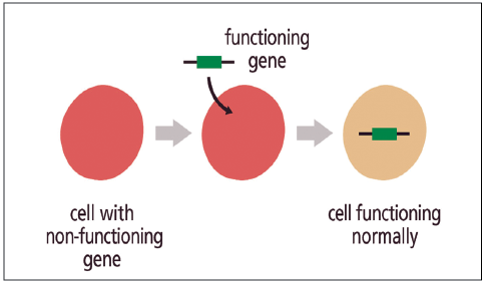
- It is an attempt to correct Hereditary Disease in any person. It is a collection of methods that allows correction of a gene defect that has been diagnosed in a child/embryo. Here genes are inserted into a person’s cells and tissues to treat a disease. Correction of a genetic defect involves delivery of a normal gene into the individual or embryo to take over the function of and compensate for the non-functional gene.
Types of Gene Therapy
Germ Line Gene Therapy
- Here germ cells (sperm or egg) are modified by the introduction of functional genes and are integrated in the genome. Therefore, changes due to therapy would be heritable and would be passed on to the later generation. Theoretically, this approach should be highly effective in counteracting genetic disease and hereditary disorders, but at present there are various technical difficulties and ethical concerns that make it difficult to try in human beings.
Somatic Gene Therapy
- Here therapeutic genes are transferred into the somatic cells of a patient. Any modifications and effects will be restricted to the individual patient only and will not be inherited by the patients offspring or any later generation.
Advantages
- To give someone who is born with a genetic disease or who develops cancer a chance of the normal life.
- Gene silencing is a concept that in itself is self-efficient for management of many diseases.
- Gene therapy has the potential to eliminate and prevent hereditary diseases, such as cystic fibrosis, and is a possible cure for heart disease, AIDS and cancer.
Disadvantages
- Short-lived Nature of Gene Therapy: For gene therapy to be accepted as a permanent cure for any disorder, it has to be ensured that the therapeutic DNA introduced into the target cells undergoes expression for long and the cells expressing the therapeutic DNA are stable and long-lived.
- Immune Response: As long as a foreign entity is introduced into human tissues, evolutionary events have predisposed the immune system to mount an attack against the invader. There is always a risk of awakening the immune system in such a way as to counteract gene therapy.
- Multigenic Disorders: Diseases caused by variation in a single gene are theoretically the best candidates for gene therapy. Unfortunately, the most prevalent disorders, such as heart disease, hypertension, Alzheimer’s, arthritis, and diabetes, emerge from variations in many genes working in combination.
- Ethical Considerations: Some ethical aspects of gene therapy lead to questions such as deciding what is normal and what is not; deciding whether disabilities are diseases and whether they should be cured; and whether the search for a cure demeans the lives of people who have disabilities.
Way Forward
This exciting new method has just started to make news. One day this word will be part of our daily homes. Making a transition out from what it is today in the field of medicine can be done using it. As scientists continue to discover genes and their purposes, the avenues of treatment are endless. Our genome is our body’s blueprint. In some respects, the key to our future lies locked away in our genome. One’s life will be forever changed as researchers begin to unlock that blueprint. We know in some sense that our fate is really in the genes.
Latest Developments in Gene Therapy
- Recent developments show promise in furthering the directions of precision medicine and genetic disease treatments. Perhaps CRISPR-based treatments are now moving towards an in vivo kind to treat genetic diseases like sickle cell disease (SCD) directly in the body, enhancing accessibility and decreasing dependence on chemotherapy.
- Simultaneously, new clinical studies investigate gene therapy for hereditary diseases such as amyloidosis, with LNPs used to deliver genes effectively to the exact tissue. This indicates single-dose therapies that would be enough to correct the faulty gene.
- Going forward in research highlights these innovations morphing away from conventional therapies into targeted genetic therapies that promise personalized efficient treatments for chronic illnesses, cancers, and genetic disorders.
Conclusion
It offers long-term solutions for genetic disorders, cancer, and chronic diseases by correcting faulty genes at their source. With advancements like CRISPR, its potential grows, but challenges such as immune responses, high costs, and ethical concerns remain. As research advances, gene therapy is poised to become a key element of precision medicine, improving patient outcomes and quality of life.
Further Reading: CRISPR-Cas9
Frequently Asked Questions (FAQs)
Which is the first gene therapy in India?
India’s first indigenous gene therapy, CAR-T cell therapy, was launched on April 4, 2024, at the Indian Institute of Technology (IIT) Bombay.
Which disease was first successfully cured by gene therapy?
The first disease successfully treated with it was severe combined immunodeficiency (SCID).
Who founded gene therapy?
The concept of gene therapy was first proposed by scientists W. French Anderson, Michael Blaese, and Kenneth Culver in the 1980s. W. French Anderson is often regarded as the “father of gene therapy” for leading the first approved human gene therapy trial in 1990, which treated a four-year-old girl with severe combined immunodeficiency (SCID).
What was the first gene therapy drug?
The first approved gene therapy drug was Gendicine, developed by Shenzhen SiBiono GenTech. It was approved in 2003 by China’s regulatory authorities to treat head and neck squamous cell carcinoma. Gendicine uses an adenovirus to deliver the p53 tumor suppressor gene into cancer cells, helping to inhibit their growth.
What is gene therapy according to NCERT?
According to NCERT, gene therapy is a treatment that involves inserting genes into a person’s cells and tissues to treat diseases, especially hereditary diseases.