
 80813-00200


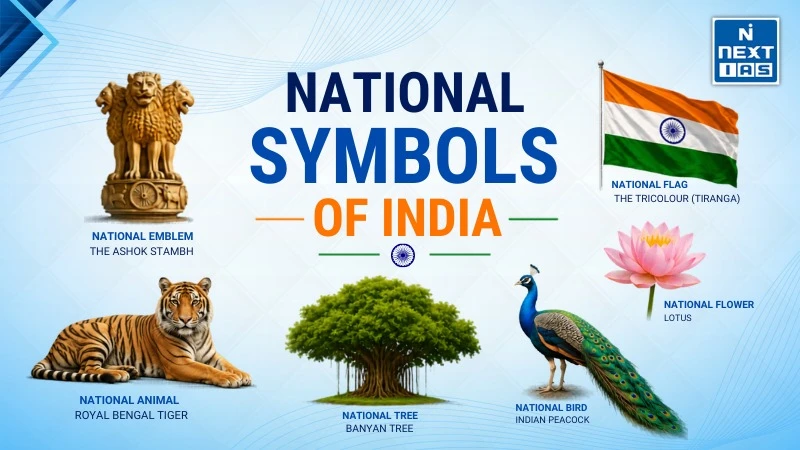
India's 10 National Symbols embody the country's heritage, unity, and values. These include the Tiranga flag symbolizes courage, peace, and growth. The Lion Capital emblem represents power and truth. The Royal Bengal Tiger as the national animal signifies strength. Together with the peacock, lotus, banyan tree, and other national symbols of India, they showcase India's cultural richness and patriotism. These National Symbols of India inspire patriotism and reflect the rich diversity and sovereignty of India.
While the national symbols of India symbolizes its diverse heritage and value system, the national flag of India (Tiranga), incorporates these ideals through its colors and the Ashoka Chakra. Overall, they reflect India's sovereignty, cultural richness, and the collective spirit of the people of India.
National Flag of India
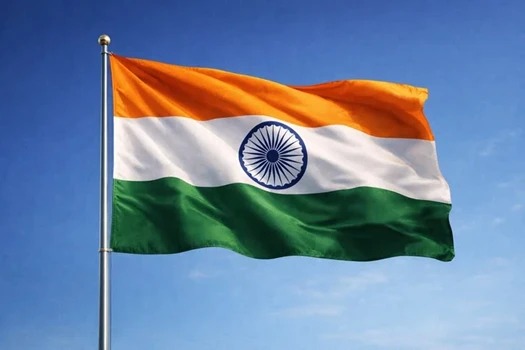
- Every free nation of the world has its own flag. It is a symbol of a free country. The National Flag of India was adopted in its present form during the meeting of the Constituent Assembly held on the 22 July 1947.
- The National flag of India is a horizontal tricolor of deep saffron (kesari) at the top, white in the middle and dark green at the bottom in equal proportion.
- For bureaucracy, the national flag acts as a continuous reminder of the constitutional morality to imbibe such values in the administration.
National Emblem of India
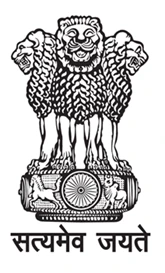
- The State Emblem is an adaptation of the Lion Capital of Asoka at Sarnath adopted as the State Emblem of India on January 26, 1950.
- In the original, there are four lions, mounted back to back, on a circular abacus, which itself rests on a bell-shaped lotus.
- The frieze of the abacus has sculptures in high relief of an elephant, a galloping horse, a bull and a lion separated by intervening Dharma Chakras.
- The motto Satyameva Jayate, which means 'Truth Alone Triumphs', written in Devanagari script below the profile of the Lion Capital is part of the State Emblem of India.
National Anthem of India
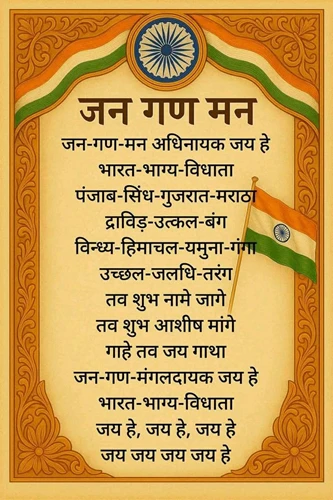
The song Jana-gana-mana, composed originally in Bangla by Rabindranath Tagore, was adopted in its Hindi version by the Constituent Assembly as the National Anthem of India on January 24, 1950.
National Song of India
- The song Vande Mataram, composed in Sanskrit by Bankimchandra Chatterji, was a source of inspiration to the people in their struggle for freedom.
- It has an equal status with Jana-gana-mana.
National Animal of India
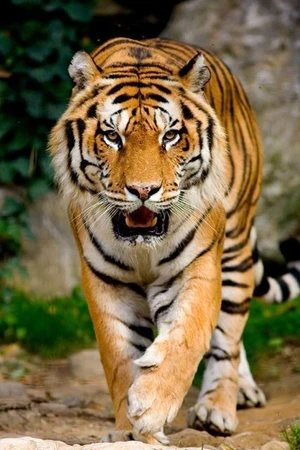
- The magnificent tiger (Panthera tigris) has a combination of grace, strength, agility and enormous power.
- The above traits have earned the tiger its pride of place as the national animal of India.
- Out of eight races of the species known, the Indian race, the Royal Bengal Tiger, is found throughout the country except in the north-western region and also in the neighbouring countries, Nepal, Bhutan and Bangladesh.
National Bird of India
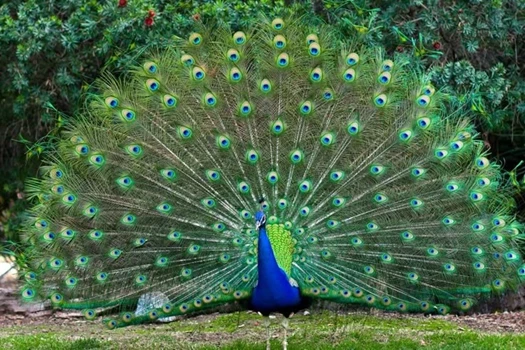
- The Indian peacock (Pavo cristatus), the national bird of India, is a colourful bird, with a fan-shaped crest of feathers, a white patch under the eye and a long, slender neck.
- An interesting fact is that male counterpart of the species is more colourful than the female, with a glistening blue breast and neck and a spectacular bronze-green tail of around 200 elongated feathers.
- The female is brownish, slightly smaller than the male and lacks the tail.
- The elaborate courtship dance of the male, fanning out the tail and preening its feathers is often a beautiful sight.
National Flower of India
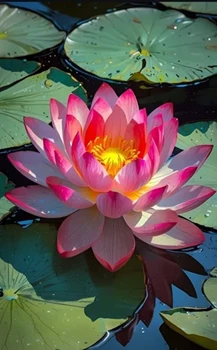
- Lotus is regarded as the National Flower of India.
- It belongs to the Nymphaea family.
- Lotus is frequently employed in religious rituals and worship and is often portrayed as the seat of the gods such as Lord Vishnu and Goddess Lakshmi.
- The metaphorical symbolism of Lotus extends to divinity, fertility, wealth, knowledge and enlightenment.
National Tree of India

- Banyan tree is the national tree of India.
- Interestingly, the tree has many names in India. Some of the unique ones includes the following:
- Bahupada: This name draws upon the banyan's many aerial roots that appear like additional feet.
- Jatal: This word means matted hair. It is associated with Lord Shiva.
- Kshira: This is the Sanskrit word for milk. The banyan, like other fig trees, oozes a milky latex. The Ramayana mentions how this latex was used to braid the hair of ascetics.
- Mahachaya: The banyan resembles a mini-forest. When Alexander marched into India in the third century BCE, his soldiers were fooled into believing that a single banyan tree was a forest.
- Raktaphala: The name comes from the figs of the banyan, which are red.
- Akshaya Vata: A banyan lives for several 100 years and appears everlasting to humans. Therefore, it is believed to be eternal.
- Dhruva: As the tree seems eternal, it is also called the north star, which is also seen as steady and indestructible.
National River of India
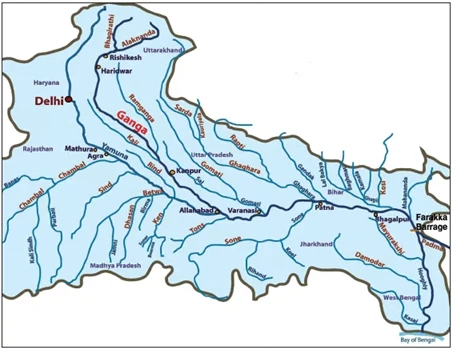
- River Ganga is regarded as the National River of India.
- Ganga has been a cradle of human civilization since time immemorial.
- Millions depend on this great river for physical and spiritual sustenance.
- People have immense faith in the powers of healing and regeneration of the Ganga.
- It is arguably the most sacred river in the world and is deeply revered by the people of this country.
- The designation of Ganga as a national river emphasizes its significance and the continuous national effort such as the Namami Gange Programme for its restoration and cleaning.
National Aquatic Animal of India

- Ganges River Dolphin is regarded as the National Aquatic Animal.
- The River Dolphin inhabits the Ganges-Brahmaputra-Meghna and Karnaphuli-Sangu river systems of Nepal, India, and Bangladesh.
Significance of National Symbols of India
- The national symbols of India are very important since they are the accurate representation of the country's values, culture, and dreams.
- The Tricolor, that is the national flag, communicates sacrifice (saffron), peace (white), and prosperity (green), whereas the Ashoka Chakra in the middle denotes justice and constant progress.
- The national emblem is based on the Lion Capital of Ashoka that represents power, honor, and India's unwavering pursuit of truth.
- India's national flower, the lotus, is a symbol of purification and spiritual awakening, whereas the Bengal tiger and the peacock, the national animal and bird, stand for power and bright beauty, respectively.
- All these symbols together not only promote but also depict India's diversity of culture as well as its national pride and unity. Furthermore, they are reminders of the everlasting values of the country, and its distinctiveness on the global map.
Way Forward
The way forward for national symbols of India lies in setting up for the purposes of raising awareness, protecting the cultural and natural heritage, and promoting these symbols globally. Continuous conservation, education, and instilling respect among citizens will make sure these symbols continue to inspire pride and unity and symbolize India's identity in the times to come.
Conclusion
The National Symbols of India reflects the cultural and historical significance of the icons that reveals a narration of an ancient civilization refurbished as a modern, democratic and sovereign republic. They often establish a connection between the past and the future, between strength and duty, between the people and the nation. As one proceeds further in the preparation process, let us act as a continuous reminder of the core values to preserve the liberty, equality and fraternity of our nation.
FAQs about National Symbols
How many national symbols does India have?
India has 17 officially recognized national symbols.
Name some other important national symbols of India?
Some other important national symbols of India include the National Reptile (King Cobra), National Heritage Animal (Indian Elephant), National Aquatic Animal (Ganges River Dolphin), and National Vegetable (Pumpkin).
What is the National Anthem of India?
The National Anthem of India is 'Jana Gana Mana' composed by Rabindranath Tagore.
What is the National Song of India?
The National Song of India is 'Vande Mataram' written by Bankim Chandra Chatterjee.
