
 80813-00200


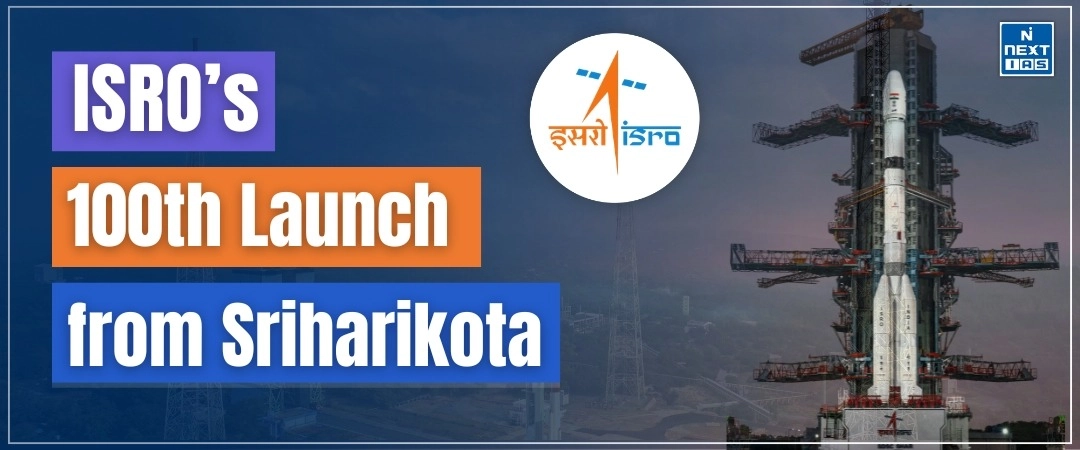
ISRO full form is Indian Space Research Organization. ISRO has completed its 100th launch from Sriharikota on January 29, 2025. GSLV-F15 successfully delivered the NVS-02 NavIC satellite to geostationary transfer orbit. The NavIC satellite provided India with L1, L5 and S-band signals to improve the accuracy of the navigation system for defense, aviation, agricultural purposes and disaster response activities.
ISRO improves navigation capabilities for military operations and commercial aviation. The Prime Minister celebrated the achievement which reflected his support for the upcoming space launch missions and facilities. The successful mission under the new chief of ISRO V. Narayanan demonstrated India's ability to achieve self-reliant space capabilities while preparing for future private sector space development.
Mission Details of the 100th launch by ISRO
| S.No. | Parameter | Details |
|---|---|---|
| 1 | Mission |
|
| 2 | Milestone |
|
| 3 | Launch date |
|
| 4 | Launch vehicle |
|
| 5 | Launch site |
|
| 6 | Payload |
|
| 7 | Satellite mass |
|
| 8 | Target orbit |
|
| 9 | Outcome |
|
| 10 | Strategic purpose |
|
| 11 | Technological importance |
|
Significance of ISRO's Space Missions
- ISRO's space missions are significant as they offer strategic autonomy, observe scientific achievements and provide commercial opportunity. The Earth Observation satellites are meant for supporting crop assessment in agriculture, mapping of groundwater, urban planning, monitoring of forest areas, fisheries, disaster warning and tracking of weather events such as cyclones.
- The Communication satellites enable broadcasting, telemedicine, tele-education, mobile connectivity and digital inclusion in rural and remote areas.
- The Navigation system such as NavIC provides indigenous positioning and offers time related services. As a result, it reduces the dependence on foreign systems and strengthens transport, defence, disaster response and logistics.
- The scientific missions such as Chandrayaan, Mangalyaan, Aditya L1 and XPoSat build India's capability in space science. The indigenous launch vehicles such as PSLV, GSLV, LVM3 and SSLV offer access to space and allow India to deploy national and international satellites in a cost-efficient way.
- The ISRO space missions strengthen the industrial capabilities in Electronics, propulsion, Materials, Software and Satellite manufacturing.
- Strategically, ISRO's space missions help in improving border surveillance, secure communications, weather intelligence and emergency response.
- ISRO has earlier launched numerous economical missions which increased India's global stand and supported the leading private sector in space exploration.
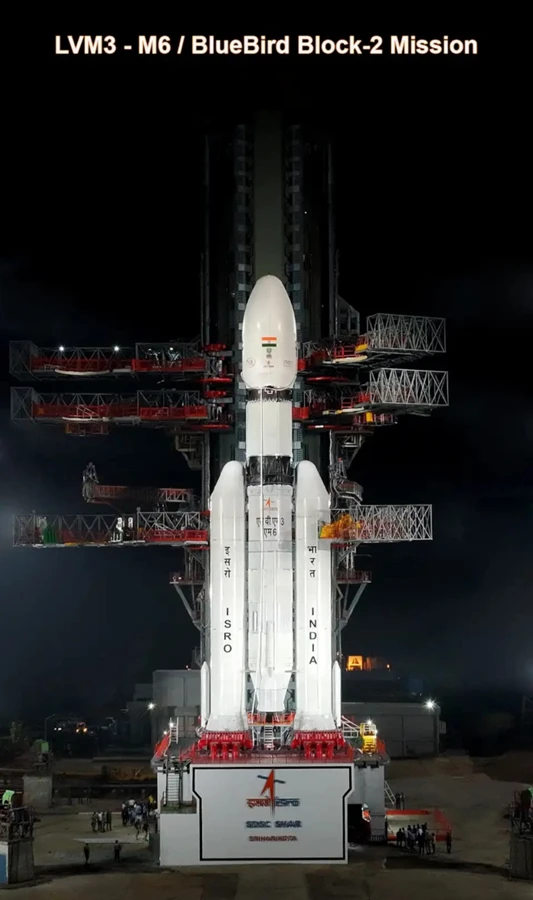
ISRO's Top Successful Launches From Sriharikota
| S.No. | Mission / Launch | Year | Launch vehicle | Major achievement |
|---|---|---|---|---|
| 1 | SLV-3 / Rohini RS-1 | 1980 | SLV-3 | First successful launch that placed an Indian satellite Rohini RS-1 into orbit and established India's launch capability. |
| 2 | PSLV-C37 | 2017 | PSLV-XL | Launched 104 satellites in one mission and created a world record for the highest number of satellites launched in a single mission. |
| 3 | Chandrayaan-1 | 2008 | PSLV-XL | India's first lunar mission and contributed decisive evidence of water on the Moon. |
| 4 | Mars Orbiter Mission (Mangalyaan) | 2013 | PSLV-XL | India's first interplanetary mission. It entered Martian orbit in 2014 on its first attempt. |
| 5 | AstroSat | 2015 | PSLV-XL | India's first dedicated multi-wavelength space observatory. |
| 6 | Chandrayaan-2 | 2019 | GSLV Mk III-M1 | Successfully placed an orbiter around the Moon. Its orbiter continues to gather valuable scientific observations despite the loss of the lander. |
| 7 | EOS-01 with nine customer satellites | 2020 | PSLV-C49 | Demonstrated continuity of Earth-observation and commercial-launch services during the COVID-19 period. |
| 8 | SSLV-D2 / EOS-07 | 2023 | SSLV | First successful developmental flight of ISRO's Small Satellite Launch Vehicle. It was designed for responsive and low-cost launches. |
| 9 | Chandrayaan-3 | 2023 | LVM3-M4 | Achieved India's first successful soft landing near the lunar south polar region. |
| 10 | Aditya-L1 | 2023 | PSLV-XL | India's first solar observatory mission which was sent toward the Lagranges or L1 point. |
| 11 | XPoSat | 2024 | PSLV-C58 | India's first dedicated X-ray polarimetry mission used to study bright X-ray sources such as black holes and neutron stars. |
| 12 | GSLV-F15 / NVS-02 | 2025 | GSLV-F15 | India's 100th launch from Sriharikota. It enhanced the NavIC navigation constellation. |
FAQs about ISRO
What is the full form of ISRO?
The full form of ISRO is Indian Space Research Organization. It is India's national agency for space exploration, research and technology.
Where is ISRO situated?
ISRO's headquarter is located at Antriksh bhavan at Bengaluru in Karnataka.
Who is the Chairman of ISRO?
The Chairman of ISRO is Dr. V. Narayanan who is also the secretary of the department of space and the chairman of Space commission.
Who was the first chairman of ISRO?
Dr. Vikram Amnalal Sarabhai was the first chairman of ISRO and served from 1963 to 1971.
When was ISRO's 100th launch from Sriharikota?
ISRO operationalized its 100th launch from Sriharikota on 29 January 2025. ISRO successfully deployed NVS-02 NavIC satellite from Satish Dhawan Space Centre.
