


Syllabus: GS3/ Economy
Context
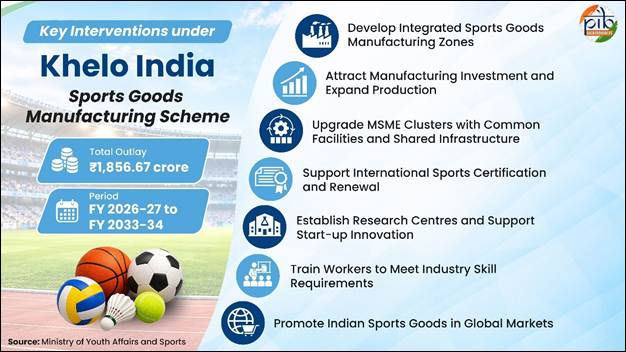
- The Union Cabinet has approved the Khelo India Sports Goods Manufacturing Scheme.
About Khelo India Sports Goods Manufacturing Scheme
- Aim: To promote investment, manufacturing, innovation and exports, and strengthen India’s position in the global sports goods sector.
- Time Period: 2026 to 2033-34.
- The scheme was announced in the Union Budget 2026-27 and the Scheme seeks to strengthen India’s sports goods manufacturing.
Global Market Opportunity in Sports Sector
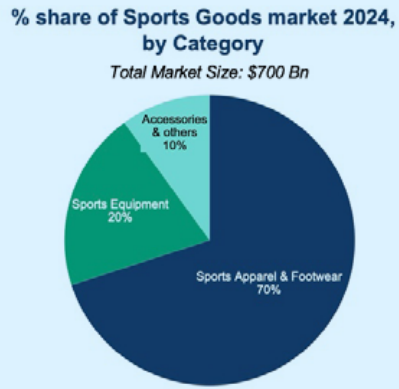
- The global sports goods market, encompassing sports apparel, footwear, equipment, and accessories, was valued at approximately $700 billion in 2024 and is projected to cross $1 trillion by 2036.
- Within this ecosystem, the sports equipment segment alone accounts for approximately $140 billion, with global demand expected to reach around $283 billion by 2036.
India’s Position in Sports Equipment Manufacturing
- India’s domestic sports goods market is estimated at approximately $2.5 billion, with sports equipment accounting for nearly $0.5 billion, indicating substantial scope for expansion in both domestic production and exports.
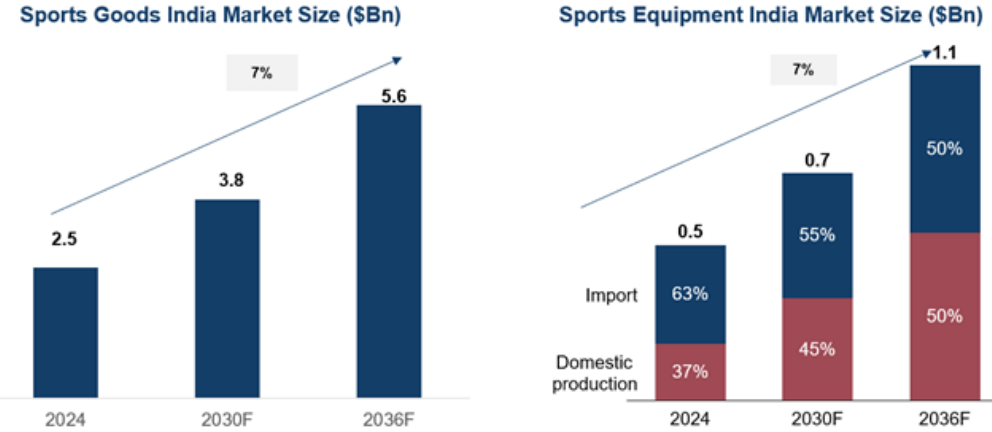
- India currently exports approximately $275 million worth of sports equipment annually, representing around 0.5% of the global export market.
- Manufacturing activity is concentrated in established clusters such as Jalandhar (Punjab) and Meerut (Uttar Pradesh), supported by a network of exporters, domestic manufacturing units, and thousands of micro enterprises.
- The sector is overwhelmingly MSME-driven, with nearly 90% of production undertaken by small and micro enterprises.
- Products with an international presence: India manufactures cricket bats, protective gear, inflatable balls, and gym and athletic training equipment.
- The United Kingdom, United States and Australia together receive over half of India’s sports equipment exports.
- Significant long-term potential: India’s sports equipment exports could reach approximately US$8.1 billion by 2036, potentially generating around 54 lakh additional direct and indirect jobs.
- A decade of major events: the Los Angeles Olympics 2028, the Commonwealth Games 2030 in Ahmedabad, the Brisbane Olympics 2032 and India’s planned bid for the 2036 Olympic Games create a decade of demand for sports equipment.
Key Challenges Affecting Export Competitiveness
- High customs duties on critical raw materials such as carbon fibre, EVA foam, and polyurethane materials.
- High certification costs required to meet international sporting standards.
- Logistics inefficiencies and higher input costs.
- Limited access to advanced manufacturing technologies.
- Weak linkages with global sports brands and procurement ecosystems.
- Limited global visibility and branding of Indian sports equipment.
Government Initiatives
- BHAVYA: The Bharat Audyogik Vikas Yojna provides for 100 plug-and-play industrial parks.
- Facilities such as ready-built factory sheds, testing laboratories and warehousing provide the infrastructure needed by manufacturers.
- National Industrial Corridor Development Corporation Limited (NICDC): NICDC helps develop industrial cities with land, roads, power, water and transport links for manufacturers.
- Its industrial corridor programme covers 20 industrial smart cities across 13 States, with four completed as of September 2026.
- Research and Innovation: Anusandhan National Research Foundation (ANRF) supports research and collaboration between educational institutions, research organisations and industry.
- Khelo India and Fit India: Khelo India supports participation, talent development, training and sports infrastructure, while Fit India promotes fitness and an active lifestyle.
Policy Recommendations to Boost Sports Equipment Exports
- Cost Competitiveness: Rationalise import duties on critical raw materials such as carbon fibre, EVA foam, and polyurethane to reduce input costs.
- Strengthening MSME Ecosystem: Expand targeted financial support, credit access, and technology upgradation schemes for MSMEs.
- Cluster-Based Manufacturing Development: Develop new port-proximate greenfield clusters to reduce logistics costs and improve export efficiency.
- Quality Standards: Set up world-class testing and certification facilities to meet international standards.
- Establish dedicated sports technology innovation hubs in collaboration with academia and industry.
Conclusion
- India needs a holistic ecosystem approach combining cost competitiveness, quality enhancement, and global integration is essential.
- With sustained policy push, it can transition from a low-share exporter to a global leader in sports equipment manufacturing.
Source: PIB
Previous article
Building a Holistic Care System for India
Next article
The Rise in Youth Unrest and Underlying Reasons
