


Syllabus: GS2/ Health, GS3/ Science and Technology
Context
- A pan-India clinical research has demonstrated that CancerSpot, a blood-based cancer detection test, may detect many forms of cancer using a single blood test.
How Does the Test Work?
- Circulating Cell-Free DNA (cfDNA): Cells naturally release small DNA fragments into the bloodstream. In cancer patients, some of these fragments originate from tumour cells and carry cancer-associated changes.
- DNA Methylation: The test analyses patterns of DNA methylation, which refers to chemical modifications of DNA that regulate gene activity.
- Methylation patterns differ between normal and cancerous cells and can provide signals for identifying cancer.
- AI-based analysis: AI examines these patterns in blood samples to identify signals associated with different cancer types.
About Cancer
- It refers to a group of diseases characterised by the rapid growth of abnormal cells that can invade nearby tissues and spread to other organs (metastasis), which is the leading cause of cancer-related deaths.
- It develops through a multi-stage process influenced by genetic factors and external agents, including physical (e.g., radiation), chemical (e.g., tobacco, alcohol, asbestos), and biological carcinogens (e.g., viruses and bacteria).
- Age increases cancer risk due to accumulated exposures and declining cellular repair mechanisms.
- Major Risk Factors for Cancer:
- Tobacco consumption: A major contributor to lung and several other cancers.
- Infections: HPV, Hepatitis B and C, and Helicobacter pylori infections.
- Lifestyle factors: Alcohol consumption, obesity, unhealthy diets and physical inactivity.
- Environmental factors: Air pollution and exposure to carcinogenic substances.
Status of Cancer Burden
- Approximately 20.6 million new cancer cases were reported globally in 2024, with nearly 9.8 million people dying from it, making it the second leading cause of death globally after cardiovascular diseases.
- In 2024, Asia accounted for the largest share, with more than half of all cancer cases (50.7%), while Europe carried a disproportionately high burden, contributing 21% of global cases.
- Lung cancer remains the leading cause of cancer death globally.
- Lung, prostate and colorectal cancers are among the most common cancers in men, while breast, lung and colorectal cancers account for a substantial share of the burden among women.
- India recorded an estimated 15.6 lakh new cancer cases in 2024, with approximately 9 lakh cancer deaths.
Challenges in Cancer Control
- Delay in detection due to lack of proper screening facilities and poor diagnostic infrastructure.
- Expensive medicines, radiation therapy and specialised procedures increase out-of-pocket expenditure (OOPE).
- Shortages of oncologists, trained healthcare workers and specialised cancer centres, particularly in developing countries.
- Limited insurance coverage and social security support expose households to catastrophic health expenditure.
- Advanced diagnostics, precision medicine and clinical trials remain concentrated in high-income countries.
Initiatives taken by India
- The National Cancer Registry Programme (NCRP) under ICMR has been tracking cancer incidence, burden, and trends since 1982, playing a vital role in gathering and analyzing data, enabling evidence-based policy decisions.
- The National Institute of Cancer Prevention & Research (NICPR) is the nodal agency research and screening guidelines under NPCDCS.
- The National Cancer Grid (NCG) was established in 2012 to ensure high-quality, standardized cancer care across India.
- The NCG also works closely with Ayushman Bharat – PMJAY to provide affordable, evidence-based cancer treatment and streamline costs under the scheme.
- Awareness Generation:
- The Eat Right India campaign by the Food Safety and Standards Authority of India (FSSAI) encourages nutritious food choices.
- Print, electronic and social media are used to increase public awareness. Healthy lifestyle is promoted through observation of National Cancer Awareness Day and World Cancer Day.
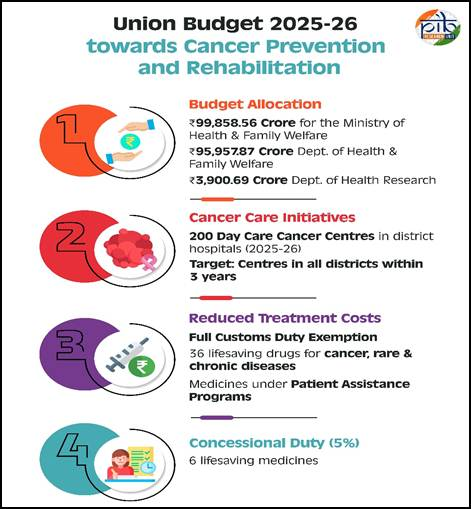
Advancing Cancer Research and Treatment
- In 2024, India launched NexCAR19, the nation’s first indigenously developed CAR-T cell therapy.
- India, in partnership with the US, Australia, and Japan, has launched the Quad Cancer Moonshot in 2024 to eliminate cervical cancer across the Indo-Pacific region.
- In 2025, the Advanced Centre for Treatment, Research, and Education in Cancer (ACTREC), a key arm of Tata Memorial Centre (TMC), embarked on a major expansion to revolutionise cancer research, treatment, and patient care.
Way Ahead
- Expand HPV and Hepatitis B vaccination, tobacco control and awareness regarding modifiable risk factors.
- Strengthen population-based screening and diagnostic infrastructure.
- Improve access to essential cancer medicines and expand financial protection.
- Strengthen public cancer centres, and specialised oncology services.
- Integrate mental health support and caregiver assistance into cancer care.
Source: TH
Previous article
News In Brief 18-11-2026
Next article
Microfinance Sector in India
