


Syllabus: GS3/Energy
Context
- Amid escalating tensions in West Asia, disruptions are being reported in the supply of liquefied petroleum gas (LPG) cylinders in several Indian cities, including Mumbai, Bengaluru, and Kolkata.
About LPG
- Liquefied Petroleum Gas (LPG) is a highly flammable, energy-rich, and clean-burning fuel composed mainly of propane and butane.
- It is obtained during crude oil refining or natural gas processing and is stored under pressure as a liquid in steel cylinders for household cooking, heating, and automotive use.
- Oil Marketing Companies such as IOC and BPCL produce 40% of India’s LPG requirement.
Why the Disruption?
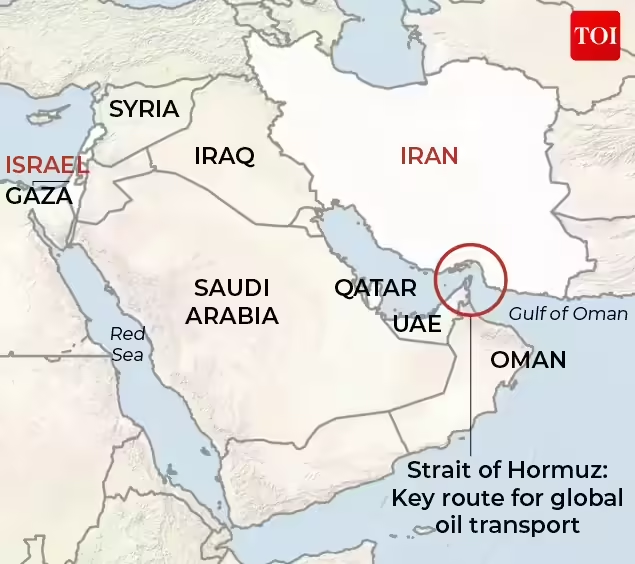
- Geopolitical Risk: India imports about 60 percent of its LPG consumption and out of these imports about 90 percent come through the Strait of Hormuz, which has been impacted due to current happenings (US and Israel’s war with Iran).
- Infrastructural Weakness: India’s LPG supply system is largely designed for continuous operational flow rather than large-scale stockpiling. For long-term storage, the country currently has two underground LPG storage caverns located at Mangaluru and Visakhapatnam, with a combined capacity of about 1.4 lakh tonnes, which is limited compared to national consumption.
- Surge in Domestic Demand: According to the International Energy Agency (IEA), India’s LPG imports increased threefold between 2011-12 and 2024-25, reaching nearly 20 million tonnes. The expansion has been driven partly by the Pradhan Mantri Ujjwala Yojana (PMUY), under which nearly 10 crore LPG connections have been added since 2017.
- India now has about 33 crore domestic LPG connections.
Ripplings Effects of an LPG Shortage
- Impact on Households: Nearly 87 percent of India’s LPG consumption is used in the domestic sector, mainly for cooking in household kitchens.
- Industrial Implications: A number of industries—including textile, food processing, pharmaceuticals, and agricultural equipment manufacturing—use LPG in boilers for processes such as heating, sterilisation, and dyeing.
- Restaurants, hotels, and catering services depend heavily on commercial LPG cylinders.
- Supply Chain and Transport Costs: A journey that normally takes about four days from Gulf ports can extend to nearly 25 days if ships reroute around Africa to avoid the conflict zone.
- Such detours increase freight charges and insurance premiums, raising the overall cost of LPG imports.
- Macroeconomic Impact: India is the second-largest consumer of LPG in the world. Analysts estimate that every $10 increase in global crude prices can expand India’s current account deficit by roughly $9 billion, putting pressure on the country’s external balance.
Government Response
- The government has taken several measures to manage the emerging shortage and stabilise supply.
- The Essential Commodities Act has been invoked to prioritise LPG supply for households, hospitals, and essential services, while restricting commercial distribution in some areas.
- Refineries have been directed to increase LPG production, leading to about a 25 percent rise in output.
- State governments have been asked to ensure security and smooth functioning of LPG supply chains.
- At the same time, India has been attempting to diversify its energy procurement sources, purchasing crude oil from more than 40 countries worldwide to reduce dependence on any single region.
Way Forward
- The emerging LPG shortage highlights the broader challenge of energy security in a geopolitically uncertain world. While India has significantly expanded LPG access through welfare schemes such as the Pradhan Mantri Ujjwala Yojana, the country remains vulnerable to disruptions in global energy supply chains.
- Strengthening Strategic LPG storage capacity, diversifying energy imports, and promoting alternative fuels will be crucial for ensuring stable and sustainable energy access for millions of households and businesses in India.
Source: TH
Previous article
International Year of the Woman Farmer (IYWF 2026)
