


Syllabus: GS2/ Health
Context
- The rising incidence of zoonotic diseases and antimicrobial resistance has highlighted the need for a coordinated One Health approach to address human, animal, and environmental health risks.
What is the One Health Approach?
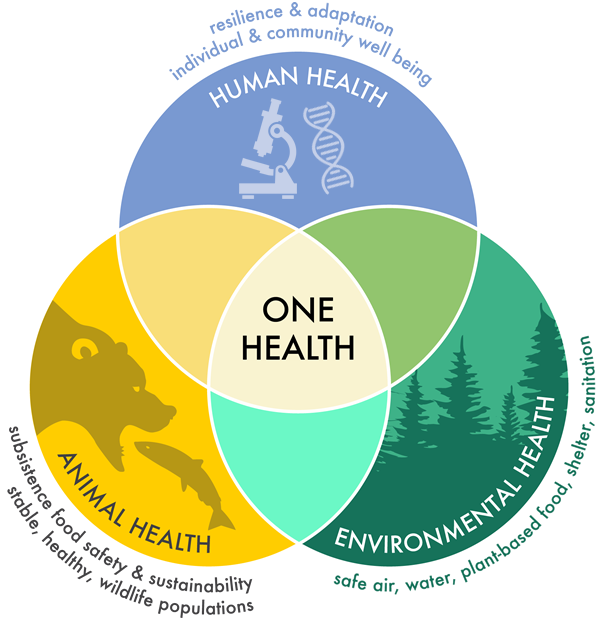
- One Health is an integrated, unifying approach that aims to sustainably balance and optimize the health of people, animals and ecosystems.
- It recognizes that the health of humans, domestic and wild animals, plants, and the wider environment (including ecosystems) are closely linked and interdependent.
Evolution of the Concept of One Health
- The concept gained prominence during the outbreak of Severe Acute Respiratory Syndrome in 2003–04.
- It was further strengthened during the spread of Avian Influenza H5N1.
- The Manhattan Principles formally recognised the linkages between human and animal health and their implications for global economies and food security.
- Scientific evidence over time has shown that;
- Nearly 75% of emerging infectious diseases are zoonotic.
- Anthropogenic factors such as land-use change, urbanisation, and global trade drive disease emergence.
Significance of One Health Approach
- Rising Zoonotic Diseases: A large proportion of emerging pathogens originate in animals and spill over to humans. Further increased human encroachment into wildlife habitats has intensified such risks.
- Impact of Climate Change: Climate change is altering ecosystems, vector distribution, and disease transmission patterns.
- Extreme weather events are increasing vulnerabilities in already fragile health systems.
- Antimicrobial Resistance (AMR): Indiscriminate use of antibiotics in humans, livestock, and agriculture is accelerating AMR.
- A cross-sectoral strategy is essential to address this growing global threat.
- Globalisation of Health Risks: Increased mobility of people and goods has enabled rapid cross-border transmission of diseases. Health security has become a matter of global collective action.
Global Initiatives Strengthening One Health
- The Quadripartite collaboration provides leadership to the One Health approach, comprising;
- World Health Organization
- Food and Agriculture Organization
- United Nations Environment Programme
- World Organisation for Animal Health.
- The One Health Joint Plan of Action (2022): It aims to strengthen surveillance and early warning systems across countries. It also focuses on addressing zoonotic diseases and antimicrobial resistance in a coordinated manner.
- The WHO Pandemic Agreement aims to ensure equitable access to vaccines and therapeutics across countries. It also seeks to establish robust pathogen data-sharing mechanisms at the global level.
National One Health Mission
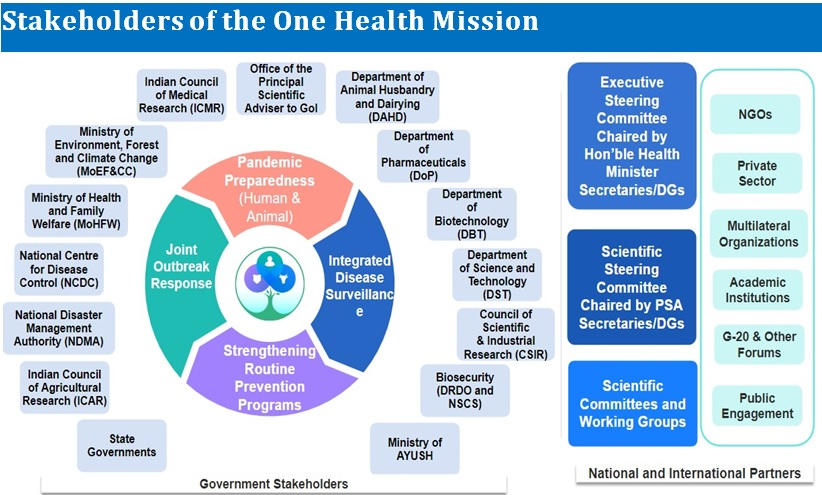
- Launched by: The Prime Minister’s Science, Technology, and Innovation Advisory Council (PM-STIAC) approved setting up a National One Health Mission with a cross-ministerial effort in 2022.
- Objective: To develop an integrated framework for surveillance, prevention, and control of zoonotic diseases, antimicrobial resistance (AMR), and emerging health threats.
- Approach: Cross-sectoral collaboration among ministries (Health, Animal Husbandry, Agriculture, Environment, etc.), research bodies, and state governments.
- Focus areas:
- Zoonotic diseases (e.g., Nipah, Avian Influenza, COVID-19 origins).
- Food safety and antimicrobial resistance.
- Climate change and its impact on disease spread.
- Capacity building for laboratories and data integration platforms.
Challenges in Operationalizing One Health
- Intersectoral Coordination: Fragmented institutional silos between human, animal, and environmental health bodies.
- Lack of Trained Workforce: Shortage of epidemiologists, zoonotic disease experts, and data scientists at the district level.
- Infrastructural Disparities: States vary in surveillance capabilities and digital health integration.
- Data Privacy & Sharing: Ensuring secure and effective real-time data flow between sectors remains a concern.
Way Ahead
- Integrated and real-time surveillance systems should be strengthened to enable early detection and timely response to emerging health threats.
- International cooperation should be strengthened to ensure equitable access to vaccines, diagnostics, and treatments across countries.
- Capacity building and community participation should be promoted to strengthen preventive and resilient healthcare systems.
Source: TH
Previous article
News In Short 06-04-2026
Next article
India Achieves Milestone in Nuclear Energy Programme
