


Syllabus: GS3/ Science and Technology
Context
- At the Raisina Dialogue 2026, the need for early collaboration between scientists and diplomats was emphasized to design governance frameworks for emerging technologies such as quantum computing.
What is Quantum Computing?
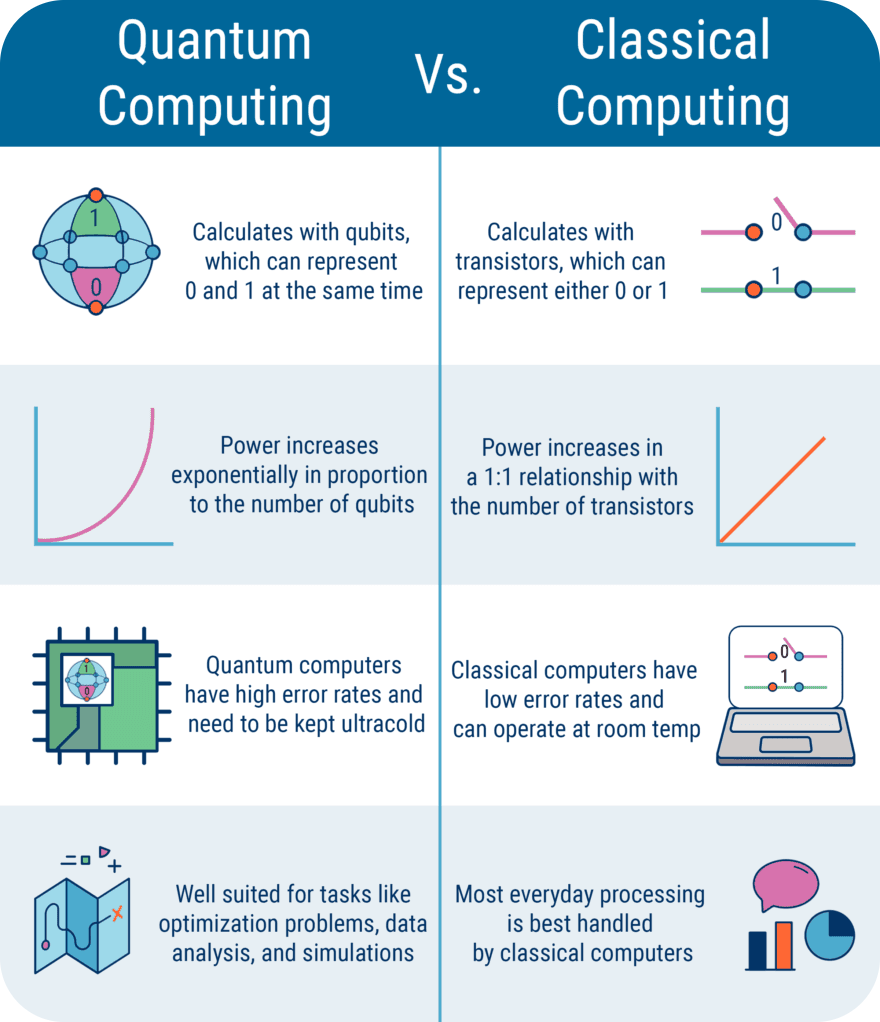
- Quantum computing refers to a new class of computers that use the principles of quantum mechanics rather than classical binary logic.
- Classical computers process information using bits (0 or 1), while quantum computers use qubits, which can exist in multiple states simultaneously.
- This capability allows quantum computers to perform certain calculations exponentially faster than conventional computers.
Principles of Quantum Computing
- Superposition: It allows a qubit to exist in multiple states simultaneously, enabling quantum computers to perform many calculations in parallel.
- Entanglement: It occurs when two or more qubits become strongly correlated, such that the state of one instantly determines the state of the other.
- This property allows quantum computers to process and link information efficiently, helping solve complex problems faster.
- Decoherence: Decoherence refers to the loss of a qubit’s quantum state due to interaction with the environment (such as radiation or heat).
- Preventing or delaying decoherence is a major challenge in building stable quantum computers.
Applications of Quantum Computing
- Cryptography & Cybersecurity: Enables ultra-secure communication through Quantum Key Distribution (QKD); for example, quantum communication networks being developed for secure government and military communication.
- Drug Discovery & Material Science: Can simulate complex molecular interactions; for example, designing new drugs or advanced batteries by modelling chemical reactions that classical computers struggle to process.
- Optimization Problems: Helps solve complex optimization tasks in logistics and finance; for example, optimizing airline routes, traffic flow in cities, or portfolio management in stock markets.
- Artificial Intelligence & Big Data Analysis: Enhances processing of massive datasets; for example, improving pattern recognition in climate modelling, fraud detection in banking, or advanced machine learning systems.
Source: TH
Previous article
Policy Reforms That Transformed Business Environment
