


Syllabus: GS3/Internal Security
Context
- The Border Security Force (BSF) is exploring the use of natural deterrents like snakes and crocodiles in riverine stretches of the India–Bangladesh Border, where fencing is not feasible.
India–Bangladesh Border: Key Facts
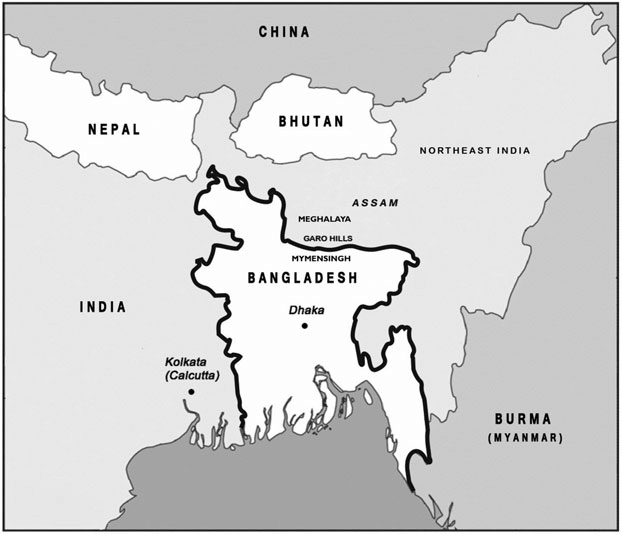
- The India–Bangladesh border, stretching approximately 4,096.7 km, is India’s longest international boundary.
- Out of this, around 3,232 km has been fenced, while about 864 km remains unfenced, including nearly 174 km of non-feasible gaps.
- These gaps exist due to rivers (such as the Ichhamati, Raimangal, and Haribhanga), frequent flooding, and difficult terrain, especially in the Sundarbans region.
- The border passes through West Bengal, Assam, Meghalaya, Tripura, and Mizoram.
Major Issues
- Porous Border & Illegal Migration: Long-standing concern of illegal migration from Bangladesh.
- It is driven by economic disparities, and environmental displacement (floods, erosion).
- Smuggling & Transnational Crime: Common illegal activities i.e. cattle smuggling, narcotics trafficking, and fake currency.
- Organized networks exploit difficult terrain and local linkages.
- Riverine & Difficult Terrain: Large stretches are flood-prone, without fencing, and subject to changing river courses.
- Physical barriers are difficult in low-lying and riverine areas, delaying fencing projects.
- Border Fencing Challenges: Land acquisition issues, and local protests (fencing cuts through villages/agricultural land).
- Fencing norms (distance from zero line) complicate implementation.
- Humanitarian & Social Concerns: Border residents face restricted movement, livelihood disruptions, and allegations of excessive force.
- India–Bangladesh Coordination Issues: Occasional tensions like border killings, and disputes over fencing close to the zero line.
Border Management Measures Adopted
- Deployment of BSF: BSF is the primary border guarding force, for round-the-clock surveillance and patrolling.
- Technological Interventions: BOLD-QIT (Comprehensive Integrated Border Management System) deployed in Assam riverine stretches. It uses sensors, thermal imagers, and radars.
- Smart Fencing (BOLD-QIT): Smart fencing for real-time monitoring, with integrated command and control systems.
- Border Outposts (BOPs) Strengthening: Increased density of BOPs, and identification of ‘dark areas’ (no mobile connectivity) for improvement.
- India–Bangladesh Cooperation: Coordinated Border Management Plan (CBMP); joint patrols and flag meetings; and improved intelligence sharing.
- Land Boundary Agreement (LBA), 2015: Settlement of enclave disputes (exchange of territories); demarcation of previously undefined border segments; improved bilateral relations and reduced conflict zones.
- Border Haats (Local Trade Markets): To promote local economic cooperation, legalize small-scale cross-border trade, reduce smuggling and informal trade, and improve livelihoods in border communities.
Challenges & Concerns opting natural deterrents
- Ecological & Ethical Issues: Introducing or manipulating wildlife populations for security purposes could disturb natural ecosystems and violate wildlife protection norms.
- Proportionality Concerns: Snakes and crocodiles cannot distinguish between infiltrators and local fishermen or civilians, raising serious humanitarian questions.
- International Law Angle: Use of lethal natural hazards as deliberate border barriers may conflict with international humanitarian norms.
About Border Security Force (BSF)
- It is India’s primary border guarding force, functioning under the Ministry of Home Affairs (MHA), was established on 1 December 1965.
- It is one of the Central Armed Police Forces (CAPFs) tasked with ensuring the security of India’s borders, especially with Pakistan and Bangladesh.
- Legal Basis: Border Security Force Act, 1968
- Objectives:
- Ensure security of India’s borders
- Prevent trans-border crimes
- Check illegal migration and infiltration
- Act as the first line of defence during peacetime
Previous article
The Executive Office without a Limit
Next article
Indian Ports have to transform using AI
