


Syllabus: GS2/ Health
In Context
- India faces a high anaemia burden, prompting the proposal of Double-Fortified Salt (DFS) containing iron and iodine. However, concerns persist over its effectiveness, safety and compatibility with salt-reduction goals.
Double-Fortified Salt (DFS)
- DFS is edible salt fortified with iron (haemoglobin formation) and iodine (thyroid function).
- Salt is consumed by nearly every household, so fortification can reach large populations without changing dietary habits.
Concerns with Universal DFS Rollout
- Conflict with salt reduction: WHO advises under 5 g of salt daily, and India faces rising hypertension and NCDs. DFS delivers iron only if salt is consumed, so cutting sodium also cuts iron intake.
- Unequal delivery: Adult men consume more salt than women and children. Iron thus reaches the vulnerable least, while groups at lower anaemia risk receive more.
- Risk of iron excess: The body cannot easily excrete surplus iron, which may cause oxidative stress. Persons with thalassaemia face overload risk, and iron in malaria-endemic, poorly sanitised settings raises further concern.
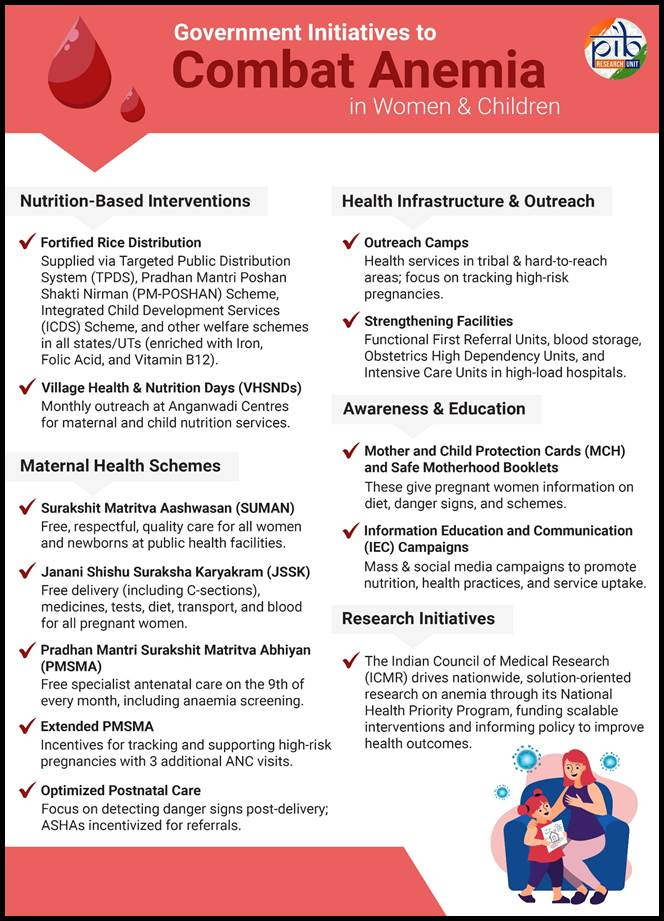
- Cumulative exposure: Iron already comes through fortified rice in PDS, PM POSHAN, ICDS and IFA supplementation. Adding DFS may push children and adolescents toward excess intake.
- Poor absorption: DFS contains non-haem iron, whose uptake falls with phytates (cereals, millets, pulses), tea and coffee polyphenols and calcium. Infection and inflammation raise hepcidin, which blocks iron uptake, so benefits shrink where disease burden is high.
What is Anemia?
- Anaemia is a condition in which the haemoglobin level in blood is below the normal range, reducing the blood’s oxygen-carrying capacity. Iron deficiency is a major cause of anemia, but it is not the only cause.
- According to the WHO, women in the reproductive age group and having haemoglobin levels lower than 12 grams per decilitre (g / dL), as well as children under 5 with haemoglobin levels lower than 11.0 g / dL are considered anaemic.
- According to NFHS-5 (2019–21), 67.1% of children aged 6–59 months and 59.1% of women aged 15–49 years were anaemic. (Anaemia data was excluded from the NFHS-6 (2023–24)).
What is its impact?
- Health: Fatigue, weakness and increased maternal and child health risks.
- Cognitive: Impaired learning, memory and child development.
- Economic: Reduced work capacity and labour productivity.
- Social: Intergenerational malnutrition and poor quality of life.
- Human Development: Undermines demographic dividend and SDG 2 (Zero Hunger) and SDG 3 (Good Health).
India’s Strategy: Anaemia Mukt Bharat (AMB)
- AMB follows the 6×6×6 framework (six beneficiary groups, six interventions, six institutional mechanisms).
- Its core measures are IFA supplementation, deworming, behaviour change communication, testing and treatment, and attention to nutrition and sanitation.
Challenges in India’s Anaemia Control Strategy
- IFA compliance is low because of gastrointestinal side effects.
- Diagnostics rarely go beyond haemoglobin, with limited testing for ferritin, B12 and inflammation.
- Healthy, diverse diets remain unaffordable for many households.
- Multiple programmes delivering iron without adequate assessment of cumulative exposure.
- Monitoring that often focuses on tablets distributed and tests conducted rather than health outcomes.
Way Forward
- Evidence-based fortification: Run monitored district pilots before national scale-up, tracking haemoglobin, ferritin and inflammation markers. Assess cumulative iron exposure and watch malaria-endemic and haemoglobinopathy-prone areas.
- Targeted interventions: Prioritise vulnerable groups and diagnosed deficiencies. Choose iron compounds suited to local diets and avoid unnecessary exposure.
- Stronger diagnostics: Expand access to ferritin and B12 testing and build treatment protocols around the underlying cause.
- Social determinants: Improve food affordability and diversity, and strengthen sanitation, deworming and malaria control. Address adolescent undernutrition, early marriage and maternal health.
- Outcome-based monitoring: Measure haemoglobin and iron status improvements and adverse effects, with district-level accountability.
Source: TH
Previous article
Union Cabinet Approves VISTAR Scheme
Next article
Falling Fertility Rate in India
