


Maithili Sharan Gupt Jayanti
Syllabus: GS1/History and Culture
Context
- Maithili Sharan Gupt Jayanti is celebrated every year on 3 August to mark the birth anniversary of the legendary Indian poet, Maithili Sharan Gupt.
About
- Birth Date: August 3, 1886, in Chirgaon, Jhansi, Uttar Pradesh.
- Literary Contributions: He popularised Khari Boli Hindi as a literary language, displacing the hegemony of Braj Bhasha in modern poetry.
- His work included issues of nationalism, social justice and Indian cultural values.
- Literary Works: Saket (an epic depicting the Ramayana from Urmila’s perspective), Bharat Bharati, Yashodhara, Panchavati, and Jayadrath Vadh.
- Title: Mahatma Gandhi granted him the title of “Rashtrakavi” (National poet) for his patriotic masterpiece Bharat-Bharati (1912).
- Honors: He was nominated member of Rajya Sabha from 1952-1964.
- For his outstanding contribution to literature and education, he was awarded Padma Bhushan in 1954.
Source: AIR
Acharya Prafulla Chandra Roy
Syllabus: GS1/History
Context
- 2nd August is observed as the 166th birth anniversary of Acharya Prafulla Chandra Roy.
About
- He was born on 2nd August 1861 in Khulna, now in Bangladesh, he rose to prominence as a pioneering scientist, educator, and industrialist.
- He was the founder of India’s first pharmaceutical company Bengal Chemicals & Pharmaceuticals established in 1901.
- He is widely regarded as the father of modern chemical science in India and played a key role in promoting scientific education in the country.
- He also established the first modern Indian research school in chemistry.
- He is remembered for his discovery of mercurous nitrite in 1896. It opened a new path for research into metal nitrites and established modern chemical research in India.
Source: AIR
Pingali Venkayya
Syllabus: GS1/History
Context
- Prime Minister Narendra Modi paid tributes to freedom fighter Pingali Venkayya on his 150th birth anniversary.
Pingali Venkayya
- He was born on 2 August 1876, in Krishna district, Andhra Pradesh.
- He was a freedom fighter and the designer of the Indian national flag, which later evolved into the present-day Tricolour.
Flag Design
- In 1921, he presented a flag design to Mahatma Gandhi at a Congress session in Vijayawada.
- His design featured three stripes representing India’s major communities and a spinning wheel (charkha) symbolizing self-reliance.
- In 1947, the design was modified to include the Ashoka Chakra, symbolizing law and progress.
Recognition
- The Government of India has issued postage stamps in his honor and organized events like Tiranga Utsav to celebrate his legacy.
Source: PIB
Shipki La Pass
Syllabus: GS1/Geography
In News
- India-China cross-border trade resumed through Shipki-La after six years.
Shipki La Pass
- It is a motorable mountain pass in the Kinnaur district of Himachal Pradesh at 3,930 m.
- It enters Himachal Pradesh at Shipki La (3,930 m) and flows in the south-westerly direction through Kinnaur, Shimla, Kullu, Mandi, Solan and Bilaspur districts of the State.
- It has been a traditional trade route between India and Tibet at least since the 15th century, building up economic, cultural and civilisational linkages.
- Trade included wool, horses, borax, turquoise and gold from Tibet, grains, spices, dried fruits, timber and metal goods from India.
- These exchanges supported local livelihoods, crafts and cultural traditions.
- The route was closed after the 1962 Sino-Indian War and was disrupted during the Doklam standoff and the COVID-19 pandemic.
- Shipki La was more than a trade route. It was a shared Buddhist heritage, pastoral way of life, and cultural links between the people on the two sides of the border.
Source: Air
Pradhan Mantri Viksit Bharat Rojgar Yojana (PM-VBRY)
Syllabus: GS2/Government Initiatives
Context
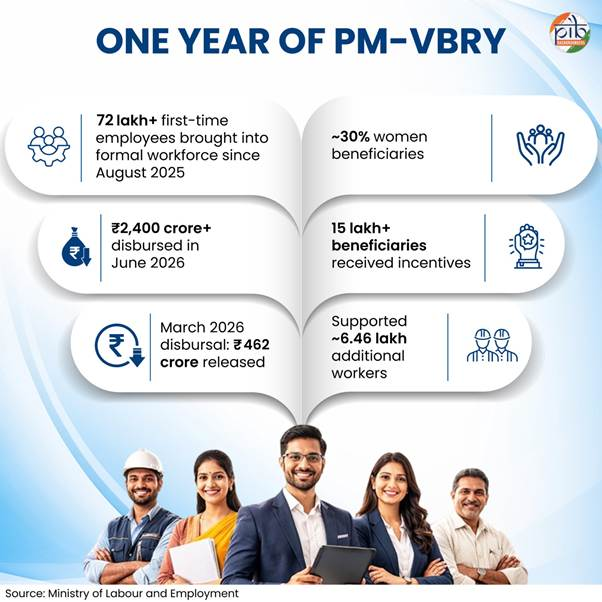
- The Pradhan Mantri Viksit Bharat Rojgar Yojana (PM-VBRY), the Centre’s flagship employment-linked incentive scheme, has completed one year of implementation.
About PM-VBRY
- It is a Central Sector Scheme launched in 2025 and implemented by the Ministry of Labour & Employment.
- Aim: To promote employment generation, enhance employability, and strengthen social security across all sectors with a particular focus on the manufacturing sector.
- The scheme aims to create more than 3.5 crore meaningful jobs across the country.
- Features:
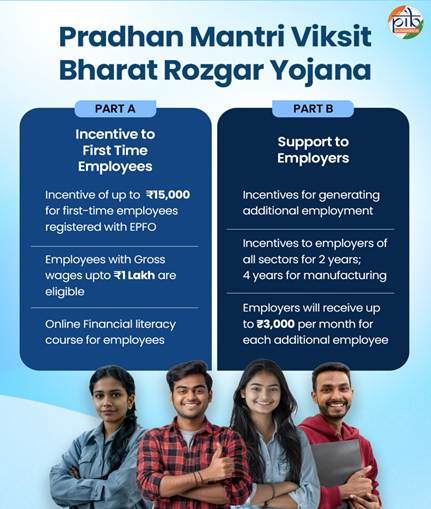
- First-time employees are eligible for incentives of up to ₹15,000.
- For the employer’s side, the government offers a reward of up to ₹3,000 per new employee after six months of stable employment.
Source: DDNews
Leptospirosis
Syllabus: GS2/Health
In News
- Kerala has witnessed a sharp rise in cases and deaths due to leptospirosis in 2026.
Leptospirosis
- It is a zoonotic disease caused by bacteria and spread to humans by contact with the urine of an infected animal or with contaminated water and soil.
- The bacteria enter the body through cuts in the skin or through the eyes, nose and mouth.
- It has been endemic in Kerala since 1989 and now has the highest mortality among communicable diseases in the State.
- The disease can range from mild to severe, sometimes fatal, with symptoms similar to those of influenza, dengue and other viral diseases.
- Mild leptospirosis is treated with oral antibiotics, while severe cases require hospitalisation.
Source: TH
U.S. Invites Bangladesh to Join Pax Silica Initiative
Syllabus: GS2/IR
Context
- U.S. Special Envoy for South and Central Asia Sergio Gor invited Bangladesh to join the U.S.-led Pax Silica initiative.
About Pax Silica
- Pax Silica is a U.S.-led international economic security initiative to secure supply chains for semiconductors, artificial intelligence (AI) infrastructure, and critical minerals among trusted partner nations.
- The inaugural Pax Silica Summit was held in December 2025 and the signatories include Australia, Israel, Japan, South Korea, Singapore, the UK, the Netherlands, and the UAE.
- Together, these countries are home to the most important companies and investors powering the global AI supply chain.
- India joined the initiative in February 2026 during the AI Impact Summit in New Delhi.
- Its objective is to reduce coercive dependencies, protect the materials and capabilities foundational to artificial intelligence, and ensure aligned nations can develop and deploy transformative technologies at scale.
- Countries will partner on securing strategic stacks of the global technology supply chain, including, but not limited to, software applications and platforms.
Source: TH
Wild Water Buffalo
Syllabus: GS3/Species in News
Context
- The Chhattisgarh Forest Department is planning to translocate wild buffaloes from Assam and keep them in enclosures at the Pamed Wildlife Sanctuary.
About
- The wild water buffalo (Bubalus arnee), also called Asian buffalo, Asiatic buffalo and wild buffalo, is a large bovine native to the Indian subcontinent and Southeast Asia.
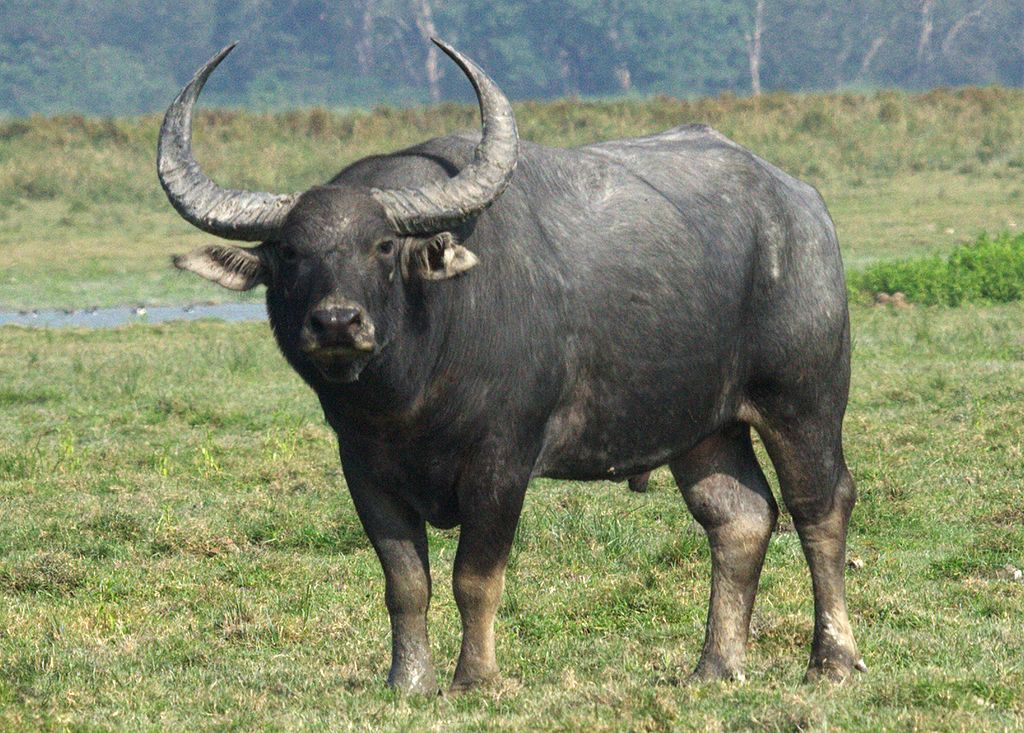
- Distribution: They are found in India, Nepal, Bhutan, Thailand, Cambodia and Myanmar.
- India is home to more than 90% of the global wild water buffalo population, with most found in Assam and smaller populations in Meghalaya, Chhattisgarh and Maharashtra’s Kolamarka forests.
- Threats: The biggest threat to wild water buffalo is the loss of genetic diversity due to intermingling with domestic cattle as well as hunting and animal diseases.
- Conservation Status: It is listed as Endangered in the IUCN Red List for threatened species.
- It is placed under the highest protection under Schedule I of the Wildlife (Protection) Act, 1972.
Source: IE
Previous article
India Struggling to Retain Scientists
