


Syllabus: GS3/ Economy
In Context
The World Bank’s Poverty and Equity Brief estimated that about 49.6 crore Indians moved above the poverty line between 2011-12 and 2022-23.
Key Findings
| Indicator | 2011-12 | 2022-23 |
| Extreme poverty (World Bank, $3 a day) | 27.1% | 2.6% |
| Poverty at lower middle income line ($4.20 a day) | 57.7% | 16.1% |
| Multidimensional poverty (NITI Aayog) | 29.17% (2013-14) | 11.28% (projected) |
- Multidimensional Gains: NITI Aayog estimates that 24.82 crore Indians escaped multidimensional poverty over nine years till 2022-23.
- Projection: The World Bank expects poverty at the $4.20 line to fall further to about 12.1% by 2028.
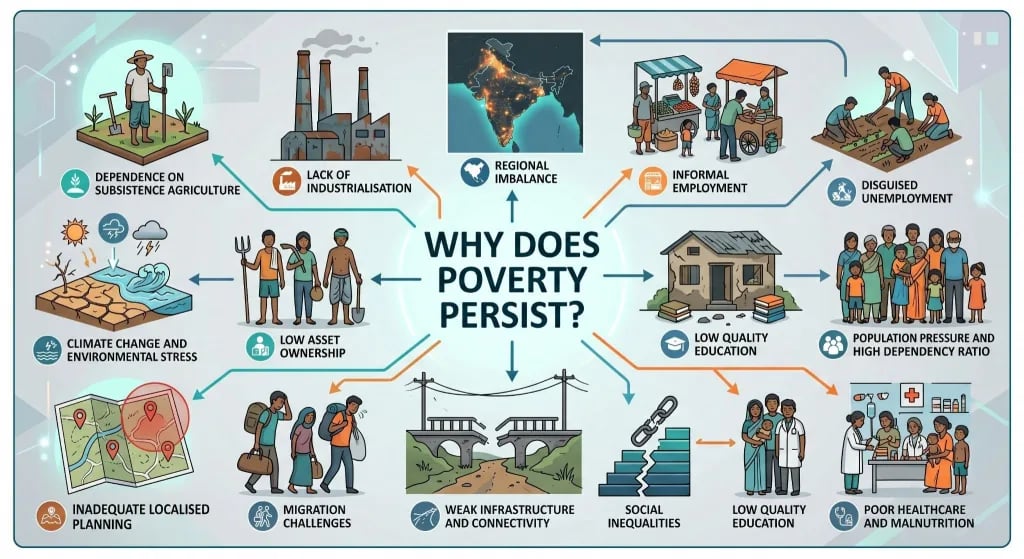
Drivers of Poverty Reduction
- Basic Services as Protection: Toilets, tap water, cooking gas, pucca houses and health cover reduce the shocks that push families back into poverty.
- E.g., Rural tap water connections rose from 3.23 crore households (2019) to 15.84 crore (May 2026), covering about 82% of rural homes under Jal Jeevan Mission.
- E.g., Ayushman Bharat offers cashless hospital care, reducing catastrophic health spending.
- Financial Inclusion and DBT: Over 59 crore Jan Dhan accounts (October 2026) allow benefits to reach people directly. The government estimates savings of about ₹3.5 lakh crore by plugging leakages.
- Credit for the Asset Poor: Collateral free loans under MUDRA, PM SVANidhi and PM Vishwakarma help small entrepreneurs, street vendors and artisans start or restart businesses.
- Women Led Livelihoods: About 10 crore rural women are part of SHGs under DAY-NRLM, and 3.76 crore have become Lakhpati Didis (November 2026), against a revised target of 6 crore by 2029.
- Food Security: Free food grains to about 80 crore people under PMGKAY provide a basic nutrition floor.
The Measurement Debate
- No Official Poverty Line: India’s last official estimates were for 2011-12 (Tendulkar 21.9%, Rangarajan 29.5%). The 2017-18 consumption survey was never released.
- Line Decides the Number: Estimates for the same year range from about 3% to over 26%, depending on the poverty line and method.
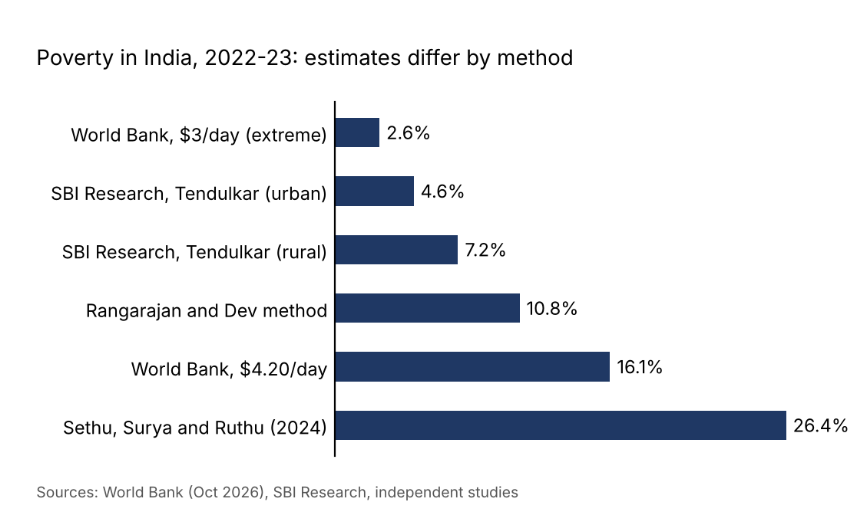
- Projection vs Measurement: NITI Aayog’s 11.28% multidimensional figure for 2022-23 is a projection, not a fresh survey result.
How Poverty Is Counted
- Consumption, Not Income: India measures poverty by household spending, from the HCES 2022-23 and 2023-24 surveys.
- PPP Conversion: Dollar lines are converted using purchasing power parity. The 2021 PPP update raised the extreme line from $2.15 to $3.00.
- Headcount Ratio: The share of people below the line. It says nothing about how far below they are.
- MPI: 12 indicators covering nutrition, schooling, housing, sanitation, cooking fuel and bank accounts.
Concerns
- Vulnerability Above the Line: About 23 crore people remain below the $4.20 line, and many more sit just above it, where one illness or job loss can push them back.
- Rising Inequality: The top 10% earn about 58% of national income while the bottom 50% earn about 15% (World Inequality Report 2026).
- Jobs and Wages: Real wages have grown slowly, and quality jobs for educated youth remain scarce.
- Welfare Dependence: Free grains for 80 crore people raise questions about how many households can sustain gains without state support.
Way Forward
- New Poverty Line: Set an official line based on the HCES 2022-23 and current spending needs, and review it regularly.
- Regular Data: Release consumption surveys on a fixed schedule and report income and multidimensional poverty together.
- Focus on the Near Poor: Track households just above the line and protect them with health and social insurance.
- Jobs Over Transfers: Shift from transfers to employment through skilling, apprenticeships and the Employment Linked Incentive scheme.
- Human Capital: Raise public spending on health and education to make gains durable.
Conclusion
India’s fall in extreme poverty is among the fastest in the world and reflects real gains in basic services and financial inclusion. The next challenge is to measure poverty credibly, protect the near poor and convert welfare gains into secure jobs and rising incomes on the road to Viksit Bharat.
| Daily Mains Practise Question [Q] Poverty in India is a multidimensional challenge that goes beyond income deprivation. Discuss the major causes and consequences of poverty in India. |
Source :TH
Previous article
International Criminal Justice and India’s Accountability Deficit
Next article
Poverty Reduction In India
