


Janjatiya Gaurav Diwas 2026
Syllabus: GS1/History
In News
- The Ministry of Tribal Affairs celebrated Janjatiya Gaurav Diwas across the country.
Janjatiya Gaurav Diwas
- November 15 is celebrated as Janjatiya Gaurav Diwas (Tribal Pride Day) to commemorate the birth anniversary of tribal freedom fighter Birsa Munda.
- It was initiated in 2021.
- It is a national occasion that is linked to the pride of the tribal community and to the inspiration of Bhagwan Birsa Munda.
Birsa Munda
- He was a spiritual reformer and freedom fighter who was born in Ulihatu village, Jharkhand, in 1874.
- He led the Ulgulan or “Great Tumult” (1899–1900)—a fierce movement for tribal self-rule and the restoration of Khuntkatti (community land rights).
- He united the Munda tribes against British land laws and feudal exploitation.
- He was known as Dharti Aaba (“Father of the Earth”).
- He envisioned a moral, self-governed society free from colonial influence.
- He spread public awareness against social evils, superstition, and exploitation.
- His ideals strengthened the sense of self-respect, collective responsibility, and vigilance towards their rights among tribal communities.
Legacy
- He was captured and martyred in Ranchi Jail at the age of 25.
- His struggle underscores the truth that the true strength of any society lies in its cultural roots, community solidarity, and the resolve to protect its existence.
Source: PIB
India re-elected to International Telecommunication Union Council
Syllabus: GS2/IR
Context
- India has been re-elected to the International Telecommunication Union (ITU) Council for the 2027–2030 term during the ITU Plenipotentiary Conference in Doha, Qatar.
About the International Telecommunication Union (ITU)
- Nature: The oldest agency in the UN system and a specialised agency for information and communication technologies (ICTs).
- Established: 1865.
- Headquarters: Geneva, Switzerland.
- Membership: 194 Member States and over 1,000 companies, universities, and international and regional organisations.
- India has been a member since 1869.
Do You Know?
- The Plenipotentiary Conference, held every four years, is the ITU’s highest policy-making body and elects the members of the ITU Council.
- The 48-member ITU Council acts as the organisation’s governing body between these conferences. It oversees the implementation of ITU policies and decisions and supervises the Union’s activities and working groups.
Source: AIR
Voyager 1
Syllabus: GS3/Space
In News
- Voyager 1 became the first spacecraft to reach one light-day away from Earth.
One light-day
- It is a staggering measure of distance, rather than a measure of time.
- It represents the exact space that light, which travels at roughly 186,000 miles (300,000 kilometres) per second, covers in a full 24-hour period.
Voyager
- NASA launched two Voyager Interstellar Missions: Voyager 1 (September 5, 1977) and Voyager 2 (August 20, 1977), as fly-by interplanetary missions.
- Both spacecraft were chartered with different routes and designated to collect scientific data en route.
Objectives
- The Voyager missions were designed to explore the outer Solar System and to find the heliopause, the outermost border of the heliosphere, the protective bubble of particles and magnetic fields that the Sun creates.
- Cameras were included to take pictures of the planets and their moons, and experiments were on board to investigate magnetic fields, atmospheres, and other planetary properties.
- Their original mission was only supposed to last something like four years, yet both Voyager spacecraft have continued to operate well beyond their intended lifetime.
Achievements
- Voyager 1: The spacecraft exited the solar system faster than Voyager 2.
- In 1990, Voyager 1 captured the most distant image of Earth, known as the iconic “Pale Blue Dot,” while venturing farther than any other human-made object beyond Neptune.
- In 2012, Voyager 1 became the first human-made spacecraft to enter interstellar space.
- Its observations led to the discovery that Jupiter’s atmosphere was far more turbulent than previously known.
- It also found a thin ring around it and many of its moons.
- In its flyby around Saturn, it discovered five new moons and closely observed the ring structures.
- It has been travelling at a velocity of 38,026.79 m/h (or 17.0 km/second) relative to the Sun.
- Voyager 2: The spacecraft has flown by Jupiter and Saturn, and was the maiden spacecraft to fly by Uranus and Neptune.
- Voyager 2 was the first and, so far, only spacecraft to visit Uranus and Neptune.
- It crossed interstellar space in 2018. It discovered 10 new moons around Uranus, along with two new rings.
- Though Voyager 2 was launched first, its different route means that it will take longer to reach the milestone.
Do you know?
- The Deep Space Network is the backbone of interplanetary communication.
- It is a sensitive telecommunications network consisting of an array of radio antennas — large parabolic dish antennas equipped with ultra-sensitive receiver systems, tuned to detect faint radio signals.
- Tracking such signals is akin to searching for a needle in a haystack.
- It is managed by NASA’s Jet Propulsion Laboratory and is strategically spread across three continents: California in the US, Madrid in Spain, and Canberra in Australia.
- This is to retain continuous communication with spacecraft even as the Earth rotates.
- It collectively sends commands and tracks spacecraft cruising in interstellar space.
Source: TH
Earthshot Prize 2026
Syllabus: Miscellaneous
Context
- At the Earthshot Prize 2026 ceremony, Prince William hailed India’s climate solutions as a global inspiration.
About the Earthshot Prize
- The Earthshot Prize was founded by Prince William in 2020 to identify and scale innovative solutions to repair the planet by 2030.
- Five winners are selected annually across five environmental categories, with each receiving £1 million.
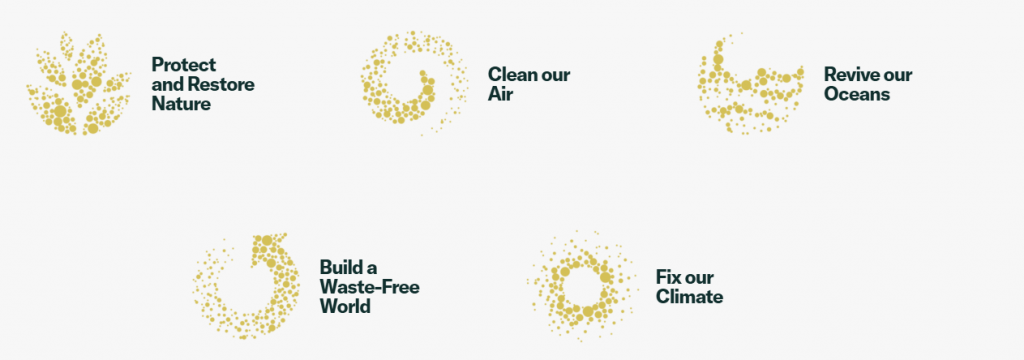
- The 2026 winners:
- Mahindra Last Mile Mobility won the award in the “Clean Our Air” category for making electric three-wheelers affordable and accelerating cleaner urban transport.
- Bhutan bagged the award in the “Protect and Restore Nature” category.
- The Niue Ocean Wide Trust bagged the award in the “Revive Our Oceans” category for protecting a section of the ocean bigger than the United Kingdom.
- PFAS-Free France won the award in the “Build a Waste-Free World” category for building a national cross-party movement to ban toxic chemicals in consumer products, and to make polluters pay for the clean-up.
- Orsted, a Danish company, won the award in the “Fix Our Climate” category for rebuilding its businesses around renewable energy, cutting its direct carbon emissions by more than 98 per cent.
Source: DD News
National Naturopathy Day
Syllabus: Miscellaneous
Context
- India observes National Naturopathy Day on 18 November, and the 9th edition was held at Nagamangala, Karnataka, under the theme ‘Prakrutik Chikitsa, Swasth Bharat’.
What is Naturopathy?
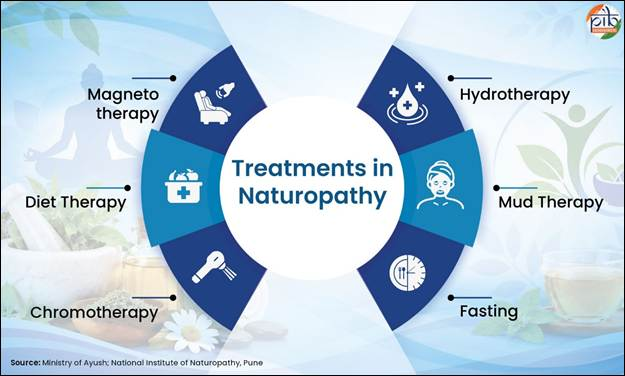
- Naturopathy is a drug-free system of healthcare based on the principle that the body has the ability to heal itself.
- It promotes healthy living through natural therapies, dietary practices and lifestyle modifications.
- It is based on the five elements of nature: Earth, Water, Air, Fire and Ether (Panchabhuta).
Why is 18 November Observed as National Naturopathy Day?
- The Ministry of Ayush declared 18 November as National Naturopathy Day in 2018 to recognise and promote naturopathy in India.
- The date commemorates Mahatma Gandhi’s contribution to nature cure. On 18 November 1945, he became the Lifetime Chairman of the All India Nature Cure Foundation Trust, Pune, and signed its deed.
Source: PIB
Previous article
Need For India’s Space Security Doctrine
Next article
News In Brief 18-11-2026
