


India’s Nutrient-Rich Purple Potato
Syllabus: GS3/Agriculture
Context
- An important outcome of biofortification research has been the development of coloured potato varieties with enhanced nutritional value.
About
- Hidden hunger remains a major public health challenge despite adequate calorie intake.
- It occurs when people consume sufficient food but lack essential vitamins and minerals in their diet.
- To address this challenge, scientists are increasingly developing biofortified crops with enhanced nutritional value.
- Biofortification improves the nutrient content of crops through plant breeding, enabling food to naturally provide higher levels of essential nutrients.
- ICAR-CPRI (Indian Council of Agricultural Research- Central Potato Research Institute) developed nutrient-rich coloured potato varieties, including Kufri neelkanth, Kufri manik, and Kufri jamunia.
- These varieties contain important antioxidants and micronutrients, such as anthocyanins, iron, and zinc.
About Kufri jamunia
- Kufri jamunia was released in 2024, the variety contains higher levels of ascorbic acid, anthocyanin, and carotenoids than Kufri manik and Kufri neelkanth.
- Its purple flesh indicates high antioxidant content and better nutritional quality including enhanced levels of zinc and iron.
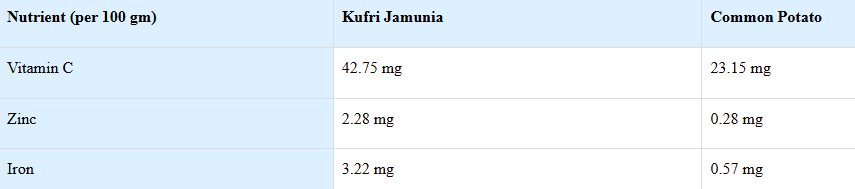
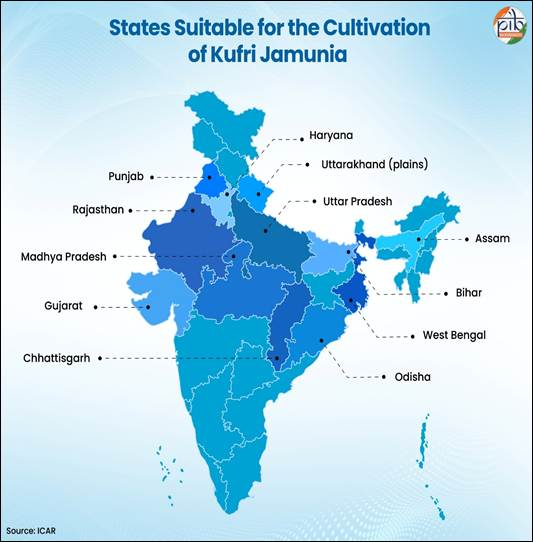
- Kufri jamunia has demonstrated stable performance in multi-location trials and has been recommended for cultivation in the North Indian plains.
Source: PIB
Global Rate-Hike Cycle as Central Banks Tackle Inflation
Syllabus: GS3/ Economy
Context
- Central banks around the world are raising borrowing costs as rising energy prices caused by the US-Iran war are increasing inflation.
Reasons for Increasing Interest Rates
- Higher crude oil prices trading at around $105 per barrel is a major concern, particularly for energy-importing economies such as India. It is increasing fuel, transportation and production costs.
- Rising long-term bond yields: Inflation uncertainty and higher government borrowing are pushing bond yields upwards.
- As bond prices fall, yields rise, increasing borrowing costs for governments and businesses. Central banks face pressure to contain inflation expectations and maintain policy credibility, potentially prompting further rate hikes.
How Do Rate Hikes Control Inflation?
- Demand management: Higher policy rates increase borrowing costs for households and businesses, moderating consumption and investment.
- Lower aggregate demand reduces the ability of businesses to raise prices, helping contain demand-driven inflation.
- Exchange-rate channel: Higher domestic returns may attract foreign capital and support the currency, potentially lowering the cost of imports.
Source: TH
Organic Palmyra Jaggery Powder Export to Bulgaria
Syllabus: GS3/ Economy
In News
- India exported its first consignment of organic Palmyra Jaggery Powder to Bulgaria.
About
- It is a traditional natural sweetener prepared from the nectar of Palmyra palm blossoms.
- The recent export consignment originated from Gobichettipalayam, Erode district, Tamil Nadu.
- The exported product is certified under India’s National Programme for Organic Production (NPOP) and European Union organic standards.
Agricultural and Processed Food Products Export Development Authority
(APEDA)
- Established: 1986 under the Agricultural and Processed Food Products Export Development Authority Act, 1985.
- Nature: Statutory authority.
- Ministry: Ministry of Commerce and Industry, Government of India.
- Headquarters: New Delhi.
Source: PIB
CRPF Considers Restoring Lance Naik and Naik Ranks
Syllabus: GS3/ Internal Security
Context
- The Central Reserve Police Force (CRPF) is reintroducing the military ranks of lance naik and naik to address delayed promotions and accommodate Agniveers retiring from the Army.
Background
- The lance naik and naik ranks were abolished in the force in 1997 and merged with the police ranks of constable and head constable through a Ministry of Home Affairs (MHA) order.
- The two ranks are still operational in the Army.
- Promotion structure: According to the hierarchy, a jawan who joins the force as a constable gains the first promotion of lance naik in five years, followed by the promotion to naik in 10 years and subsequently head constable in 20 years.
- Currently, the about 3.25 lakh personnel-strong CRPF is facing acute stagnation in promotions in these ranks, as a constable gets his first promotion in 22-25 years on average.
Reasons for Restorations
- Its aim is to provide two more promotions to the constabulary before they reach the head constable rank, which will help address their grievances along with boosting their morale.
- It also wants to make the CRPF service attractive for the Agniveers from the Army, whose first batch will begin retiring later this year, and will be eligible to join the Central Armed Police Forces (CAPFs), including the CRPF.
- Agniveers are short-term military personnel recruited into the three forces for four years under the Centre’s Agnipath scheme.
About Central Reserve Police Force (CRPF)
- The Central Reserve Police Force, initially established as the Crown Representatives Police in 1939, assumed its current name under the CRPF Act 1949.
- It operates under the Ministry of Home Affairs.
- Mission: Empower the government to maintain the rule of Law, Public Order, and Internal Security. Safeguard the nation’s integrity, while fostering Social Harmony and Development by upholding the supremacy of the Constitution.
- Headquarters: New Delhi.
- Specialized Units:
- CoBRA (Commando Battalion for Resolute Action) for guerrilla and anti-Naxal operations.
- Rapid Action Force (RAF) for riot and crowd control.
- Mahila Battalions (women’s battalions).
- VIP Security and Parliament Duty groups.
Source: TH
Exercise Konka- 26
Syllabus: GS3/Defence
Context
- The India-UK bilateral maritime exercise KONKAN-26 concluded off Plymouth, United Kingdom.
About Exercise KONKAN
- KONKAN, which began in 2004, is an annual bilateral maritime exercise between the Indian Navy and the Royal Navy.
- The Indian Navy was represented by the stealth frigate INS Trishul, while the Royal Navy deployed HMS Sutherland, a Duke-class anti-submarine warfare frigate.
- Exercise KONKAN reinforces the Comprehensive Strategic Partnership under the India–UK Vision 2035, highlighting a shared commitment to a free, open, and secure Indo-Pacific.
Other India-UK Bilateral Exercises
- AJEYA WARRIOR (Army), Exercise Indradhanush (Air Force), and Exercise Cobra Warrior (multinational air exercise hosted by the UK).
Source: PIB
Previous article
India’s Space Economy to Reach USD 40-45 Billion in 7–8 Years
Next article
News In Brief 19-10-2026
