


Article 142 of the Constitution
Syllabus: GS2/Polity and Governance
Context
- The Supreme Court of India took a rare and extraordinary step under Article 142 to quash FIRs registered against Gen Z NEET-UG protesters.
What is Article 142 of the Constitution?
- Article 142 of the Constitution deals with the enforcement of decrees and orders of the Supreme Court to do “complete justice” in any matter pending before it.
- While the powers under Article 142 are extraordinary in nature, the apex court has defined its scope and extent through its judgments over time.
- In the Prem Chand Garg case (1962), the Supreme Court held that orders passed under Article 142 must be consistent with fundamental rights and cannot contravene constitutional provisions.
- Landmark judgments under Article 142
- Ayodhya Case (2019): The Supreme Court directed the Union government to establish a trust for the construction of the Ram Temple and awarded the disputed 2.77-acre site for the temple.
- Bhopal Gas Tragedy Case (1991): The Supreme Court ordered Union Carbide Corporation (UCC) to pay $470 million in compensation for the victims of the tragedy.
- Highway Liquor Case (2016): The Supreme Court restricted the sale of liquor within 500 metres of national and state highways to curb accidents caused by drunk driving.
- Chandigarh Mayor Election Case (2024): The Supreme Court invoked Article 142 to declare AAP candidate Kuldeep Kumar as the winner, after finding that the presiding officer had deliberately invalidated eight ballots.
Source: TH
Totalisers for Vote Counting in EVMs
Syllabus: GS2/ Polity and Governance
Context
- The Supreme Court has asked the Union Government to examine the introduction of totaliser machines for counting votes recorded in Electronic Voting Machines (EVMs) to protect the secrecy of booth-wise voting patterns.
What is a Totaliser?
- A totaliser is an electronic interface designed to aggregate votes recorded in multiple EVMs before declaring the result.
- It can connect the control units of approximately 14 EVMs or polling stations and provide only the combined vote total for each candidate. Thus, individual booth-wise voting patterns are not disclosed.
- The technology was developed by:
- Bharat Electronics Limited, Bengaluru; and
- Electronics Corporation of India Limited, Hyderabad.
What are Electronic Voting Machines (EVMs)?
- It is a device used to electronically record and count votes cast in elections.
- EVMs were first used in 1982 in the Assembly constituency of Paravur in Kerala in 50 out of 123 booths.
- EVM has two parts, it consists of a ‘control unit’ and a ‘balloting unit’, connected by a 5-meter cable.
- The control unit is with the Election Commission-appointed polling officer and it is the brain of the EVM.
- The balloting unit is in the voting compartment into which the voter enters to cast the vote in secret by pressing the button against the name and symbol of the candidate of her choice.
- The balloting unit is turned on only after the polling officer presses the ‘Ballot’ button on it.
Voter Verified Paper Audit Trail (VVPAT)
- A VVPAT is intended as an independent verification system for voting machines designed to allow voters to verify that their vote was cast correctly.
- It contains the name of the candidate (for whom vote has been cast) and symbol of the party/individual candidate.
- When a vote is cast, the VVPAT machine, which is attached to the ballot unit (BU) of the EVM,prints out a slip of paper with the voter’s choice indicated on it.
- Though it remains behind glass, the printed slip is visible for seven seconds so the voter can see that the vote has been recorded correctly, before it falls into a box underneath.
- The idea of the VVPAT machine first emerged in 2010. However it was used for the first time in the Noksen Assembly constituency of Nagaland in 2013.
- The Conduct of Elections Rules, 1961 were amended in 2013 to allow for a printer with a drop box to be attached to the EVM.
- From 2017, 100% of VVPATs began to be used in polls, and the 2019 Lok Sabha elections became the first general election to have 100% of EVMs being attached to VVPATs.
Source: TH
Integrated Fertiliser Management System (iFMS)
Syllabus: GS3/Economy
Context
- The Integrated Fertiliser Management System has entered a new phase with the introduction of a series of digital initiatives that enable more effective, data-driven monitoring of the fertiliser supply chain.
About iFMS
- The Integrated Fertilizer Management System (iFMS) is a national-level digital platform for end-to-end monitoring and management of the fertilizer supply chain in India.
- It has been developed and technically supported by the National Informatics Centre (NIC) for the Department of Fertilisers, under the Ministry of Chemicals and Fertilisers.
- The system is increasingly being developed into a data-driven monitoring and decision-support platform through its integration with farmer, land and crop-related databases.
- Key Features:
- iFMS is being integrated with State-level farmer, land and crop databases, including Meri Fasal Mera Byora (MFMB) in Haryana, and with AgriStack.
- The Vehicle Location Tracking System (VLTS) links fertilizer dispatch and Goods-in-Transit information with vehicle-location data. It improves visibility of fertilizer consignments during transit and helps identify delays and unusual movement patterns.
- Framework for Fertiliser Sale (FFS): The initiative connects a mobile application-based fertiliser booking system with the existing iFMS Point-of-Sale (PoS) ecosystem.
- Electronic Subsidy Processing: iFMS plays a central role in fertiliser subsidy administration, with subsidy payments linked to actual fertiliser sales recorded through the PoS network.
Source: PIB
India’s Current Account Deficit Widens
Syllabus: GS3/Economy
In News
- India’s current account deficit (CAD) widened slightly to $4.2 billion (0.5% of GDP) in Q1 FY27, from $3.4 billion (0.4% of GDP) a year earlier, mainly because the merchandise trade deficit increased sharply.
Current Account Deficit
- It is a component of the balance of payments system, which records all financial transactions between a country and the rest of the world.
- It occurs when a country’s total imports of goods, services and transfers are more than its total exports and transfers out.
- It includes trade in commodities and services but also revenue from investments overseas and unilateral transfers, such as remittances and international aid.
Causes
- Trade Imbalance: A country has a deficit in the balance of trade when it imports more products and services from other countries than it exports to them.
- Flows of investment: Capital flows (FDI and portfolio investment) can cause CAD by increasing demand for imports or by funding domestic consumption and investment.
- Exchange Rate Fluctuations: Changes in the value of the currency, depreciation or appreciation, will affect the cost of imports and exports and the current account balance.
Implications
- Economic: A stable CAD can depress a country’s external financial position, making it more sensitive to external shocks and currency depreciation.
- Policy challenges: CAD may tempt policymakers to respond with fiscal and monetary policies, trade policy and structural measures to improve competitiveness.
- Business Environment: CAD can impact firms through the exchange rate, interest rate, inflation, and trade policies, which affect cost, pricing, and competitiveness.
Source:TH
IAF’S Highest-Ranking Woman
Syllabus: GS3/Defence
Context
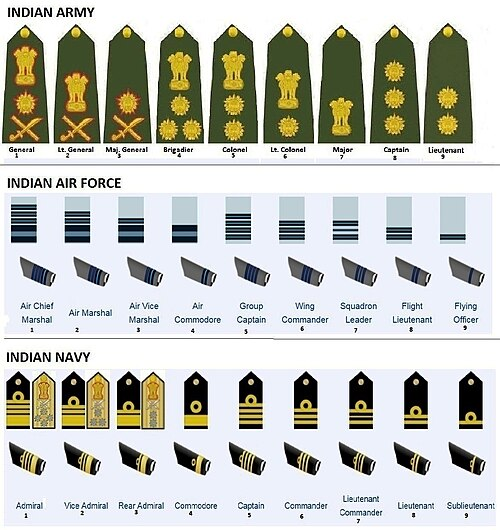
- In a historic milestone for the Indian Air Force (IAF) and defence forces, Air Vice Marshal Shakti Sharma scripted history and became the first woman officer (non-medical) to attain the rank of Air Vice Marshal (or equivalent).
About
- Before creating history by the elevation to AVM, Sharma was also the first woman from the Tri-Services to command a Sainik School. She served as the principal of Sainik School, Kapurthala.
- One of the key reasons why a woman officer could achieve this feat is attributed to the Indian Air Force (IAF) officially granting Permanent Commission status to women officers in 2010. Since then, the IAF has streamlined opportunities for their promotion and career development, including their participation in various career courses.
- The Army and the Navy started granting Permanent Commission to women officers in select arms/services and branches in 2008. However, that was extended to multiple other branches in 2020 after the Supreme Court’s intervention.
Shoulder insignia for Commissioned Officer Ranks in Indian Army, Air Force and Navy
Source: PIB
India is Reviving Sandalwood Cultivation
Syllabus: GS3/Economy; Environment
In News
- India is witnessing a renewed push to revive sandalwood (Santalum album) cultivation, with the Union Budget 2026-27 highlighting its cultural and economic importance.
Sandalwood (Santalum album)
- It is a tall evergreen tree from the Santalaceae family, characterized by its hemiparasitic roots and intensely aromatic yellowish-brown heartwood.
- It can grow up to 12 to 15 m in height and is a partial root parasite. The species mainly occurs in lowland tropical forest and woodland.
- It is native to India, Sri Lanka, eastern Indonesia and Australia.
- The cultivation has spread from the typical southern states to Telangana, Gujarat, Madhya Pradesh and Andhra Pradesh and areas of north India.
- Santalum album is listed as Vulnerable by the IUCN.
- India has traditionally been a big producer and exporter of sandalwood, but dwindling stocks and output have undermined its position, making it more dependent on imports.
- By 2024, sandalwood plantations were estimated at 23,000–30,000 ha, increasing by roughly 600 ha each year, with the Ministry of AYUSH supporting plantations at about 3,275 ha.
- It is primarily cultivated for sandalwood oil and is widely used in products such as incense, perfumes, and cosmetics.
- Its medicinal properties consist of a wide range of uses, including antimicrobial and antifungal properties.
Source: DTE
Wakefield Accelerators
Syllabus: GS3/Science and Technology
Context
- Wakefield accelerators are at experimental stage, and can create very strong electric fields over a short distance, potentially making particle accelerators much smaller.
About
- A particle accelerator is a machine that uses electric and magnetic fields to make tiny particles, such as electrons or protons, to move at extremely high speeds.
- The Large Hadron Collider (LHC) is a huge particle accelerator in Europe. It is about 27 km long and can accelerate protons to almost the speed of light.
- The newer accelerators can be much smaller, one such technology is wakefield accelerator.
Wakefield Accelerator
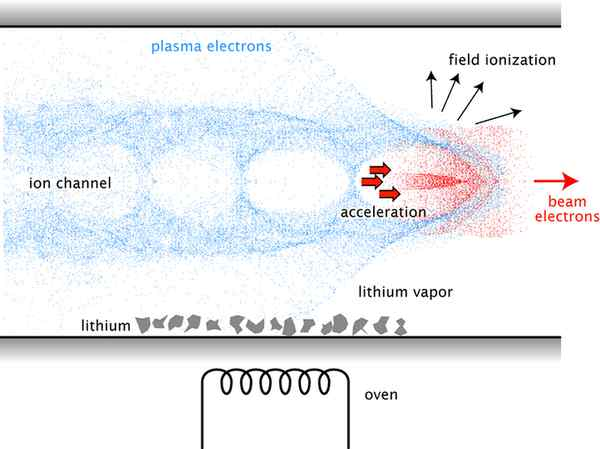
- It uses plasma, which is a gas containing free electrons and positively charged ions.
- A laser pulse or particle beam passes through the plasma and pushes the electrons aside. The positively charged ions pull the electrons back.
- The electrons move back and forth, creating a travelling wave of electric fields, called a wakefield.
- Other electrons are injected at the right point into this wave. They can “surf” the electric wave and gain energy.
- Limitation: They are still limited as the current wakefield accelerators can accelerate electrons to only a few tens of GeV, while the LHC can reach energies up to about 1,000 times higher.
Source: TH
