


Syllabus: GS3/Economy
Context
- India is expanding its Free Trade Agreement (FTA) network, but the experience with earlier FTAs has raised concerns over widening trade deficits and limited export competitiveness.
What is a Free Trade Agreement (FTA)?
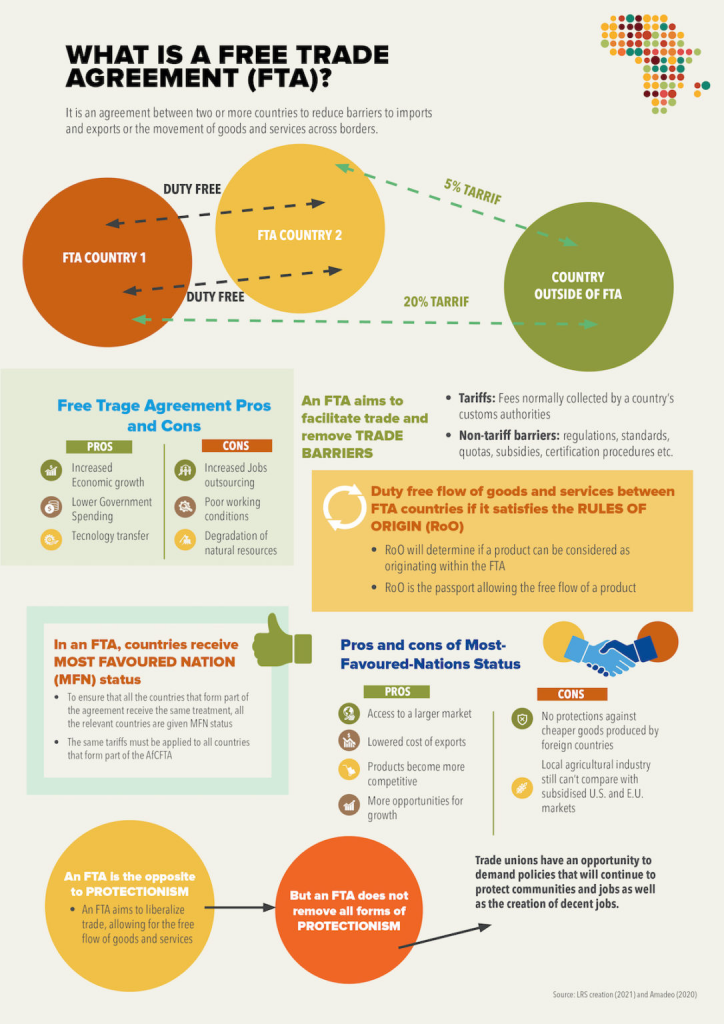
- FTAs are arrangements between two or more countries or trading blocs that primarily agree to reduce or eliminate customs tariff and non tariff barriers on substantial trade between them.
- They can cover both goods and services.
- FTAs also address issues such as investment, mobility of professionals, and regulatory cooperation.
India’s Free Trade Agreements (FTAs)
- Existing: India currently has 16 operational FTAs covering 28 countries, including the recently implemented India–UK Comprehensive Economic and Trade Agreement (CETA).
- Since 2020, India has operationalised FTAs with the UAE, Australia, Mauritius, EFTA (Switzerland, Norway, Iceland and Liechtenstein), Oman, and the United Kingdom.
- FTAs awaiting implementation or under negotiation: India has eight additional FTAs involving 41 countries awaiting implementation or under negotiation.
- The India–New Zealand FTA has been signed and is awaiting implementation.
- India is also negotiating FTAs with the United States, Canada, Israel, Peru, the Gulf Cooperation Council (GCC), and the Eurasian Economic Union (EAEU).
Why is India Expanding its FTA Network?
- India’s Export-led Growth: India aims to achieve US$2 trillion in exports by 2030, with FTAs serving as an important instrument for expanding merchandise and services exports.
- Expand Market Access: FTAs provide Indian exporters with preferential access to overseas markets by reducing or eliminating tariffs and non-tariff barriers, thereby improving the competitiveness of Indian goods and services.
- Attract Foreign Investment: Preferential trade agreements improve the investment climate by providing greater market certainty, encouraging foreign direct investment (FDI), technology transfer, and supply chain diversification.
- Economic and Strategic Partnerships: FTAs reinforce India’s trade diplomacy and strategic engagement with key economies, supporting initiatives such as Act East Policy, Neighbourhood First, and India-Middle East-Europe Economic Corridor (IMEC).
Challenges in India’s FTA Strategy
- Rising Trade Deficits: Between 2007–09 and 2023–25, the trade deficit increased by 381% with ASEAN, 318% with Japan, and 268% with South Korea, compared to a 142% increase with the rest of the world.
- In FY 2025, India recorded a trade deficit of over US$50 billion with the UAE, Australia, Mauritius, and EFTA countries.
- Low Utilisation of FTA Benefits: Only 20–30% of eligible Indian exports use FTA benefits, while import-side utilisation is estimated at 60–70%.
- Compliance with Rules of Origin (RoO), certification requirements, and documentation increases transaction costs.
- Inverted Duty Structure: Higher import duties on raw materials and intermediate goods than on finished products increase production costs for Indian manufacturers.
- This weakens domestic manufacturing, reduces value addition, and undermines the objectives of the Make in India initiative.
- Shift of Manufacturing to FTA Partner Countries: The existing tariff structure encourages firms to establish manufacturing units in FTA partner countries such as Vietnam, Thailand, and Indonesia, and export finished goods to India.
- This can reduce domestic investment, employment, and industrial capacity while weakening India’s manufacturing ecosystem.
- Sustainability Measures: Developed countries are increasingly linking FTAs with labour, environmental, and climate-related standards, including the European Union’s Carbon Border Adjustment Mechanism (CBAM).
- Indian exporters may face additional compliance requirements related to carbon emissions, sustainability, and due diligence.
Way Ahead
- Correct Inverted Duty Structure: Lower duties on raw materials and intermediate items to enhance the competitiveness of domestic producers.
- Build National Competitiveness: Invest in manufacturing, technology, logistics and resilient supply chains as long-term FTA gains depend on strong productive capacities.
- Creation of an FTA Impact Monitoring Authority: Set up a special organization to periodically monitor the utilisation of FTA, sector-wise outcomes, import surges, trade deficits and impact of regulatory commitments on policy space.
- Tackle Non-Tariff Barriers: Emphasise mutual recognition of standards, testing and conformity assessment to promote market access for Indian exporters.
- Strengthen FTA Negotiation Framework: It is important to introduce performance evaluation and accountability for trade negotiators to guarantee that future FTAs adequately protect India’s economic and strategic interests.
| Daily Mains Practice Question [Q] India’s expanding Free Trade Agreement (FTA) network presents both opportunities and challenges. Critically examine the limitations of India’s FTA strategy and suggest reforms needed to ensure that FTAs contribute to sustainable economic growth. |
Source: TH
Previous article
Strengthening Public Health Systems in India
Next article
Indian Aviation Needs More Competition
