


Removal of the Chief Election Commissioner
Syllabus: GS2/ Polity
Context
- Opposition parties are considering an impeachment motion against Chief Election Commissioner (CEC) Gyanesh Kumar.
Article 324 of Constitution
- Article 324 of the Constitution states that the Election Commission will comprise the Chief Election Commissioner (CEC) and such number of Election Commissioners (ECs), as the President may decide.
- The Election Commission of India (ECI) is responsible for managing the preparation of electoral rolls and conducting elections to Parliament, State Legislatures, and the offices of the President and Vice-President.
- The Constitution specifies that the President will appoint the CEC and ECs, subject to the provisions of an Act of Parliament.
Constitutional Provisions for Removal of the CEC
- Article 324(5) of the Constitution of India provides that the Chief Election Commissioner (CEC) can be removed in the same manner and on the same grounds as a judge of the Supreme Court.
- A motion seeking the removal of the CEC may be introduced in either House of Parliament and must specify the grounds for seeking removal.
- The motion must be supported by:
- At least 100 members of the Lok Sabha, or
- At least 50 members of the Rajya Sabha.
- Once the motion is admitted, the Speaker of the Lok Sabha or the Chairman of the Rajya Sabha constitutes an inquiry committee to investigate the allegations.
- If the committee finds the charges proven, the motion is taken up for voting in Parliament.
- Both Houses must then pass the motion with a two‑thirds majority of those present and voting. After both Houses approve the motion, the President issues the final order for removal.
Source: TH
Jal Jeevan mission 2.0
Syllabus: GS2/Government Initiatives
Context
- The Union Cabinet approved the extension of the Jal Jeevan Mission (JJM) to 2028
About Jal Jeevan Mission (JJM)
- Type: Centrally Sponsored Scheme.
- Nodal Ministry: Department of Drinking Water & Sanitation (DDWS), under the Ministry of Jal Shakti.
- Background: The National Rural Drinking Water Programme (NRDWP) was restructured and subsumed into JJM.
- Objective: To ensure Functional Household Tap Connection (FHTC) to every rural household with 55 litres per capita per day (lpcd) of potable drinking water.
- It also seeks to certify all Gram Panchayats as “Har Ghar Jal”.
- Coverage and Extension
- Launched in August 2019 with the aim of achieving 100% rural tap water coverage by 2024. However, the programme reached about 81% coverage, leading to its extension till 2028 under JJM 2.0.
- Digital Monitoring Framework: A national digital platform called “Sujalam Bharat” will be introduced to digitally map the drinking water supply system from source to tap.
- Each village will be assigned a unique “Sujal Gaon / Service Area ID”.
- Progress: Tap water access in rural India has expanded rapidly, rising from 3.23 crore households (16.7%) to an additional 12.48 crore households connected since then.
- Funding Pattern: 90:10 for Himalayan and North-Eastern States, 100% for Union Territories and 50:50 – Other States.
Do you know?
- State Bank of India Research estimates that JJM has freed 9 crore women from the daily burden of fetching water.
- The World Health Organisation (WHO) estimated reduction in women drudgery by saving of 5.5 crore hours daily, prevention of 400,000 diarrheal deaths, and savings of 14 million Disability Adjusted Life Years (DALYs).
- IIM Bangalore & International Labour Organisation (ILO) estimated generation of 59.9 lakh direct and 2.2 crore indirect person-years of potential employment, strengthening rural livelihoods through JJM.
Source: TH
National Dam Safety Authority (NDSA)
Syllabus: GS2/ Governance
In News
- The new office of the National Dam Safety Authority (NDSA) was inaugurated at R.K. Puram, New Delhi.
About National Dam Safety Authority (NDSA)
- The NDSA is a statutory body established under the Dam Safety Act, 2021.
- It functions under the Department of Water Resources, River Development and Ganga Rejuvenation of the Ministry of Jal Shakti.
- It acts as the national-level regulator for dam safety in India
Key Digital Initiatives Launched
- NETRA, NDSA Engine for Tracking and Review using AI. It is connected with DHARMA Dam Safety Database.
- Rashtriya Bandh Suraksha Darpan (RBSD), developed by Centre for Development of Advanced Computing (C-DAC) for visualization of Dam Break Analysis (DBA).
Source: PIB
Glass Industry of India
Syllabus: GS3/ Economy
Context
- India’s glass manufacturing industry is facing operational challenges as the government plans to curb gas supplies to industrial consumers amid uncertainties over LNG shipments due to the ongoing conflict in West Asia.
Energy Dependence of the Glass Industry
- Glass manufacturing plants primarily rely on piped natural gas (PNG) and liquefied petroleum gas (LPG) as fuel sources for furnaces.
- The manufacturing process requires continuous high-temperature operations, making uninterrupted fuel supply essential.
Glass Industry of India
- The first modern glass plant in India, Paisa Fund Glass Works, was established in 1908 at Talegaon, Maharashtra by Bal Gangadhar Tilak as part of the Swadeshi movement to promote indigenous industries.
- Firozabad, Uttar Pradesh Known as the “Glass City of India”, has been a centre for glass production since the 17th century and is the world’s largest producer of glass bangles.
- Other key states with major glass manufacturing units include Maharashtra, Gujarat, Tamil Nadu, Andhra Pradesh, and West Bengal.
- The industry is broadly divided into;
- Container glass: bottles, jars, beverage containers.
- Flat glass: used in construction, automotive windshields, and mirrors.
- Specialty glass: optical glass, laboratory glassware, and pharmaceutical glass.
- Fiberglass: used in insulation, aerospace, and electronics.
- Market Size and Growth: The Indian glass manufacturing market was valued at about USD 1.81 billion in 2024.
- It is projected to reach around USD 2.81 billion by 2030, growing at about 7.7% CAGR.
Source: IE
National Investment and Infrastructure Fund
Syllabus: GS3/ Economy
In News
- The National Investment and Infrastructure Fund (NIIF) has raised $750 million for its Second Private Market Fund (PMF-II).
About National Investment and Infrastructure Fund (NIIF)
- Established in 2015 as India’s sovereign wealth fund.
- NIIF is a collaborative platform managed by National Investment and Infrastructure Fund Limited (NIIFL) to attract equity into infrastructure and related areas.
- The Government stake is 49% and remaining 51% from global institutional investors
Source: ET
Dark Oxygen
Syllabus: GS3/Science and Technology
In News
- A new study discovered “dark oxygen” on the Pacific Ocean seafloor, showing that oxygen can be produced without sunlight.
Dark oxygen
- It is being used by researchers to describe oxygen detected in deep ocean regions where sunlight is completely absent.
- Traditionally, oxygen production has been closely linked to photosynthesis, which requires light energy.
Latest Research
- In the Clarion Clipperton Zone of the Pacific, scientists used benthic chambers to monitor seafloor oxygen.
- Surprisingly, oxygen levels rose in total darkness, despite microbes and chemical reactions normally consuming it.
- Repeated measurements and lab tests suggest polymetallic nodules may generate oxygen through electrochemical processes.
Importance
- The discovery of dark oxygen could reshape understanding of global oxygen cycles and suggest that oxygen can form in extreme environments without photosynthesis.
Polymetallic nodules
- They are rock-like structures that form on the ocean floor over millions of years. They have metals that are useful for batteries and electronics.
- They are also being looked into for possible deep-sea mining because they are valuable.
- They are commonly found in the abyssal plains of the Pacific Ocean.
Source :TOI
Asteroid 2024 YR4
Syllabus: GS3/Space
Context
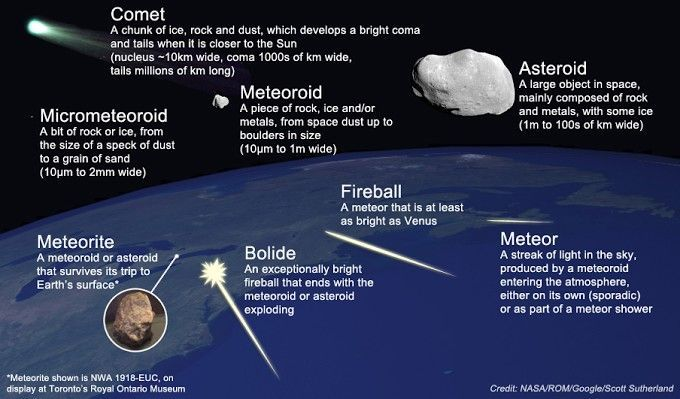
- NASA has confirmed that asteroid 2024 YR4 poses no collision risk to the Moon in 2032, based on observations from the James Webb Space Telescope.
- 2024 YR4 is classified as a Near-Earth Asteroid (NEA), indicating its orbit brings it close to Earth’s orbital path.
About
- Asteroids, sometimes called minor planets, are rocky, airless remnants left over from the early formation of our solar system about 4.6 billion years ago.
- Most asteroids can be found orbiting the Sun between Mars and Jupiter within the main asteroid belt.
Source: TH
SIPRI Report on Arms
Syllabus: GS3/Defence
Context
- The Stockholm International Peace Research Institute (SIPRI) Arms Transfers Database (1950–2025) was updated recently.
Major Highlights
- The volume of international transfers of major arms in 2021–25 was 9.2% higher than in 2016–20. This was the biggest increase since 2011–15.
- The five largest suppliers of major arms in 2021–25 were the United States, France, Russia, Germany and China.
- Top five importers are Ukraine, India, Saudi Arabia, Qatar and Pakistan accounted for 35% of global imports.
- Europe accounted for 33% of global arms imports, followed by Asia and Oceania at 31% and West Asia at 26%.
- Arms exports by the USA increased by 27% between 2016–20 and 2021–25, giving it a 42% share of total global arms exports.
- India accounted for 8.2% of total global arms imports between 2021 and 2025, making it the second-largest importer of major weapons systems.
- The largest share of Indian arms imports came from Russia, at 40% a significantly smaller share than in 2016–20 (51%) and almost half that in 2011–15 (70%).
- India is increasingly turning to Western suppliers including France, Israel and the United States.

About SIPRI
- SIPRI is an independent international institute dedicated to research into conflict, armaments, arms control and disarmament. It is based in Stockholm.
- It was established in 1966, SIPRI provides data, analysis and recommendations, based on open sources, to policymakers, researchers, media and the interested public.
- Funding: It was established on the basis of a decision by the Swedish Parliament and receives a substantial part of its funding in the form of an annual grant from the Swedish Government.
- The Institute also seeks financial support from other organizations in order to carry out its research.
Source: SIPRI
Coal Gasification
Syllabus: GS3/Energy
Context
- The Union environment ministry’s expert appraisal committee has declined to grant an exemption to minimum depth for underground coal gasification (UCG) projects in view of environmental impacts.
What is Coal Gasification?
- Coal gasification enables conversion of coal into syngas (synthetic gas), which comprises hydrogen, carbon monoxide, and CO₂.
- The syngas can be used to produce Methanol, Synthetic Natural Gas (SNG), Ammonium nitrate, Fertilizers and Petrochemicals and power.
Underground Coal Gasification (UCG)
- UCG is a process that converts coal into a combustible gas called syngas while it is still in the ground, rather than through conventional mining.
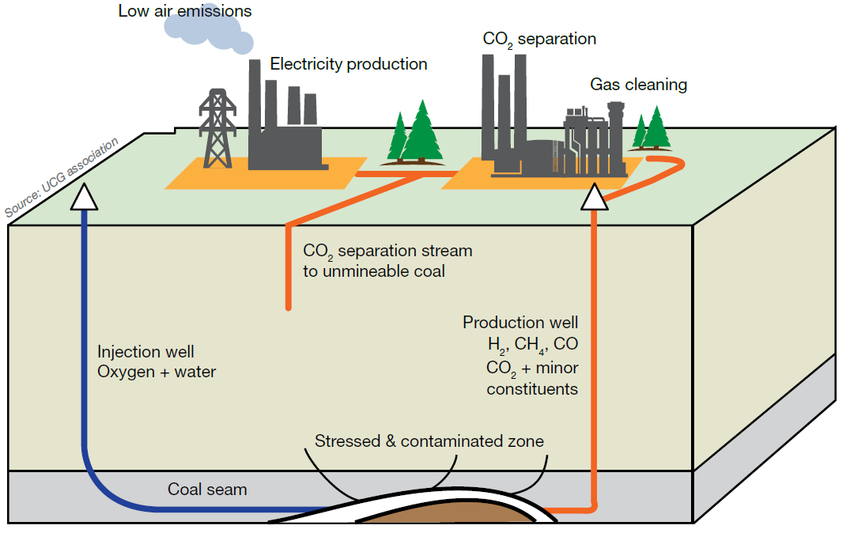
- It represents a strategic initiative to harness India’s deep-seated coal reserves—resources that are otherwise unmineable through conventional methods.
- This innovative step is expected to reduce dependence on imported natural gas and crude oil while unlocking new avenues for investment.
Financial Incentive Scheme for Coal Gasification
- The scheme was launched in 2024 and has a total outlay of ₹8,500 crore.
- The scheme aims to achieve 100 million tonnes of coal gasification by 2030, leveraging India’s abundant domestic coal reserves to promote sustainable industrial development.
- It encourages participation from both public and private sector players to establish coal gasification projects across the country.
Source: HT
Proton Accelerator Facility to Come up in Visakhapatnam
Syllabus: GS3/Science and Technology
In News
- Andhra Pradesh will host a high-energy proton accelerator in Visakhapatnam as part of India’s long-term nuclear research programme.
- A proton is a subatomic particle with a positive electrical charge. It is found in every atomic nucleus of every element.
About the Project
- The high-energy proton accelerator in Visakhapatnam will generate high-energy neutrons for converting thorium into uranium fuel.
- The facility benefits from Visakhapatnam’s technological ecosystem and sea access for cooling.
- The project is linked to the Raja Ramanna Centre for Advanced Technology (RRCAT).
Importance
- The proton accelerator is being developed as part of India’s long-term nuclear programme.
- It is a strategically important technology that may take decades to become fully operational.
- It will generate high-energy neutrons through spallation reactions to convert India’s abundant thorium into uranium fuel for reactors.
Raja Ramanna Centre for Advanced Technology (RRCAT)
- It was established in 1984 under the Department of Atomic Energy.
- It leads research in particle accelerators and laser technologies with applications in space, defence, communications, and medical science.
- It also runs national-scale labs where industries, hospitals, and institutions conduct experiments.
Source :TH
Haleem
Syllabus: Miscellaneous
Context
- Amid shortage of commercial LPG, there are apprehensions that haleem will be pushed off the Ramzan menu in Hyderabad.
About the Haleem
- Haleem is a GI-tagged seasonal delicacy served during the Islamic holy month of Ramzan in Hyderabad, that is shipped across the country by multiple restaurant chains.
- Cooked over wood-fired ovens — known as ‘bhatti’ — for nearly 12 hours, the wheat, meat, and spices are turned into a gooey consistency by evening and is part of the fast-breaking food items at Iftaar.
Source: TH
National Highways Green Cover Index (NH-GCI)
Syllabus: Miscellaneous
Context
- NHAI in coordination with ISRO has released the first-of-its-kind Annual Report on the National Highways Green Cover Index (NH-GCI) 2025–26.
About
- The assessment uses high-resolution satellite sensors to detect chlorophyll content, enabling an objective and technology-driven measure of vegetation along highways.
- The NH-GCI value is expressed as a percentage, indicating the proportion of land covered by green cover within the Right of Way (RoW) of National Highways.
- The index measures vegetation along both sides of highways at a granularity of one kilometre.
- Approximately 30,000 km of National Highways spanning 24 States have been covered for the period July–December 2024.
Source: PIB
Previous article
Defence Forces Vision 2047
