


Unearthing the Silent Splendour of Hoysalas
Syllabus: GS1/History
Context
- In the rural parts of Hassan, Mandya and Mysuru in Karnataka, overlooked Hoysala-era temples reveal a thriving medieval kingdom’s sculptural mastery.
- These were built between the 11th and 13th centuries.
About
- Temple architecture style: The Hoysala temples are constructed in Vesara style of architecture.
- The temple has a Dravidian morphology along with substantial influences from the Bhumija style prevalent in Central India, and the Nagara traditions of northern and western India.
- The material used in temple construction is choloritic schist also known as soapstone.
- The temple has a distinct style following a stellate plan built on a raised platform.
Hoysala Empire
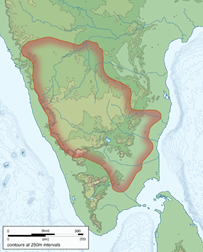
- The Hoysala Empire was a Kannadiga power that ruled most of what is now Karnataka, between the 10th and the 14th centuries.
- The Hoysala rulers were originally from Malenadu, an elevated region in the Western Ghats.
- By the 13th century, they governed most of Karnataka, entire northwestern parts of Tamil Nadu and parts of western Andhra Pradesh in the Deccan Plateau.
- The capital of the Hoysalas was initially located at Belur, but was later moved to Halebidu.
Source: TH
India’s Indigenous Tetanus and Adult Diphtheria (Td) Vaccine
Syllabus: GS2/ Health
Context
- The Union Minister for Health and Family Welfare launched the indigenously manufactured Tetanus and Adult Diphtheria (Td) Vaccine at the Central Research Institute (CRI), Kasauli in Himachal Pradesh.
What is the Td Vaccine?
- The Td vaccine protects against tetanus and diphtheria, two potentially fatal bacterial diseases.
- It replaces the earlier Tetanus Toxoid (TT) vaccine, expanding protection to include diphtheria.
- In 2006, the World Health Organization (WHO) recommended that countries transition from Tetanus Toxoid (TT) vaccine to Td vaccine.
- India’s National Technical Advisory Group on Immunization (NTAGI) also advised this shift for all age groups.
Tetanus
- Tetanus is a non-contagious infection that affects the nervous system, leading to painful muscle stiffness and spasms.
- Cause: It is caused by the bacterium Clostridium tetani, which is commonly found in soil, dust, and animal manure.
- Transmission: The bacteria typically enter the body through a break in the skin, such as a deep cut, puncture wound (like stepping on a rusty nail), or burn.
Diphtheria
- Diphtheria is a highly contagious infection that primarily affects the mucous membranes of the nose and throat.
- The toxin released by the bacteria can travel through the bloodstream and damage the heart (myocarditis), kidneys, and nerves.
- Cause: It is caused by Corynebacterium diphtheriae bacteria.
- Transmission: It spreads from person to person through respiratory droplets (coughing or sneezing) or by touching contaminated objects.
Source: PIB
Frontier Nagaland Territorial Authority (FNTA)
Syllabus: GS2/ Polity and Governance
Context
- On February 5 2026, the Union Government signed a tripartite agreement with the Government of Nagaland and the Eastern Nagaland Peoples’ Organisation (ENPO) to create the Frontier Nagaland Territorial Authority (FNTA).
About
- The ENPO had demanded a separate State,“Frontier Nagaland”, since 2010.
- The demand stems from colonial-era policies that treated the eastern hills as a minimally administered frontier.
- After Nagaland was carved out of Assam as a State in 1963, eastern tribes felt politically and economically marginalised compared to western Nagaland.
- The eight tribes inhabiting the region argued that development gaps widened due to limited infrastructure, poor connectivity, and weaker political representation.
Key Features of the FNTA
- The FNTA grants semi-autonomous governance to six eastern districts of Nagaland, allowing local administration to function with reduced dependence on the State capital.
- Districts Covered Under FNTA: Mon, Tuensang, Longleng, Kiphire, Noklak and Shamator.
- A mini-Secretariat will be established within the region, headed by a senior officer, to improve administrative efficiency.
- The authority will exercise legislative and executive powers over 46 subjects, enabling local leaders to make decisions on matters such as:
- Land use and management
- Agriculture and allied activities
- Rural development
- Infrastructure and local planning
- Welfare schemes suited to tribal needs.
- Development funds will be allocated proportionately based on population and geographical area.
- The FNTA arrangement does not alter Article 371(A) of the Constitution, thereby preserving Naga customary laws, traditional institutions, and social practices.
Source: TH
PRASHAD Scheme
Syllabus: GS2/Governance
In News
- Union Civil Aviation Minister announced plans to enhance pilgrimage tourism in Andhra Pradesh under the PRASHAD scheme.
Pilgrimage Rejuvenation and Spiritual Augmentation Drive (PRASAD) Scheme
- It is a Central Sector Scheme launched in 2014–2015 by the Ministry of Tourism, Government of India.
- A Central Sector Scheme (CS) is an initiative fully funded and implemented by the Union Government.
- It focuses on developing and identifying pilgrimage sites across India to enrich the religious tourism experience.
- It improved infrastructure in tourism areas—roads, transport, sanitation, and utilities—and enhanced both residents’ quality of life and the overall experience for tourists.
Benefits
- Increase Employment Opportunities & Tourism Revenues: Tourism development under the PRASHAD Scheme generates local employment across hospitality, transport, guiding, handicrafts, and retail, boosting livelihoods and economic empowerment.
- Income Generation: Tourism boosts income for local artisans, vendors, homestays, and small businesses by increasing demand for their goods and services, improving livelihoods and living standards.
- Preservation of Cultural Heritage: PRASHAD-funded preservation of heritage sites helps communities maintain cultural identity while fostering education and cultural exchange with visitors.
- Promotion of Local Culture and Traditions: The PRASHAD Scheme promotes local culture through festivals, exhibitions, and traditional performances, enhancing community pride and cohesion.
- Skill Development and Capacity Building: The PRASHAD Scheme supports skill development and capacity-building programs for local communities, enabling them to engage in tourism and drive sustainable development.
Source: Air
Prime Minister Launches Full Delhi-Meerut RRTS Corridor
Syllabus: GS3/Economy
In News
- The Prime Minister inaugurated India’s first Namo Bharat Regional Rapid Transit System (RRTS) and dedicated the 82-km Delhi-Meerut Namo Bharat Corridor to the nation.
Namo Bharat
- It is India’s first Regional Rail connecting key urban nodes across the National Capital Region via high-speed rail corridors (82-km long corridor).
- It is a rail-based, high-speed, high-frequency and sustainable transit system with a design speed of 180 Kmph and an average speed of 100 Kmph which aims at bringing people and places closer to NCR.
- National Capital Region Transport Corporation (NCRTC) is the implementing agency.
- Namo Bharat will provide fast, safe, and comfortable regional commute and encourage more people to switch to public transport by way of seamless integration among public transit systems in the region.
Source :DD
Biopharma Shakti
Syllabus: GS3/Economy
Context
- India announced a massive investment of ₹10,000 crore in the Union Budget 2026-27 for the biotechnology sector.
- The aim is to focus on boosting the production of biologics and biosimilars through a new initiative called the Biopharma Shakti.
About
- The initiative aligns with the aim of transforming India into a leading global biopharma industry and capturing 5% of the global biopharmaceutical market share.
- The National Biopharma Mission and other schemes launched over the past few years are working towards the same goal.
- The initiative is designed to support domestic development and manufacturing of high-value biopharmaceutical products and medicines, reduce import dependence, and enhance India’s competitiveness in global biologics supply chains.
- Biopharma involves production, manufacturing, or extraction of therapies through biological organisms, such as human cells, fungi, or microbes.
- Some examples of biopharmaceuticals include vaccines, antibody treatments, gene therapies, cell implants, modern insulin, and recombinant protein drugs.
Source: TH
