


Syllabus: GS3/ Inclusive Development
Context
- The Supreme Court, in the All India Football Federation (AIFF) case, recently emphasised that sports are not merely recreational activities but vital institutions of “national life.”
Key Observations by Supreme Court of India
- Fraternity Through Sport: Team sports compel individuals to set aside caste, class, gender, or linguistic distinctions and work collectively towards shared goals.
- Sports as Community Resources: Sporting facilities and opportunities should be recognised as ‘material resources’ of the community, essential for fostering social cohesion.
- Avoiding Elitism: Sporting infrastructure must not remain in the exclusive hands of the urban economic elite; revenues from sporting events and media rights should promote inclusivity.
- Institutions of National Life: Sporting bodies are institutions of national life, deserving of integrity, professionalism, and regulation in the public interest.
Key Issues in India’s Sports Ecosystem
- Rural-Urban Divide: According to NITI Aayog, rural athletes often lack access to basic training facilities, qualified coaches, competitive platforms, and nutritional and psychological support.
- Urban centers, on the other hand, benefit from private investment, media attention, and proximity to national federations.
- Infrastructure and Policy Gaps:Over 3.4 lakh schools in India lack playgrounds, despite legal mandates under the Right to Education Act.
- It limits early exposure to sports and physical activity.
- Lack of Sporting Culture: There’s limited integration of sports into school curricula, despite the National Education Policy 2020 advocating for it.
- Gender and Social Inclusion: Women, differently-abled athletes, and marginalized communities face additional barriers to participation and recognition.
- Inclusive policies exist but require stronger enforcement and cultural shifts.
Schemes and Programmes to Support Sports in India
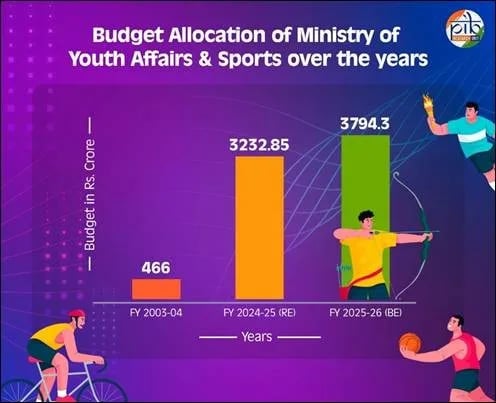
- Khelo India: Launched in 2016-17 by the Ministry of Youth Affairs and Sports, the Khelo India programme aims to revive the sports culture in India at the grassroot level by building a strong framework for all sports played in our country.
- The Retired Sportsperson Empowerment Training (RESET) Programme, launched in 2024, empowers retired athletes to reinvent themselves.
- The Pandit Deendayal Upadhyay National Welfare Fund for Sportspersons offers one-time ex-gratia aid of up to ₹5 lakh, a monthly pension of ₹5,000, medical assistance up to ₹10 lakh, and support up to ₹10 lakh for injuries sustained during training or competitions.
- National Sports Development Fund (NSDF): These funds supplement public investment and are used to develop infrastructure, support high-potential athletes, and fund innovative programmes, creating a collaborative model for sports development.
Way Ahead
- Grassroots Investment: Expand playgrounds in schools and strengthen rural sports infrastructure to democratise opportunities.
- Public–Private Collaboration: Encourage private sector partnerships to supplement state investment in infrastructure and training.
- Cultural Shift: Promote sports as a way of life, not just a path to medals, by integrating physical education systematically into schools and communities.
Concluding remarks
- The Supreme Court’s philosophy provides a vital bridge between constitutional values of fraternity and equality and their realisation through practical institutions like sports.
- By ensuring that opportunities are open to all irrespective of caste, class, gender, or economic background, the Court highlighted how the unifying power of sports is amplified, transforming it from a privilege of the few into a shared national resource for cohesion and collective progress.
Source: TH
Previous article
Women Potential Remains Under-leveraged in Agriculture
Next article
Traditional Ritual Theatres of India
