


Huangyan Island (Scarborough Shoal)
Syllabus :GS1/Geography
In News
- The Philippines opposed China’s plan to establish a nature reserve at the disputed Huangyan Island (Scarborough Shoal) in the South China Sea.
About Huangyan Island (Scarborough Shoal)
- Huangyan Island, also known as Scarborough Shoal (English) and Panatag Shoal (Philippines), is a disputed coral atoll located in the South China Sea.
- It is strategically significant for its rich fisheries, potential hydrocarbon resources, and military importance.
- Located 220 km west of Luzon, Philippines, near the Manila Trench.
- It first appeared on the 1734 Velarde Map of the Philippines, claimed under Spanish rule and later named “Scarborough” after a British ship grounded there in 1748.
- The Philippines’ claim stems from the Treaty of Washington (1900).
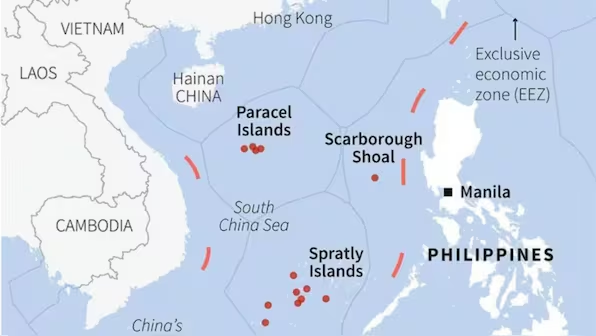
South China Sea
- A marginal sea of the western Pacific Ocean, bounded by Taiwan (northeast), the Philippines (east), Borneo and the Gulf of Thailand (south), and the Asian mainland including Vietnam and China (west/north).
Source :IE
Kolhan’s Manki-Munda system
Syllabus :GS1/History
In News
- Adivasis from the Ho tribe protested in Jharkhand’s West Singhbhum accusing the Deputy Commissioner of interfering with their traditional Manki-Munda governance system.
Manki-Munda system
- The Ho tribe of Jharkhand’s Kolhan region traditionally followed a decentralized, hereditary governance system led by village heads called Mundas and regional leaders called Mankis.
- Mundas resolved local socio-political disputes, while unresolved cases were escalated to the Manki, who oversaw a group of villages (pir).
- This system resolved social and political issues, not land or revenue matters.
- This self-contained system operated independently, without external authority or taxation.
- The arrival of the East India Company disrupted this autonomy by introducing taxes and external control.
- Mundas resolved local socio-political disputes, while unresolved cases were escalated to the Manki, who oversaw a group of villages (pir).
Impacts of Britishers
- The Manki-Munda system was disrupted by the British East India Company, which imposed taxes and land seizures under the Permanent Settlement Act (1793), leading to adivasi revolts.
- In response, the British codified the Manki-Munda system through Wilkinson’s Rules in 1833, integrating Kolhan into British India while preserving tribal leadership.
- Post-independence, Wilkinson’s Rules remained in effect, with Kolhan largely exempt from general civil laws.
Source :IE
First bamboo-based Bio-refinery
Syllabus: GS3/Environment
Context
- Prime Minister Modi inaugurated India’s first bamboo-based bio-refinery at Golaghat district in Assam.
About
- Five lakh tonnes of green bamboo would be sourced annually from four northeastern States, including Arunachal Pradesh and Assam to produce ethanol, acetic acid, furfural, and food-grade liquid carbon dioxide.
- The bioethanol plant is expected to give a ₹200-crore boost to Assam’s rural economy.
Biorefinery
- A biorefinery is an industrial facility that converts biomass (plant material, agricultural residues, forestry waste, algae, organic waste, etc.) into a wide range of value-added products such as:
- Biofuels (ethanol, biodiesel, biogas, biohydrogen);
- Biochemicals (organic acids, solvents, bioplastics, enzymes);
- Biomaterials (fibers, biocomposites, biodegradable plastics);
- Bioenergy (electricity, heat, syngas).
- A biorefinery is like a green alternative to an oil refinery, converting renewable biomass into fuels, energy, and chemicals in an efficient, sustainable, and eco-friendly way.
Source: AIR
Australia Approves First Vaccine to save Koalas from Chlamydia
Syllabus: GS3/Species in News
Context
- Australia has approved the first vaccine to protect its shrinking koala population against chlamydia.
About
- The vaccine was found to have decreased mortality by at least 65%.
- Chlamydia: It is a sexually transmitted infection caused by the bacterium Chlamydia pecorum that can cause infertility and blindness. In koalas, chlamydia is a threat to survival and a key conservation issue.
- It is also found in humans caused by Chlamydia trachomatis, in humans, chlamydia is a major sexually transmitted infection (STI) but treatable.
About Koala
- The koala (Phascolarctos cinereus) is a tree-dwelling marsupial native to Australia.
- Often mistakenly called the “koala bear,” it is not a bear but a marsupial (a mammal that carries its young in a pouch).
- Physical Characteristics: Thick, soft, grey or brown with lighter underside – provides insulation.
- Large and black, with a strong sense of smell (helps detect eucalyptus leaves).
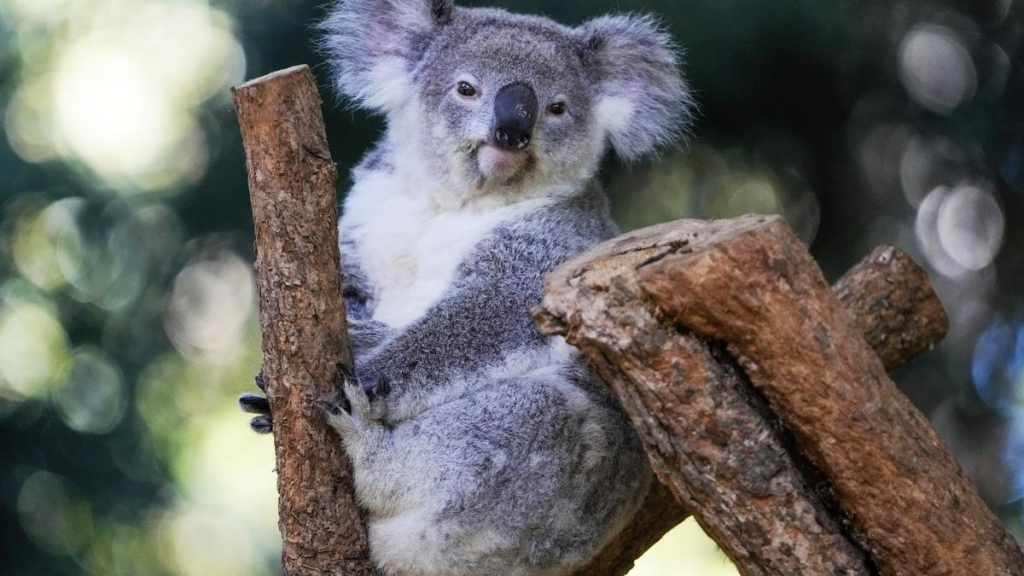
- Habitat & Distribution: Found mainly in eastern and southeastern Australia (Queensland, New South Wales, Victoria, South Australia).
- Diet: Herbivores – almost entirely eat eucalyptus leaves.
- Behavior: Mostly nocturnal and sedentary.
- Threats: Along with habitat loss, climate change and bushfires, a major reason for koalas’ vulnerability is chlamydia.
- Since 2022, they have been listed as endangered in Queensland, New South Wales and the Australian Capital Territory under Australia’s national environmental law.
- IUCN Status – Vulnerable.
Source: TH
Eustoma Flower
Syllabus: GS3/Environment
Context
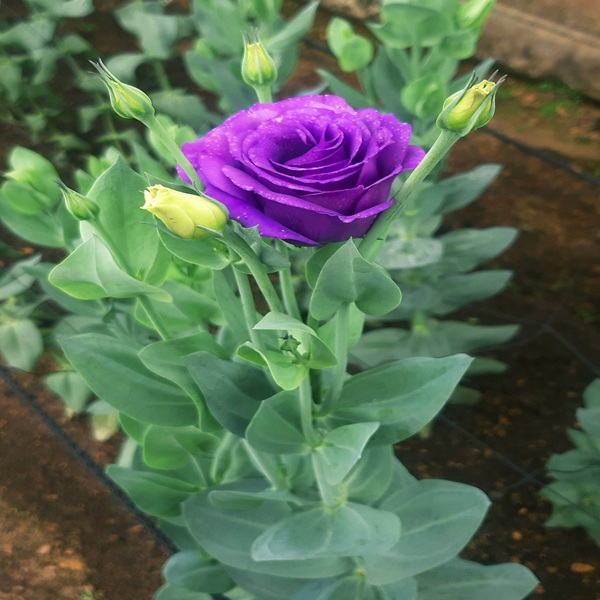
- Eustoma, a flower earlier available in Odisha only through imports, has bloomed locally for the first time.
- This breakthrough was achieved by the National Botanical Research Institute (NBRI), a research arm of the Council of Scientific and Industrial Research (CSIR).
About the Eustoma (Eustoma grandiflorum)
- Common Name: Lisianthus
- Family: Gentianaceae
- Native Region: Mexico and North America
- Cultivation requirements:
- Grows in rich, well-drained soil with full sunlight.
- Needs regular moisture but sensitive to overwatering.
- Key Characteristics:
- Because of its enormous rose-like blossoms, long stems, and extended vase life, its sales have increased dramatically in recent years, earning it the title of the “next rose”.
Source: TH
Pink Tax
Syllabus: GS3/Economy
Context
- As per International Finance Students Association’s (IFSA) research ‘The Gender Tax: Assessing the Economic Toll on Women,’ almost 67% of Indian individuals have never heard of the Pink Tax.
Pink Tax
- Pink tax is neither a real tax, nor is it a government-imposed fee.
- It’s just a pricing phenomenon wherein women pay more for buying a product exclusively made for them or enjoying a service tailor-made for them.
- Pink toys, haircuts, drycleaning, razors, shampoos, body lotions, deodorants, facial care, skincare items, beauty care, clothing, T-shirts, jeans, salon services etc. suffer the tax.
- The term “Pink Tax” is believed to have originated in the U.S. in California in 1994.
Regulation in India
- While there are no specific laws in India to address the issue of Pink Tax, the National Consumer Disputes Redressal Commission ruled that companies must follow fair pricing policies and avoid gender-based price discrimination.
- In July 2018, the Union Government exempted sanitary napkins and tampons from the Goods and Services Tax (GST). Prior to this rule, these hygiene items were levied 12% GST.
Ways to Avoid Pink Tax
- Choose gender-neutral products or men’s variants whenever possible.
- Compare the quality and if the men’s variant is better, skip the pink packaging or choose unisex products.
- Instead of comparing prices of the entire package, check the price per unit.
Source: TH
Kerala Approves Draft Wildlife Protection (Amendment) Bill, 2025
Syllabus: GS3/ Environment
In News
- The Kerala Cabinet has approved the draft Wildlife Protection (Amendment) Bill, 2025, a landmark proposal aimed at tackling growing human-wildlife conflict.
Key Provisions of the Draft Bill
- Empowerment for Immediate Action: The Chief Wildlife Warden (CWW) will be authorized to order the immediate killing of any wild animal that attacks or injures a person in residential areas, bypassing the lengthy procedures required by the central Wildlife Protection Act, 1972.
- Decentralized Authority: District Collectors or Chief Conservators of Forests can report incidents directly to the CWW, who can act without waiting for central government approval.
- Population Control and Relocation: The amendment allows birth control and translocation measures for species listed in Schedule II of the Act (like wild boar and monkeys) when their numbers become excessive, again without needing prior sanction from the Centre.
- Power to Declare Vermin: The authority to declare Schedule II animals as “vermin”—enabling their culling—is transferred from the Union Government to the State Government.
- Bonnet Macaque Reclassification: The bill proposes shifting the bonnet macaque (monkey) from Schedule I (highest protection) to Schedule II (lower degree of protection), making population management easier.
- Sandalwood Trade Reform: Allows sale of sandalwood trees grown on private land through Forest Department outlets, with farmers receiving the full timber price.
About Human-Animal conflict
- Human-wildlife conflict is when encounters between humans and wildlife lead to negative results, such as loss of property, livelihoods, and even life.
- Causes: Poaching & illegal trade, lack of protected areas, deforestation, agricultural expansion, climate change, and invasive species.
Source: TH
Indian Coast Guard
Syllabus: GS3/ Security Agencies
In News
- The Indian Coast Guard (ICG) has reaffirmed India’s commitment to global maritime governance at the 4th Coast Guard Global Summit, held in Rome.
About Indian Coast Guard
- It was established in 1977 under the Coast Guard Act, and functions under the Ministry of Defence.
- Its primary role is maritime law enforcement, coastal security, protection of India’s Exclusive Economic Zone (EEZ), anti-smuggling, anti-piracy, and prevention of illegal fishing.
- The ICG is headed by a Director General.
Division of India’s Coastline
- For command and control, the Indian coastline is divided into five regions: North-West (Gandhinagar), West (Mumbai), East (Chennai), North-East (Kolkata), and Andaman & Nicobar (Port Blair)—each headed by an Inspector General.
Source: TH
2025 World Boxing Championships
Syllabus: Miscellaneous
In News
- Jaismine Lamboria and Minakshi Hooda have won gold at the World Boxing Championships 2025 held in Liverpool, UK.
About
- The event was hosted at M&S Bank Arena, Liverpool, UK, and brought over 550 boxers from more than 65 countries across all continents.
- The 2025 edition was historic, as it combined both men’s and women’s events under World Boxing, the new global boxing federation, for the first time at the elite level.
- Kazakhstan topped the medal table with 7 gold, ahead of Uzbekistan and India.
Source: TH
Previous article
India’s Outward FDI goes to ‘Tax Havens’
Next article
Women’s Political Participation in India
