



Syllabus: GS2/Health
Context
- A novel study has revealed important insights into developing strong immunity against DENV, which is otherwise quite complex.
About
- Researchers from the US and Philippines have identified specific antibodies, known as envelope dimer epitope (EDE)-like antibodies, as the key for building broad, cross-serotype immunity following natural infection or vaccination.
- The findings represent a significant step forward in understanding dengue immunity and could lead to more effective therapeutics.
About Dengue
- Dengue is a mosquito-borne viral disease caused by the Dengue virus (DENV), which has four serotypes (DENV-1, DENV-2, DENV-3, and DENV-4).
- It is transmitted primarily by the Aedes aegypti mosquito.
- Spread: The virus does notspread person-to-person directly.
- A mosquito becomes infected by biting a person already infected with the virus, and then can transmit the virus to another person through a subsequent bite.
- Symptoms: Fever, severe headache, muscle and joint pains, nausea and vomiting, pain behind the eyes, and rashes.
- In severe cases, the infection can lead to internal bleeding, and if not managed properly, even death.
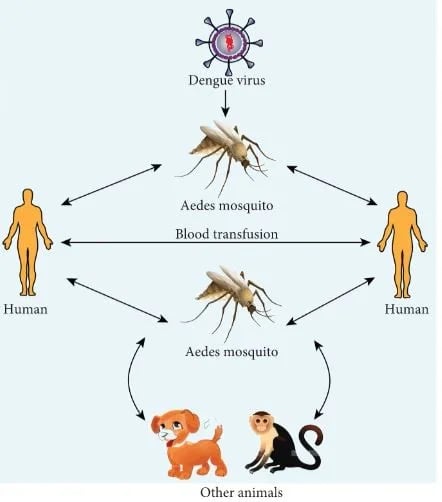
- Treatment: There is no specific treatment for dengue. Early detection of disease progression with proper medical care lowers fatality rates of severe dengue to below 1%.
- Vaccine: Dengvaxia (CYD-TDV) – approved in some countries, recommended for individuals aged 9-16 with a history of dengue infection.
Dengue & Vaccine Challenges
- Global burden: It is the most common vector-borne viral disease; half the world’s population is at risk, especially in Southeast Asia, Africa, Americas.
- Dengue fever is one of the top 10 threats to global health, according to the World Health Organisation (WHO).
- Dengue in India: India accounts for a large fraction of global dengue cases; 2.3 lakh cases and 297 deaths were reported in 2024.
- Vaccine challenge: Primary immunity after first infection can worsen disease on second infection with different serotypes.
- Severe dengue cases (requiring hospitalization) occur after second infections.
- True protection (secondary immunity) develops only after infection with ≥2 serotypes.
Significance of Study
- EDE-like antibodies could be a biomarker for protective immunity.
- Future vaccines may aim to specifically induce high EDE-like antibody levels.
- Could improve vaccine safety and cross-serotype protection.
Source: TH
Previous article
India Becomes World’s Third-Largest Automobile Market
Next article
News In Short 12-August-2025
