


Environment & Ecology Notes for UPSC
Environment & Ecology plays a crucial role in adding value to enrich essays with facts and perspectives. Therefore, concise Environment & Ecology notes prove to be highly useful during year-long UPSC CSE preparation. We have compiled topic-wise Environment & Ecology notes curated for UPSC aspirants. Here’s a complete topic coverage:






UPSC Environment & Ecology Notes
The importance of well-structured notes always remains in UPSC CSE preparation as it plays a very crucial role in the overall preparation journey - Prelims, Mains and Interview. It not only facilitates effective assimilation and comprehension of concepts but also aids in easier internalisation and recall during the examination. It facilitates in enriching answers as the ability to link concepts with diagrams, maps and current affairs gives an edge over other aspirants.
In case of prelims, concise notes helps recalling factual information and hence, accuracy ratio enhances while solving the questions in the actual exam. Now, let us have a detailed look over the Environment & Ecology UPSC CSE syllabus.
Important Topics for Environment and Ecology
To begin with reading Environment and Ecology, one can start with NCERT books to have a grasp over the basic concepts to build a strong foundation for the subject. Read only the environment related part in the NCERT books. Moreover, there are numerous coaching study materials available in the market, at NEXT IAS we aim to provide the most relevant and important attributes of the subject as per the actual demand for UPSC CSE, aligned with the core requirements of the examination.
Therefore, it is advisable to use NCERTs, reliable sources & standard books, and keep them updated with effective current affairs coverage.
Environment and Ecology can be broadly divided into the following topics:
- Basics of Environment: You will read about the inter-relationship between living organisms and its physical surroundings.
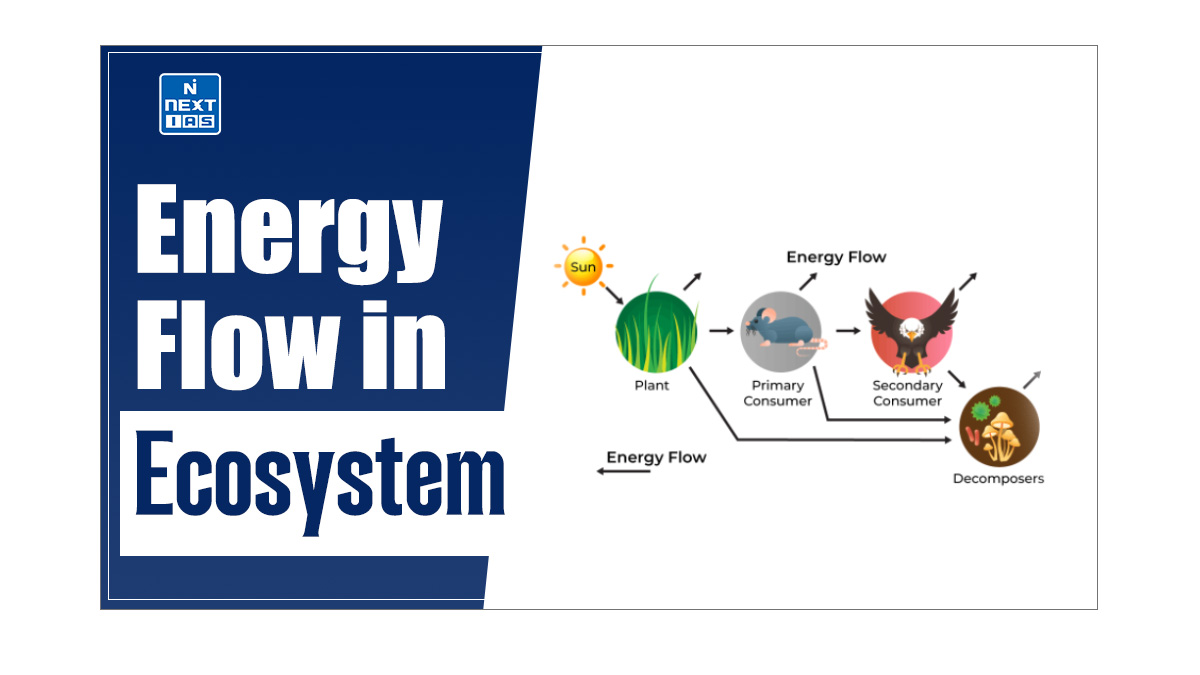
- Ecosystem: You will read about the biological community that interacts with organisms and their physical environment that functions as an interconnected entity.
- Biodiversity: You will read about the different variety of life on Earth, combining all species of plants, animals, microorganisms, their genes, and the ecosystems they form further.
- Faunal Diversity: You will study regarding the type and variability of animal species within a specific geographical ecosystem.
- Floral Diversity: You will read about the variety and variability of plant species, including flowering plants, trees, fungi, and algae, within a particular ecosystem.
- Conservation of Biodiversity: You will read about the practice of preserving the variety of lives on Earth to maintain a balance of ecology and ensure resources for generations to come.
- Environmental Governance in India: You will study about the policies, laws and institutions that regulate environmental conservation in India.
- Environmental Organizations in India: You will be reading regarding the groups such as the World Wildlife Fund in India that work on research, advisory, and action for environmental protection and conservation.
- Environmental Organizations in the World: You will read about the International organizations such as the United Nations Environment Programme (UNEP) and non-profit organizations such as Greenpeace that focus and support in resolving the global environmental challenges.
- Environmental Pollution: You will study about the introduction of detrimental contaminants into the natural environment which causes instability, and may produce harmful effects to ecosystems.
- Air Pollution: You will read about the degradation of the atmosphere which is caused by harmful bio-chemical substances, such as particulate matter such as PM 2.5 or PM 10 and greenhouse gases such as carbon dioxide, methane etc.
- Water Pollution: You will read about the water contamination in water bodies such as lakes, rivers, oceans, and groundwater due to the introduction of harmful substances.
- Soil Pollution: You will read about the existence of toxic chemicals present in soil at very high concentrations that pose a threat to human health and its ecosystem.
- Other types of Pollution: You will read about other pollution entities that includes noise, light, thermal, and radioactive pollution, which are all human-induced degradations in the environment.
- Ocean Acidification: You will read about the ongoing decrease in the pH value of the planet’s oceans, which is primarily caused by the uptake of carbon dioxide(CO2) from the atmosphere.
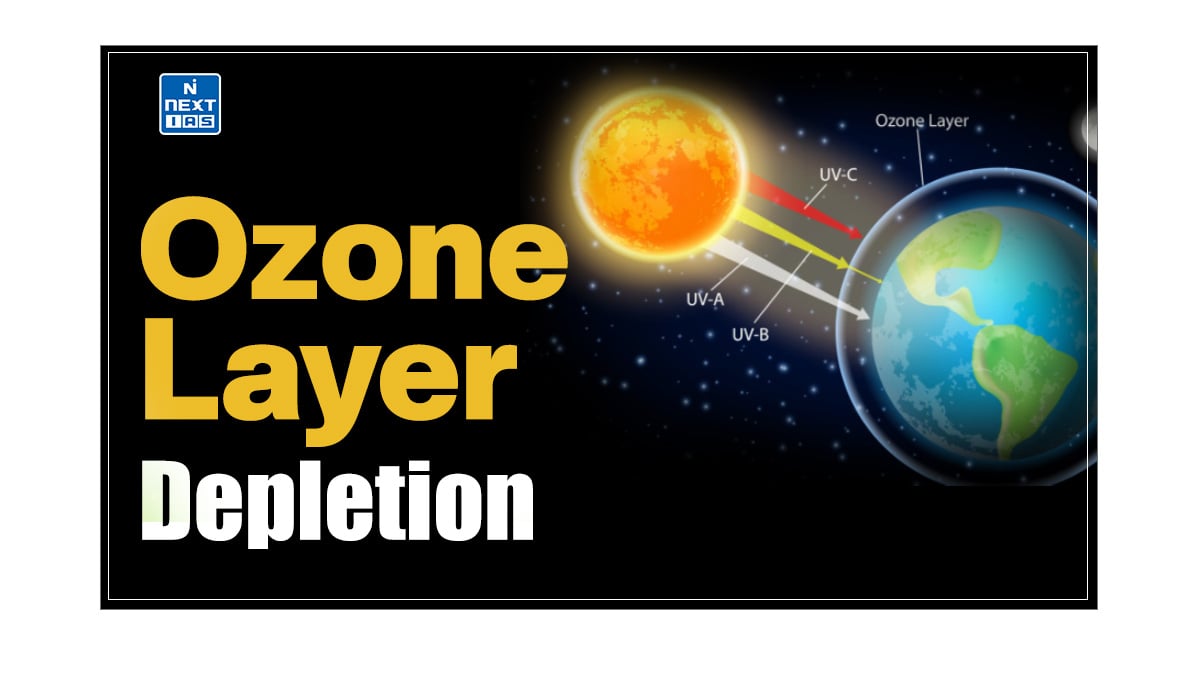
- Ozone Depletion: You will read about the stratospheric ozone layer thinning due to the release of ozone-depleting substances such as Chlorofluorocarbon(CFCs).
- Climate Change: You will study regarding the major shift in the global climatic patterns and average temperatures, primarily attributed to anthropogenic activities like fossil fuel burning etc.
- India and Climate Change: You will read about the vulnerability to climate impacts, primarily engaged in international agreements while making a balanced economical development with the strategies of mitigation and adaptation.
- Mitigation Strategies: You will read about the actions such as shifting and adopting renewable energy and increasing carbon sinks to reduce the severity of climate change.
- Environmental Conventions: You will read regarding International treaties such as the Paris Agreement and Montreal Protocol where nations collaborate together to address and resolve global environmental issues.
- Sustainable Development: You will study about the development that meets the needs of the present without compromising the ability of future generations to meet their own needs.
- Environmental Impact Assessment (EIA): You will read about the methods used to evaluate the potential environmental consequences of a proposed project or development before it actually gets started.
- Environmental Ethics: You will read about the branch of philosophy which considers the moral relationship between human beings and the environment and our duty to protect it.
- Recent Developments: You are expected to read more about the contemporary developments related to the issue.
Significance of Environment & Ecology in UPSC
Environment & Ecology as a discipline comprises an integral part of Paper-1 in UPSC CSE Prelims and GS Paper-III in UPSC CSE Mains. At a macro level, factual questions are asked in prelims but still an analytical approach( at micro level), that comes eventually from answer writing practice for mains exam, is needed to solve them. This knowledge plays a crucial role in both Essay writing and Interview stage as well.
FAQs: UPSC Environment & Ecology Notes
How to read Environment for UPSC Prelims?
Begin with the NEXT IAS UPSC Environment & Ecology book for a comprehensive coverage of the syllabus. Practice makes a man perfect- Try solving PYQs of UPSC Prelims and Mains. Parallel navigation through an Atlas(Oxford or Orient Blackswan) is advisable.
Who is the best teacher for Environment in UPSC?
Having prolonged experience over 17 years in teaching over lakhs of students in UPSC domain, A. P. Singh Sir is the best Environment faculty. His teaching methodologies are comprehensive and very helpful in building foundational knowledge which further transforms into a robust plethora of knowledge base of the classroom students. Many IAS toppers are their classroom students.
Which publisher is best for UPSC environment books?
Made Easy Publications is the best publisher for UPSC environment books. Additionally, there are numerous coaching materials available in the market, of which the best material is NEXT IAS classroom and printed study material. It is the most preferred study material among UPSC CSE aspirants and provides a one stop solution for Environment as a discipline.
