
 80813-00200


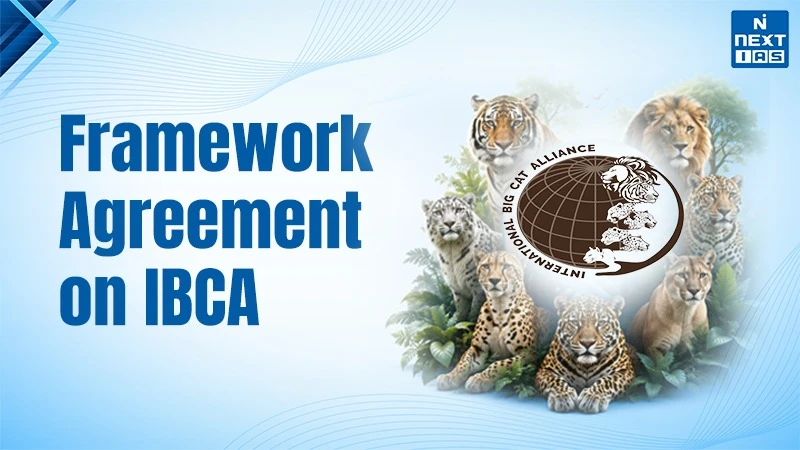
The International Big Cat Alliance (IBCA) was formed through the Framework Agreement which created the organization as a treaty-based intergovernmental body in January 2025 after India first introduced it in 2023. The New Delhi-based organization brings together range countries such as India and Cambodia to protect seven big cat species which include the tiger, lion, leopard, snow leopard, puma, jaguar and cheetah. The main objectives of the organization include protecting natural habitats and developing financial resources and sharing technological knowledge and conducting scientific research and implementing climate change adaptation methods through their joint programs and decision-making Assembly and operational Secretariat. Seven nations signed initially.
Historical Background of International Big Cat Alliance
- The Indian Prime Minister introduced the project during a ceremony on April 9, 2023 to celebrate the 50th anniversary of Project Tiger in India at Mysuru.
- The goal of this mission is to enhance international collaboration which aims to protect seven major big cat species and their natural habitats.
- India is home to five of the seven big cat species which include tiger, lion, leopard, snow leopard and cheetah.
- The alliance intends to establish contact with 97 countries which maintain the natural environments of seven big cat species.
- IBCA operates as a global partnership which includes multiple nations and agencies for the purpose of ecosystem protection which includes the conservation of these species and their habitats.
- The platform will develop as a knowledge sharing space which unites existing best practices with inter-governmental platforms while it backs restoration work in potential range areas.
- IBCA will establish operational networks in multiple domains which will deliver knowledge-sharing, capacity-building, networking, advocacy, financial assistance and resource support.
- IBCA governance consists of an assembly of members, a standing committee, and a secretariat which operates from its main office located in India.
- The Indian government has approved the initial IBCA financial support of Rs. 150 crore for the period between 2023 and 2028.
Key Requirements for IBCA Framework Agreement
The essential requirements for IBCA Framework Agreement membership and operations which will begin in January 2025, require the following.
- Membership: Sign/open for accession by any country (95 big cat range states eligible). No joining fee; voluntary contributions optional. Process: Sign agreement, designate National Focal Point.
- The Assembly requires consensus for its decisions whereas two-thirds of members can make binding decisions. The Secretariat operates from its main office located in New Delhi, India.
- The Parties or Secretariat must submit SMART objectives which will guide conservation work through habitat restoration and technological advancements and financial resources.
- Each Party assigns one Focal Point to handle coordination and networking tasks.
- The organization will have around 29 members in 2026 with India as one of its participating countries.
IBCA Challenges, Socio-Ecological Security, Climate Mitigation
The IBCA Framework Agreement (Art. III, Preamble) targets "common challenges to the protection and conservation" of seven big cats (tiger, lion, leopard, snow leopard, puma, jaguar, cheetah), including:
- Habitat/prey degradation
- High financing/technology costs
- Resource mobilization gaps
- Specific obstacles to viable populations in range countries
Socio-Ecological Security
IBCA secures "socio-ecological future" (Art. III) through habitat/prey/big cat conservation work, which enables both range and non-range countries to establish ecological balance. The programs support sustainable population management through their research and capacity building efforts while creating stakeholder partnerships to address human-wildlife conflicts.
Climate Mitigation
The program supports "adaptation and mitigation of adverse effects of climate change" (Art. III, Preamble). The organization establishes links between big cat conservation efforts and ecological resilience through its habitat and prey research, advanced studies, and global climate adaptation work.
Objectives of Big Cat Alliance
The Framework Agreement (Art. III) outlines IBCA's core objectives for big cat conservation:
- The organization will work together to protect seven big cat species through joint efforts which will include safeguarding their habitats and their natural food sources.
- The organization will work together to reduce financing and technology expenses through resource sharing.
- The organization will focus on promoting innovation through its research and development initiatives which include capacity building programs.
- The organization will work to solve climate change problems through its adaptation and mitigation activities.
- The organization will improve socio-ecological security for range countries through programs which use SMART goal frameworks.
Conclusion
The IBCA Framework Agreement serves as a major achievement for global big cat conservation because it unifies range countries through Indian leadership since its 2025 implementation. The program supports environmental security for tigers, lions, and their relatives by addressing habitat destruction and climate change and funding deficiencies through its collaborative initiatives and groundbreaking solutions. The members' continuous dedication will create conditions that sustain animal populations and preserve environmental balance for upcoming generations.
FAQs about IBCA
What is IBCA's purpose?
Launched by India in 2023, IBCA unites a range of countries to conserve seven big cats via habitat protection, tech sharing, and climate strategies under its 2025 Framework Agreement.
Who can join IBCA?
Open to all big cat range countries (95 eligible); sign the Framework Agreement and appoint a National Focal Point—no fees required.
Where is IBCA headquartered?
New Delhi, India, hosts the Secretariat; Assembly makes consensus-based decisions on conservation programs.
