
 80813-00200

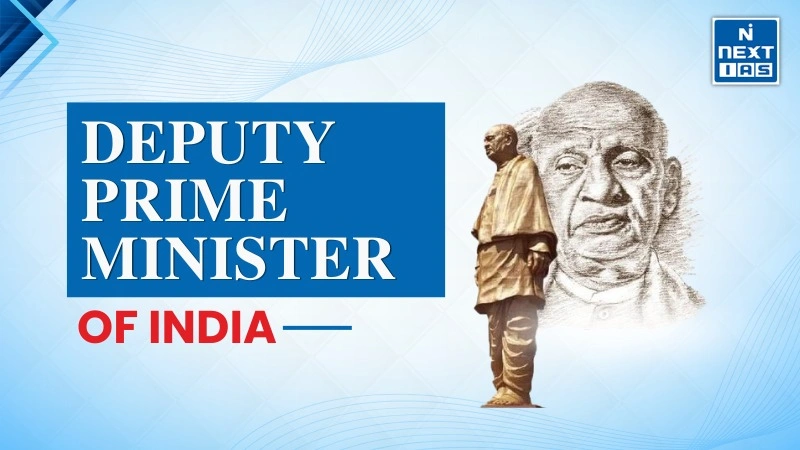
The post of Deputy Prime Minister is not mentioned in the constitution of India and is an extra constitutional informal designation. The constitution only mentions the Prime Minister and the Councils of Ministers. The Deputy PM takes the same oath as any other Ministers in the Parliament of India. Interestingly, the title of Deputy Prime Minister is given to a major partner at the time of forming a coalition government when there is not a clear majority-party win.
The First Deputy Prime Minister was Sardar Vallabhbhai Patel from 1947 to 1950 and the Last Deputy PM was L K Advani from 2002 to 2004. Despite having such an important role in the administrative structure of the country, this post remains vacant since 2004. In the K M Sharma Vs Devi Lal case of 1990, the Supreme Court clarified that the ‘Deputy PM’ is only a ‘descriptive role’ and has no powers of a Prime Minister. Chaudhary Devi Lal served as the 6th Deputy PM under the then Prime Minister V. P. Singh from 1989 to 1990 in a coalition government.
List of Deputy Prime Ministers of India
Since the Independence of India, There have been a total seven Deputy Prime Ministers in India. The leaders served numerous other important portfolios. Following is the list of the Deputy Prime Ministers of Independent India:
| S. No. | Name | Tenure |
|---|---|---|
| 1 | Sardar Vallabhbhai Patel | 1947 – 1950 |
| 2 | Morarji Desai | 1967 – 1969 |
| 3 | Charan Singh and Jagjivan Ram (Jointly) | 1977 – 1979 |
| 4 | Y. B. Chavan | 1979 – 1980 |
| 5 | Devi Lal | 1989 – 1990 |
| 6 | Devi Lal | 1990 – 1991 |
| 7 | L. K. Advani | 2002 – 2004 |
Extra-Constitutional Role as Vice Prime Minister
Article 75 of the Indian Constitution mentions the provisions for the appointment of the Prime Minister and other ministers. However, this post of the Deputy Prime Minister of India is meant for administrative convenience at the discretion of the Prime Minister. The post is not mentioned in the constitution of India. The Supreme Court has previously said that the post of the Deputy Prime Minister of India does not confer additional powers or rank rather he/she has no special constitutional mandate.
Duties and Functions of Deputy PM
The following are the duties and functions as:
Assists the Prime Minister
- He/She assists the Prime Minister in making important policy decisions, managing government affairs, and looking after the administration of key ministries, handling essential portfolios like Home Affairs, Defence, and Finance.
Coordinates between Ministries
- He/She ensures smooth communication and coordination among various ministries and departments to facilitate effective governance.
Act as a senior advisor
- He/She provides strategic advice to the Prime Minister on national political and international issues.
Act as an acting Prime Minister
- He/She performs the duties and responsibilities of the Prime Minister in their absence due to travel, illness, or any other reasons.
Table of Precedence
It is related to the rank and order of the government officers of the Union and State in India. But, the order in this Table is meant only for ceremonial occasions. The present notification on this subject was issued on 26 July, 1979. This notification superseded all the previous notifications and was also amended many times. The table of precedence showcasing the deputy prime minister of India is given below:
- President
- Vice-President
- Prime Minister
- Governors of states within their respective states
- Former Presidents 5A. Deputy Prime Minister
- Chief Justice of India, Speaker of the Lok Sabha, and other constitutional authorities
First Deputy Prime Minister of India
The first deputy Prime Minister Sardar Vallabhbhai Patel born on 31 October, 1875 in Nadiad, Gujarat. He was an Indian barrister and a leader of the INC political party during the Indian independence struggle. During the first three years of Indian independence after 1947, he served on numerous government profiles such as deputy prime minister, minister of home affairs, minister of information, and minister of states. Vallabhbhai Patel was the first Indian to hold such a prestigious position of the deputy prime minister of India, and is widely known as the ‘Iron Man of India’. He united more than 560 princely states into one nation after independence showcasing his extraordinary negotiation skills and robust determination. He died 15 December, 1950 in Mumbai.
Last Deputy Prime Minister of India
The last deputy Prime Minister, Lal Krishna Advani born on 8 November, 1927 in Karachi, British India [now in Pakistan]. He is an Indian politician and a founding member of the BJP political party. He became deputy prime minister of India (2002–04). He was largely responsible for popularizing and strengthening the BJP, which, from its formation in 1980, emerged as one of the strongest political forces in India.
Conclusion
The Deputy Prime Minister is an honourable but a non-constitutional position. This post was created for administrative and political convenience. The role is majorly to assist the Prime Minister, look after good governance, and manage important ministries. The Deputy Prime Minister historically played an important part in maintaining political stability and supporting major policy decisions.
Frequently Asked Questions about Deputy PM
Who is the current Deputy Prime Minister of India?
There is no current deputy PM of India as of 2025. The post has remained vacant since 2002-2004 when L.K. Advani was the deputy PM.
Who was the first Deputy Prime Minister of India?
Sardar Vallabhbhai Patel was the first Deputy PM of India from 1947-1950. He also held the portfolio of Home Minister.
