
 80813-00200


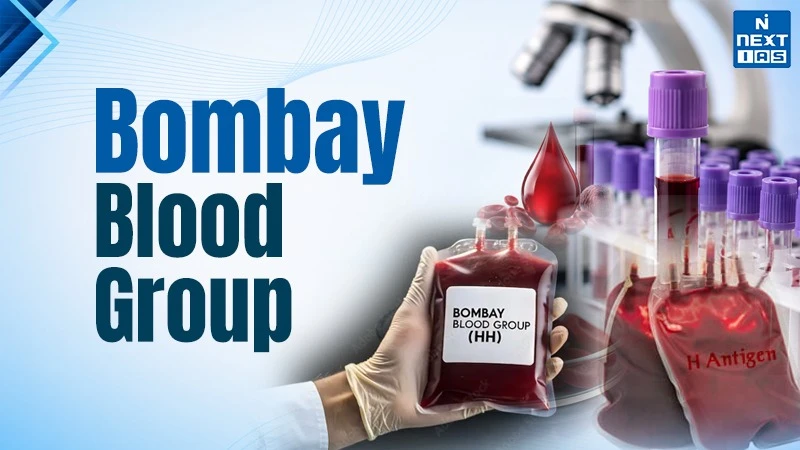
The Bombay Blood Group, also known as the hh or oh negative phenotype, is one of the rarest blood groups in the human biological system. This blood group was discovered in the city of Mumbai, formerly known as Bombay, in 1952, and it defies the traditional ABO blood grouping system because of the absence of the H antigen on the red blood cells.
In case of a blood transfusion, people with this blood type can receive blood only from other H deficient donors. Because the H antigen is the precursor of the ABO blood group antigens, if it is not produced, the ABO blood group antigens are also not produced.
Problem with Blood Transfusion
| S.No. | Problem | Brief description |
|---|---|---|
| 1 | Allergic reaction |
|
| 2 | Fever |
|
| 3 | Transfusion reaction |
|
| 4 | Transfusion infection |
|
| 5 | Bacterial contamination or Sepsis |
|
| 6 | Transfusion-related acute Lung injury (TRALI) |
|
| 7 | Circulatory overload (TACO) |
|
| 8 | Excess of Iron |
|
| 9 | Electrolyte and metabolic problems |
|
| 10 | Alloimmunisation |
|
Historical Background of Bombay Blood Group
- In Bombay, India, an individual was discovered to have an interesting blood type that reacted to other blood types in a way that had not been seen before.
- Serum from this individual contained antibodies that reacted with all RBCs from normal ABO phenotypes (i.e., groups O, A, B, and AB).
- The individual’s RBCs appeared to lack all of the ABO blood group antigens and an additional antigen that was previously unknown.
- In 1952, a paper about the “new blood group character related to the ABO blood group” was published.
- This new blood group character is the H antigen and it is the building block for the antigens of the ABO blood group.
- It was named for the city in which it was first discovered, the ‘Bombay phenotype’ describes individuals whose RBCs lack the H antigen.
- Because the A and B antigens cannot be formed without the H antigen precursor, their RBCs also lack these antigens.
- As a result, these individuals produce anti-H, anti-A, and anti-B and can thus be transfused only with RBCs that also lack the H, A, and B antigens i.e., they can only receive blood from another person with the Bombay phenotype.
- Because of the rarity of this blood type, this normally means using blood donations from a suitable relative.
List of Blood Group Compatibility
| S. No. | Blood Group | Can Donate To | Can Receive From |
|---|---|---|---|
| 1. | O- | O-, O+, A-, A+, B-, B+, AB-, AB+ (Universal Donor) | O- |
| 2. | O+ | O+, A+, B+, AB+ | O-, O+ |
| 3. | A- | A-, A+, AB-, AB+ | O-, A- |
| 4. | A+ | A+, AB+ | O-, O+, A-, A+ |
| 5. | B- | B-, B+, AB-, AB+ | O-, B- |
| 6. | B+ | B+, AB+ | O-, O+, B-, B+ |
| 7. | AB- | AB-, AB+ | O-, A-, B-, AB- |
| 8. | AB+ | AB+ only (Universal Recipient) | All types |
Genetic Basis and Mechanism of the Bombay Blood Phenotype
- The Bombay phenotype results from homozygous recessive inheritance of the h allele (hh genotype).
- Normally, most people have at least one H allele, producing the H substance—a carbohydrate chain on red blood cell surfaces.
- In Bombay individuals, the lack of H means no foundation for A or B sugars, so their cells appear “blank”.
- However, their plasma forms with potent anti-H, anti-A, and anti-B antibodies, which agglutinate (clump) any non-Bombay blood introduced.
- A related variant, the para-Bombay phenotype, retains some H antigen in secretions but not on cells, adding further complexity.
Prevalence Worldwide
- Globally, the Bombay blood group affects about 0.0004% of people, or approximately 1 in 250,000 to 1 million.
- In Mumbai, prevalence rises to about 1 in 10,000, linked to consanguineous marriages in western and southern India.
- It is more common in India, Pakistan, Bangladesh, and some Middle Eastern pockets, though urbanization may dilute it through diverse gene pools.
- Registries like those in Mumbai help track donors and are vital during medical emergencies.
Medical Challenges in Transfusions for HH & OH Negative Blood Group
- Bombay patients can donate to any ABO group since their cells lack A, B, or H antigens, acting as “universal donors” in that sense—but they cannot receive from anyone else.
- O blood transfusion causes severe hemolytic reactions, including fever, chills, hemoglobinuria (red urine), and life-threatening renal failure from anti-H antibodies reacting with the O cells' H antigen.
- Misdiagnosis as O is common without H-specific testing, leading to serious complications.
- Only Bombay-to-Bombay transfusions are safe.
- Kidney or liver transplants from non-Bombay patients also pose a risk of antibody incompatibility.
FAQs about Bombay Blood Group
What is the Bombay Blood group?
Bombay Blood group is a rare blood phenotype which lacks the H antigen on red cells.
How many have a Bombay blood group?
There are about 1 in 10,000 individuals in India and 1 in 10,00,000 people worldwide have Bombay blood group.
Which blood group is the Bombay blood group?
The hh phenotype which is chemically different from A, B, AB, and O blood groups.
