


Paternity Leave
Syllabus: GS2/Governance
Context
- The Supreme Court called on the Union government to examine the need for a formal law recognising paternity leave for all fathers, adoptive or biological.
- The Court observed that the duration of the leave must be determined to suit the needs of both the parents and the child.
About
- Paternity leave is leave granted to a male employee (father) to take care of his newborn or adopted child and support the mother after childbirth.
- India does not have a universal paternity leave law.
- However, under the Central Civil Services (Leave) Rules, 1972 male government employees are entitled to 15 days of paternity leave, which they can take within six months of their child’s birth or adoption.
- The Supreme Court of India in 2026 urged the government to:
- Enact a dedicated law on paternity leave.
- Recognize it as a social security benefit.
- Countries like Sweden, Iceland and Germany provide paid parental leaves.
Significance
- It challenges the stereotype that childcare is solely a mother’s responsibility.
- Encourages shared parenting roles.
- Reduces physical and emotional burden on mothers after childbirth.
- Ensures better newborn care.
- Strengthens parent-child bonding.
- Makes workplaces more inclusive and progressive.
Source: TH
Flexible Inflation Targeting Framework (FITF)
Syllabus: GS3/ Economy
Context
- The Government of India has retained the inflation target of 4% with a tolerance band of ±2% for the period April 1, 2026 to March 31, 2031.
India’s Inflation Targeting Framework
- India adopted a Flexible Inflation Targeting Framework (FITF) in 2016 on recommendation by an Expert Committee headed by Dr. Urjit Patel.
- As per Section 45ZA of the RBI Act, 1934, the Central Government, in consultation with the RBI, determines the inflation target once every five years.
- The Consumer Price Index (CPI) — which measures retail inflation — is the chosen benchmark.
- The Monetary Policy Committee (MPC), is mandated to maintain inflation as set by the Government.
What is the Monetary Policy Committee (MPC)?
- The MPC is a statutory body established under the RBI Act, 1934 (amended in 2016).
- It is responsible for fixing the benchmark interest rate (repo rate) to maintain price stability while keeping growth in mind.
- It consists of 6 members:
- 3 from the RBI (including the Governor as Chairperson),
- 3 external members appointed by the Government.
- Decisions are made by majority, and each member has one vote. In case of a tie, theRBI Governor has the casting vote.
Source: TH
Gold Prices Fall Amid Crisis
Syllabus: GS3/ Economy
Context
- Gold prices have declined sharply despite the outbreak of a major conflict in West Asia in February 2026.
Why Gold Traditionally Rises During Crises?
- Safe Haven Demand: Gold is considered a reliable store of value during periods of uncertainty such as wars, financial crises, and inflationary shocks.
- Low Interest Rate Environment: Gold does not generate interest or dividends.
- When interest rates fall, returns on bonds and deposits decline, making gold relatively more attractive.
Key Factors Driving the Current Fall in Gold Prices
- Rising Oil Prices and Inflation Concerns: The West Asian conflict has disrupted oil supply, pushing crude prices above $100 per barrel. Higher oil prices have increased global inflationary pressures.
- Shift in Monetary Policy Expectations: Markets now expect central banks to maintain higher interest rates for a longer period.
- Higher interest rates increase returns on fixed-income instruments such as government bonds.
- Opportunity Cost of Holding Gold: As interest-bearing assets become more attractive, investors shift away from gold, which offers no yield.
Key Facts
- Top Global Producers (2024–25): China, Australia, Russia.
- India’s Position:
- Production: Extremely low, less than 1% of global production.
- Consumption: Second largest consumer of gold globally.
- Gold Reserves in India: Bihar, Rajasthan, and Karnataka.
- Key Mining Areas in India:
- Karnataka is the leading gold-producing state in India. Major mining sites include Hutti Gold Mines and Kolar Gold Fields (closed in 2001).
- Jharkhand: Gold is found in alluvial form in the Subarnarekha River basin.
Source: TH
Foreign Institutional Investors (FII)
Syllabus: GS3/Economy
Context
- According to data from National Securities Depositories Ltd. (NSDL), Foreign Institutional Investors (FIIs) sold ₹1,12,244 crore worth of Indian stocks in a single month.
- This sale is the most aggressive FIIs have ever made in a month.
Foreign Institutional Investors (FIIs)
- Foreign institutional investors (FIIs) are crucial participants in global markets, investing outside their home countries.
- FIIs include entities such as hedge funds, insurance companies, pension funds, and investment banks.
- In India, FIIs must register with the Securities and Exchange Board of India (SEBI) and comply with strict investment rules.
- FIIs can be important sources of capital in developing economies.
- They bring in foreign capital, which can stimulate growth and bolster foreign reserves, thus boosting the overall economy of a nation.
Do you Know?
- The term FII was replaced by FPI (Foreign Portfolio Investor) under SEBI (FPI) Regulations, 2014.
- FPIs are classified into three categories based on risk — Category I (lowest risk, e.g. sovereign funds), Category II (regulated entities), and Category III (highest risk, e.g. hedge funds).
Source: TH
Agnikul Tests 3D-Printed ‘Agnite’ Booster Engine
Syllabus: GS3/ S&T
In News
- Indian space startup Agnikul Cosmos recently announced the successful test of its 3D-printed booster engine, named ‘Agnite’.
About
- Agnite is a single-piece 3D-printed booster engine developed for the booster stage of Agnibaan launch vehicles.
- The engine is designed to reduce production complexity and turnaround time for space missions.
- Unlike conventional booster engines made of thousands of parts, Agnite is built as a single-piece architecture.
- It can reportedly be fully printed within a week, making manufacturing significantly faster.
- The engine is made of Inconel, a high-performance alloy commonly used in high-temperature aerospace applications.
Source: TOI
QS World University Rankings by Subject 2026
Syllabus: Miscellaneous
Context
- The 16th annual edition of the QS World University Rankings by Subject has been recently published.
About QS World University Rankings by Subject
- QS Quacquarelli Symonds is a London-based higher education analytics firm.
- It ranks universities not overall, but specifically for 55 individual subjects giving a more granular picture of academic excellence.
- The 55 subjects are grouped into five broad areas — Arts and Humanities, Engineering and Technology, Life Sciences and Medicine, Natural Sciences, and Social Sciences and Management.
- IIT-ISM Dhanbad (Indian School of Mines) has ranked 21st globally in Mineral and Mining Engineering & IIM Ahmedabad has featured as India’s top-ranked institution in both Business and Management Studies and Marketing.
Source: TH
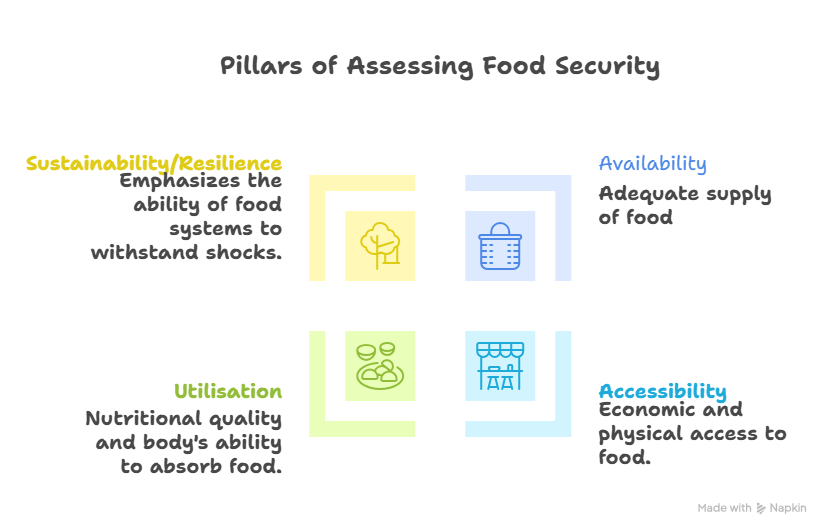
IIED Food Security Index
Syllabus: GS3/ Economy
In News
- A new study by the International Institute for Environment and Development (IIED) has found that India is among the large economies most vulnerable to worsening food insecurity under rising global temperatures.
Key Highlights
India’s Position:
- India’s baseline score in the new Food Security Index is 5.31, significantly below the global average of 6.74.
- It is behind countries such as Brazil, Mexico, and Indonesia, indicating structural weaknesses in its food system.
Impact of Rising Temperatures:
- India’s score is projected to decline further to:
- 4.96 at 1.5°C warming
- 4.52 at 2°C warming.
- This means that climate change (long-term rise in global temperatures and weather instability) could increasingly reduce access to adequate food.
Previous article
Ecological Risks of Microplastics
Next article
World Buddhist Peace Conference 2026
